People seeking cocaine treatment in Atlanta face barriers in reimbursement, workforce capacity, and awareness of fentanyl risk.
The region has strong foundational infrastructure through safety-net hospitals, behavioral health programs, and harm reduction services that deliver evidence-based therapies including cognitive behavioral therapy and contingency management.
This article examines cocaine use disorder treatment data Atlanta providers use, identifies system strengths and critical gaps, and explains which policy changes will improve outcomes for residents across urban and suburban communities in 2025.
Cocaine Use Patterns and Overdose Risk in Atlanta
National surveillance shows that cocaine-involved overdose deaths have climbed since 2014, driven largely by fentanyl contamination rather than pure cocaine toxicity. This pattern reshapes the risk environment for Atlanta residents who use cocaine. When illicitly manufactured fentanyl appears in cocaine supplies, users who do not expect opioid exposure face heightened mortality risk. Harm reduction tools like naloxone and fentanyl test strips become essential for people who traditionally identify as non-opioid drug users.
Georgia public health data mirrors these national trends. State surveillance emphasizes that stimulant-involved overdoses frequently include synthetic opioids, making overdose prevention a priority across urban centers including metro Atlanta. Disparities compound the challenge. Cocaine-involved overdose rates have increased disproportionately among Black adults in recent years, reflecting structural inequities in drug supply exposure, treatment access, and trust in healthcare systems.
Who Needs Cocaine Treatment Services?
Adults with cocaine use disorder span demographic groups including professionals, parents, justice-involved individuals, and people experiencing homelessness. Many use multiple substances, requiring integrated screening and polysubstance care. Co-occurring mental health conditions like anxiety, depression, and trauma are common, making dual diagnosis capacity a core requirement for effective Atlanta programs.
What Does Science Say Works for Cocaine Treatment?
There are no FDA-approved medications for cocaine use disorder. The strongest evidence supports behavioral therapies, especially contingency management, cognitive behavioral therapy, and structured programs like the Matrix Model. Contingency management consistently outperforms other approaches in meta-analyses, increasing abstinence duration and treatment retention through objective monitoring and immediate reinforcement of target behaviors.
Cognitive behavioral therapy equips individuals with coping skills, trigger identification, and relapse prevention strategies. The Matrix Model combines CBT, motivational interviewing, family education, urine testing, and peer support into a manualized protocol with evidence for stimulant disorders. The community reinforcement approach restructures life rewards toward sobriety. These modalities work best when combined and tailored to individual needs.
Contingency Management Stands Out
Contingency management effectiveness is supported by decades of randomized trials showing robust effects when programs maintain fidelity to core principles: frequent objective monitoring, immediate and salient reinforcers, escalating reward schedules, and reset contingencies. The Veterans Affairs system implemented contingency management nationally, demonstrating feasibility and positive outcomes at scale. However, adoption in community settings has lagged due to historical reimbursement barriers.
What About Medications
Multiple agents have been studied off-label for cocaine use disorder, including bupropion, topiramate, and disulfiram. A comprehensive meta-analysis concluded no medication meets the standard for FDA approval, though some may benefit subgroups or address co-occurring conditions like depression or ADHD. Clinicians may consider pharmacotherapy case by case, but behavioral interventions remain the treatment core.
Atlanta’s Treatment Infrastructure and Access Points
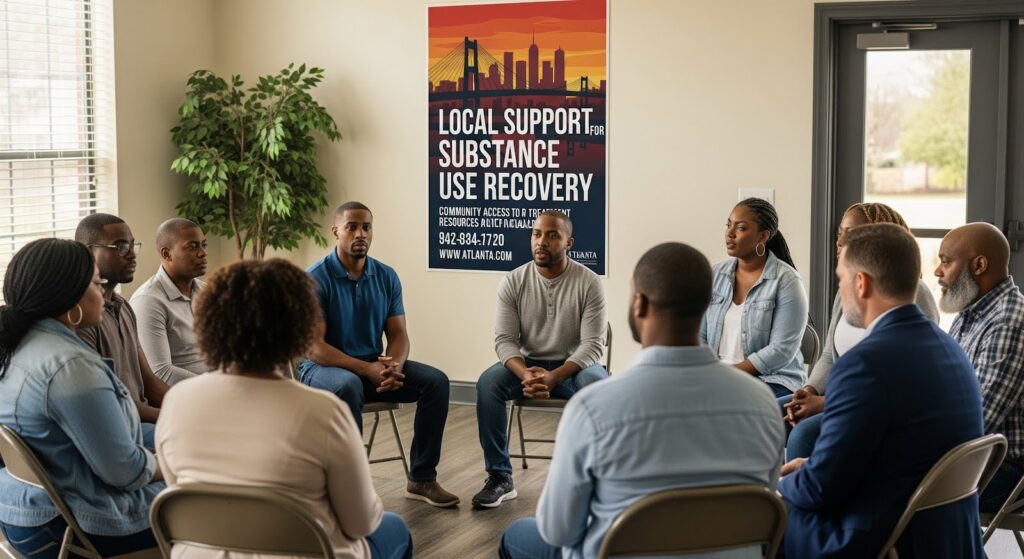
Atlanta benefits from a multi-sector ecosystem spanning safety-net hospitals, federally qualified health centers, private programs, veterans services, and community-based harm reduction organizations. Each plays a distinct role in the continuum from crisis stabilization to long-term recovery support.
Safety Net and Public Systems
Grady Health System anchors safety-net behavioral health services in metro Atlanta. As the region’s flagship public hospital, Grady provides emergency care, inpatient stabilization, and outpatient behavioral health linkages. Scaling contingency management within Grady’s outpatient services would be high leverage for uninsured and Medicaid populations.
Mercy Care operates as a federally qualified health center network delivering integrated primary care and behavioral health to low-income Atlantans. Substance use services include counseling and care coordination, with sliding fee scales addressing affordability barriers.
Georgia’s Department of Behavioral Health and Developmental Disabilities operates the Georgia Crisis and Access Line, a 24/7 entry point for mental health and substance use triage and referrals statewide. The 988 Suicide & Crisis Lifeline connects callers to local crisis centers, relevant for co-occurring psychiatric emergencies and linkage to treatment.
Finding Local Services
SAMHSA’s FindTreatment.gov directory is the most comprehensive national resource for locating nearby programs by level of care, payment options, and populations served. However, the directory does not reliably specify contingency management availability, highlighting a need for better local visibility into evidence-based practice adoption.
Coverage, Financing, and Policy Landscape
Georgia has not implemented full Medicaid expansion under the Affordable Care Act. The state’s Pathways to Coverage program extends Medicaid to some low-income adults with work or engagement requirements, but uptake remains modest. Substantial coverage gaps persist for Atlanta residents who could benefit from cocaine treatment, limiting program revenue and capacity.
Georgia enacted a Mental Health Parity Act in 2022 to strengthen enforcement of equal coverage for mental health and substance use disorder benefits. Effective parity is necessary for adequate networks and reimbursement, yet benefit design details matter. Without explicit contingency management coverage, even parity-compliant plans may not support the most effective therapy.
The Contingency Management Reimbursement Gap
Historically, payers have under-reimbursed or excluded contingency management, limiting adoption despite strong evidence. Some states, including California, have launched Medicaid-funded contingency management pilots and demonstrations. Georgia has not established a statewide contingency management benefit, meaning availability in Atlanta typically depends on research funding, grant projects, or select private programs.
Establishing sustainable Medicaid and commercial reimbursement for contingency management is the single highest-impact policy lever to improve cocaine treatment outcomes in Atlanta. Federal guidance now provides clear pathways, and precedent exists in other states.
Justice and Crisis Pathways
Fulton County operates an Adult Drug Court and related accountability courts linking legal diversion with treatment. These pathways are important for justice-involved individuals who use cocaine, particularly when paired with evidence-based interventions. However, formal linkages to contingency management-capable providers are not yet standardized.
Treatment Access Disparities Across Metro Atlanta
Urban-suburban treatment access disparities Atlanta GA experiences reflect differences in insurance coverage, transportation infrastructure, stigma, and provider distribution. Black communities in Atlanta face disproportionate overdose risk and may encounter barriers rooted in historical mistrust and unequal access to high-quality care. Peer-led, culturally responsive services and harm reduction-first approaches are essential to rebuilding trust and engagement.
Workforce shortages compound disparities. Georgia has widespread Health Professional Shortage Areas for mental health, reducing timely access and forcing long wait times. These shortages particularly impact programs attempting to integrate co-occurring psychiatric and addiction care.
Fragmentation adds navigation complexity. Multiple entry points including emergency departments, primary care clinics, harm reduction sites, and courts operate with varying eligibility criteria and referral processes. Centralized care coordination that includes real-time information on contingency management availability would improve continuity.

Key Barriers to Optimal Cocaine Treatment in Atlanta
| Barrier | Impact | High-Yield Solution |
| Lack of CM reimbursement | Lower retention and abstinence | Medicaid/commercial coverage; technical assistance for fidelity |
| Coverage gaps (non-expansion) | Unaffordable care for low-income adults | Optimize Pathways enrollment; charity care; local grants |
| Workforce shortages | Treatment delays; limited service intensity | Task-shifting; peer workforce; telehealth; digital CM platforms |
| System fragmentation | Drop-offs between harm reduction and treatment | Centralized navigation; warm handoffs; shared care plans |
| Fentanyl contamination | Elevated mortality among cocaine users | Naloxone and test strip saturation; targeted messaging |
The Most Impactful Strategy for 2025
The convergent evidence points to one clear priority. Establishing sustainable reimbursement and quality infrastructure for contingency management across Atlanta safety-net and community providers will produce the greatest improvement in cocaine treatment outcomes. This must be implemented within integrated models that bundle contingency management with cognitive behavioral therapy or Matrix programming, harm reduction saturation including naloxone and fentanyl test strips, co-occurring mental health care, and practical enablers like peer navigation and transportation assistance.
Without contingency management financing, Atlanta will continue to underperform on retention and recovery despite motivated providers and sound clinical infrastructure. Aligning Georgia Medicaid, commercial payers, and county grant programs behind standardized contingency management benefit design, technical assistance, and fidelity monitoring should be the top priority.
Building Better Access Pathways
Concrete improvements include funding peer navigators in harm reduction settings and emergency departments to create warm handoffs to treatment. Integrating accountability courts with contingency management providers through formal contracts would align legal incentives with evidence-based care and reduce recidivism.
Launching contingency management pilots at Grady and Mercy Care using county or state seed grants would demonstrate feasibility in safety-net settings and generate local implementation data. Adopting digital contingency management platforms can reduce staffing burden, enable remote monitoring, and extend reach to people with transportation or childcare barriers.
Establishing a metropolitan network map that layers contingency management-capable sites onto existing directories would improve visibility. This should include eligibility, languages, walk-in hours, and transportation options, updated regularly.
Why Does This Matter for Atlanta Residents?
Cocaine use disorder contributes to emergency department visits, family disruption, employment instability, and preventable overdose deaths in Atlanta. The fentanyl-contaminated drug supply has made cocaine use more dangerous than ever. Yet effective treatments exist and local infrastructure is in place. The missing piece is not knowledge or good intentions. It is financing and policy alignment to deploy the highest-yield therapies at scale.
When Atlanta closes the contingency management reimbursement gap, integrates harm reduction with treatment navigation, and addresses co-occurring needs through coordinated care, outcomes will improve measurably. Retention will increase. Cocaine use will decrease. Overdoses will decline. Families will stabilize. The region has the capacity to deliver on this vision in 2025.
If you or someone you care about is struggling with cocaine use in the Atlanta area, help is available now through Summit’s comprehensive treatment programs that combine evidence-based therapies, holistic support, and individualized care in a compassionate environment designed for lasting recovery.