Are emergency room visits for drug overdoses increasing among women in Atlanta?
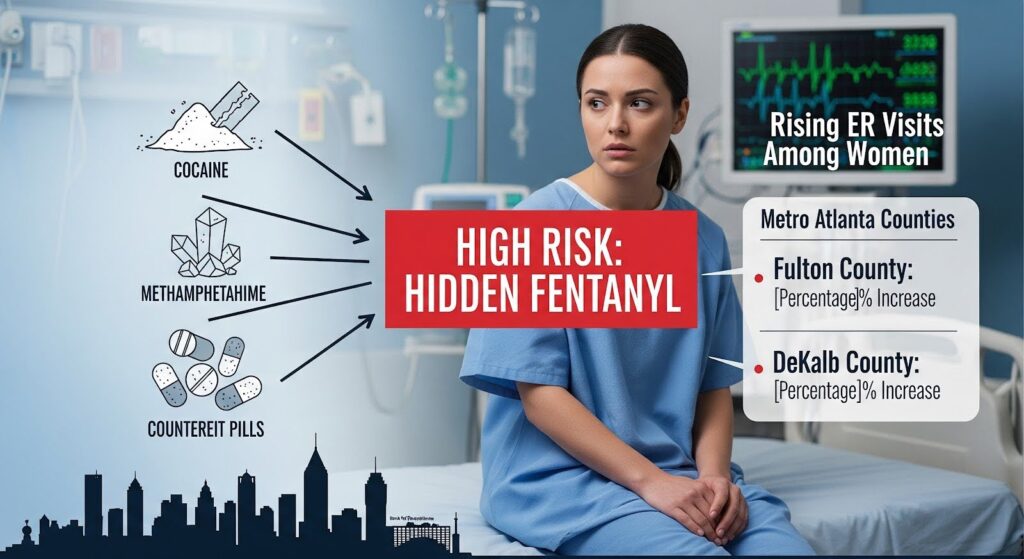
Recent surveillance shows Atlanta women overdose statistics are rising because fentanyl is rapidly contaminating non-opioid drugs like stimulants and counterfeit pills.
This article examines the latest gender-specific data and what it means for local health responses.
Women in the ER for Overdose in Atlanta: The Trends
Public health officials are tracking a shift in who arrives at the emergency department (ED) for drug-related emergencies.
While men historically represent a larger share of total cases, recent data indicates that Women ER overdose data Atlanta are capturing more visits involving polysubstance use.
This rise aligns with national patterns where suspected fentanyl-involved ED visits increased across all demographic groups between 2020 and 2024.
The primary driver is the changing drug supply. In Georgia, fentanyl-involved deaths rose 308 percent from 2019 to 2022.
This surge in mortality has a parallel in nonfatal emergency visits. Women who may not identify as opioid users are unknowingly exposed to fentanyl through other substances.
Local data from Fulton and DeKalb counties suggest that these visits often involve multiple drugs. When a patient arrives with a combination of substances in their system, surveillance systems count the visit in multiple categories.
This means a single emergency event involving cocaine and fentanyl appears in both stimulant and opioid statistics, which can amplify the apparent Atlanta ER overdose data by gender for specific drug classes.
Atlanta Substance Use Trends Women Face Today
The risk environment in metro Atlanta has become more volatile due to adulterated supplies. Understanding these shifts helps explain why more women are seeking emergency care.
Fentanyl in Stimulants and Pills
A major factor driving ED admissions is the presence of illicitly manufactured fentanyl in drugs that are not opioids.
Women who use cocaine or methamphetamine for energy or weight control face a high risk of accidental poisoning.
Reports indicate that fentanyl and cocaine combinations are common in urban counties like Fulton.
Because the body has no tolerance for opioids, even a small amount of fentanyl in a stimulant can cause a life-threatening overdose that requires immediate ER stabilization.
The Benzodiazepine Connection
Women have historically received prescriptions for benzodiazepines at higher rates than men.
While co-prescribing of opioids and sedatives has decreased nationally, the illicit market has filled the gap. Counterfeit pills sold as Xanax or Valium often contain fentanyl.
This creates a dangerous scenario where women believe they are taking a familiar anxiety medication but are actually ingesting a potent synthetic opioid.
Emerging Contaminants
New threats are also appearing in local hospitals. A case series at Grady Memorial Hospital identified patients exposed to drug-laced paper strips from correctional settings.
Additionally, substances like xylazine and nitazenes are complicating treatment because they do not respond to standard reversal drugs like naloxone.
These complex cases often result in longer, more intensive hospital stays.
Interpreting ER Overdose Demographics Data Atlanta
Analyzing the numbers requires looking at how data is collected. Surveillance systems use different methods to count overdoses, which affects how we understand the scope of the problem for women.
Visits Versus Patients
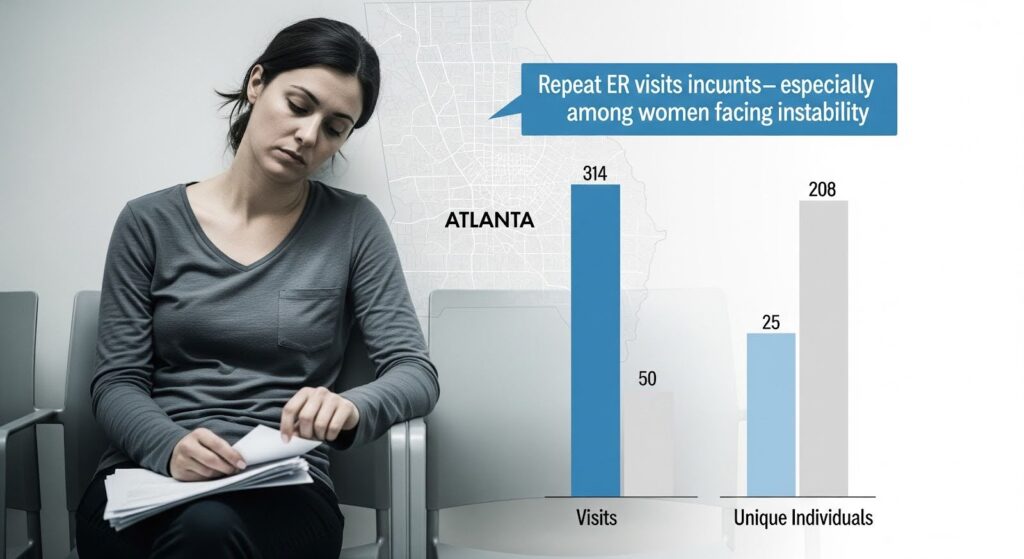
Most ED data tracks “visits” rather than unique individuals. Women facing housing instability, domestic violence, or untreated mental health conditions may visit the ER multiple times in a year.
This repeat usage can drive up the visit count even if the number of individual women overdosing remains steady. This distinction is crucial for targeting social support services effectively.
Social Vulnerability Factors
Geography plays a significant role in these outcomes. Research links higher social vulnerability to increased rates of nonfatal overdose visits.
In Atlanta, neighborhoods with economic barriers often overlap with areas seeing high overdose numbers.
For women in these communities, the lack of access to preventive care and addiction treatment exacerbates the risk of ending up in the emergency room.
Surveillance Systems Overview
Public health leaders use several tools to monitor these trends. The table below outlines the key systems used to track overdose patterns in the region.
Here’s the table formatted cleanly:
| System Name | What It Tracks | Relevance to Women in Atlanta |
| CDC DOSE-SYS | Suspected overdoses in near real-time using ED notes. | Detects sudden spikes in fentanyl visits among women. |
| Georgia OASIS | Finalized hospital discharge data and death records. | Provides confirmed county-level gender statistics. |
| SUDORS | Fatal overdoses with toxicology details. | Reveals polysubstance trends like stimulant co-use. |
| DOSE-DIS | Standardized discharge data with specific drug codes. | Tracks specific drugs like cocaine or meth by sex. |
Improving the Response for Women
Addressing the rise in ER visits requires a strategy that goes beyond traditional opioid controls. Since many women are exposed through stimulants or counterfeit pills, prevention efforts must broaden their focus.
Hospitals are uniquely positioned to intervene during the critical window after an overdose. Evidence suggests that starting medication for opioid use disorder (MOUD) in the ER can reduce mortality risks significantly.
For women, connecting them to care that also addresses mental health and family needs is essential to prevent repeat visits.
Community programs are also adapting. Distributing fentanyl test strips in places women frequent, such as OB/GYN clinics and community centers, can help those who do not identify as drug users check their supplies.
The Fulton County Board of Health has outlined strategic goals to enhance these compassionate, evidence-based interventions.
Why Does It Matter?
The data paints a clear picture: women in Atlanta are increasingly vulnerable to a drug supply that is more toxic and unpredictable than before.
The rise in emergency room visits is a warning sign that fentanyl has permeated non-opioid markets, affecting women who may not perceive themselves as being at risk for opioid overdose.
By understanding these Atlanta substance use trends women are experiencing, the community can push for better access to testing supplies, safer prescribing, and holistic support systems.
If you or a loved one needs support, Summit’s professional addiction treatment can provide the care and safety necessary for recovery.