If you take Xanax and your weight has shifted, you are not imagining things. Alprazolam can push appetite and body weight in both directions depending on dose, duration, and whether you are starting or stopping the drug.
In one controlled study, a single dose boosted daily calorie intake by roughly 975 calories. This article breaks down exactly when Xanax side effects weight loss, when they favor gain, and what you can do about either outcome.
Does Xanax Make You Gain or Lose Weight?
The short, honest answer is both, at different times.
Xanax and weight change follow a pattern tied to three phases of use. During the first days, the drug tends to increase appetite for tasty, calorie dense foods. Over several weeks of steady treatment, clinical trials actually show small average weight loss in many patients. And during tapering or withdrawal, decreased appetite and weight loss become common again.
So does Xanax cause weight gain or loss? It depends on where you are in the treatment timeline, what dose you take, and what else is going on with your health and medications. Let me walk through each phase so the picture gets clearer.
How Xanax Affects Appetite in the Short Term?
The hedonic eating effect
Xanax belongs to the benzodiazepine class. These drugs act on GABA receptors in the brain, and one well documented result is that they amplify how good palatable foods taste. This is not the same as feeling hungry. It is more like turning up the volume on the reward you get from sweet, salty, or rich foods.
This effect has been confirmed across species and in human lab settings. The benzodiazepine blocker flumazenil reverses it, proving the response is tied directly to the drug’s receptor activity rather than some unrelated cause.
A controlled look at calorie intake
In a study of seven healthy men, a single 0.75 mg dose of alprazolam raised total daily calorie intake by about 975 calories over placebo. The extra eating happened mostly in the evening, between 5:00 pm and 11:30 pm. Meal size and the types of food chosen stayed the same. People simply ate more often, especially later in the day.
That evening shift matters. Research on meal timing shows that eating later at night is linked to worse metabolic markers, including higher insulin, glucose, and triglycerides. If Xanax nudges you toward late night snacking, even a modest pattern could affect metabolic health over time.
Early sedation slows you down
Xanax also causes dose related drowsiness and psychomotor slowing. In clinical trials for panic disorder, drowsiness hit 86% of patients on immediate release and 79% on extended release, compared with 49% on placebo. When you are drowsy, you move less. Less movement means fewer calories burned.
Controlled pharmacology studies confirm that sedation peaks on day one and is strongest at higher or less frequent doses. Tolerance to this sedation builds within about four to seven days, so the activity dip is mostly a short lived problem. Still, during those first days, the combination of eating more and moving less tilts the scale toward weight gain.
Xanax Weight Loss in Longer Term Trials
Here is where the story takes a turn that surprises many people. Over six to eight weeks of treatment at the moderate to high doses used in panic disorder studies (around 5 to 6 mg per day), the group average actually showed small but measurable weight loss.
Trial evidence for weight loss
* In a large multicenter trial, patients on alprazolam for eight weeks experienced net weight loss even though some of them reported increased appetite. The paradox of feeling hungrier yet losing weight appeared repeatedly in this dose and duration range.
* A controlled study in agoraphobia with panic disorder found that alprazolam at about 5 mg per day was tied to decreased appetite and weight loss, with a clear dose response relationship: higher doses correlated with greater weight loss over eight weeks.
Why the paradox?
Several things likely explain why does Xanax make you lose weight over weeks even when some patients feel hungrier:
The subgroup reporting increased appetite may be smaller than the subgroup experiencing decreased appetite and weight loss. Sedation tolerance kicks in within a week, restoring normal activity levels. Gastrointestinal side effects at higher doses can reduce net calorie absorption. And as anxiety itself improves, stress related metabolic changes may normalize.
The bottom line for this phase: Xanax weight loss is the more common group level finding in controlled trials lasting six to eight weeks, though individual results vary widely.
Withdrawal, Tapering, and Weight Loss
If you have taken Xanax for more than about four weeks, physical dependence is likely. Stopping or reducing the dose triggers a withdrawal syndrome, and appetite suppression is one of its hallmark features.

What the discontinuation data show?
In alprazolam specific studies, about 35% of patients developed a distinct withdrawal syndrome after short term treatment. Symptoms included decreased appetite and weight loss, peaking near the end of the taper and the first week off the drug, then improving during the second week.
Because alprazolam is short acting, withdrawal symptoms can begin within two to three days of the last dose, faster than with longer acting benzodiazepines. This quick onset can make appetite loss feel sudden and intense.
Tapering safely to protect nutrition
Guidelines from NICE recommend gradual, individualized dose reductions with shared decision making. Abrupt stops raise the risk of severe withdrawal, including seizures, and can worsen appetite suppression.
A recent randomized trial found that a masked taper combined with cognitive behavioral therapy for insomnia (CBT I) improved successful discontinuation rates compared with a standard unmasked taper. Behavioral support during tapering may shorten the window of appetite loss and help people maintain adequate nutrition.
What the FDA Labels Say About Xanax Side Effects Weight Loss and Gain?
Both the immediate release and extended release alprazolam labels list appetite changes (increased or decreased) and weight changes (gain or loss) as recognized adverse reactions. Neither label pins down exact long term frequencies or breaks out metabolic risk by formulation.
In practice, this means the FDA acknowledges that Xanax can move weight in either direction. The label does not tell you which way it will go for you, because the answer depends on dose, duration, your body, and what other medications you take.
Why Your Experience May Differ From Someone Else’s?
| Factor | Pushes Toward Weight Gain | Pushes Toward Weight Loss |
|---|---|---|
| Hedonic appetite boost (early days) | Increased intake of palatable foods | Not applicable in this phase |
| Sedation (days 1 to 7) | Reduced physical activity | Tolerance develops, effect fades |
| Steady state treatment (weeks) | Some patients report increased appetite | Group average shows small weight loss |
| Withdrawal or tapering | Not typical | Decreased appetite, nausea, GI symptoms |
| Co medications (SSRIs, antipsychotics) | Often strong independent weight gain drivers | May mask or override Xanax effects |
| Guideline concordant short use (under 4 weeks) | Limited exposure window | Minimal net change expected |
This table captures why asking “does Xanax make you lose or gain weight” rarely gets a one word answer. The drug’s effects shift across time, and your personal context fills in the rest.
Practical Steps to Manage Weight on Xanax
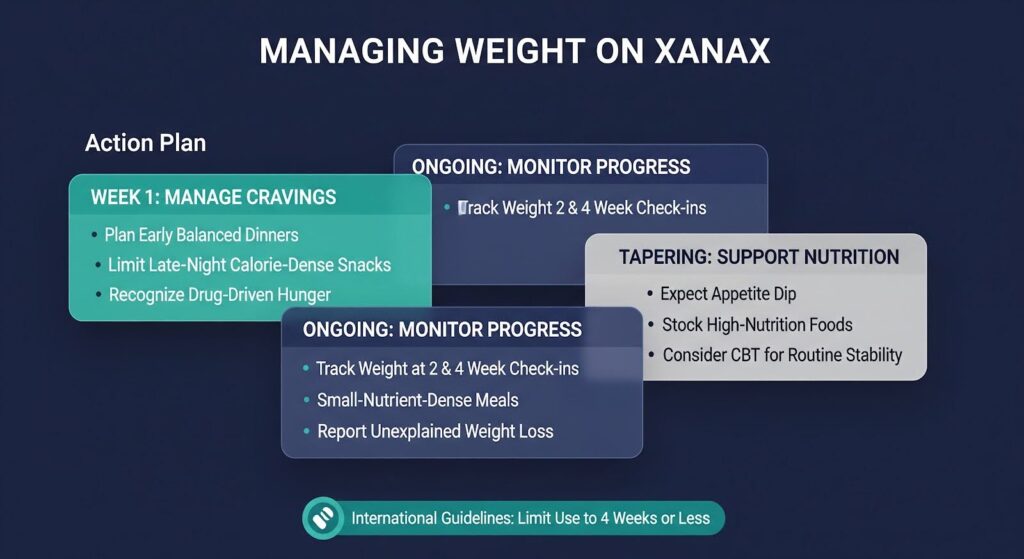
During the first week
Watch for evening cravings. The research points to increased late night eating as the most consistent acute effect. Plan an earlier, balanced dinner and keep calorie dense snacks out of easy reach after a certain hour. This is not about willpower. It is about recognizing a drug driven shift in how food rewards feel.
During ongoing treatment
Track your weight and appetite at two and four week check ins. If you notice unexplained weight loss, especially at higher doses, talk to your prescriber. Small, frequent, nutrient dense meals can help if appetite drops.
During tapering
Expect some appetite dip. Prepare by stocking easy to eat, high nutrition foods. Stay hydrated. If you are tapering from a longer course, ask about behavioral supports like CBT, which can stabilize both anxiety and eating routines during the transition.
Review the bigger picture
Xanax is not meant for long term daily use. International guidelines recommend courses of four weeks or less whenever possible. Shorter courses naturally limit the window for significant weight change in either direction. If anxiety or insomnia needs ongoing treatment, safer first line options with better understood metabolic profiles exist.
Why This Matters Beyond the Scale?
Weight changes on Xanax are more than a cosmetic concern. Unplanned weight loss during withdrawal can signal a rough taper that needs clinical attention. Increased evening eating, even without net weight gain, can quietly worsen metabolic markers. And the confusion people feel when their experience does not match a simple “gain or loss” answer can erode trust in their treatment.
Understanding that Xanax and weight loss or gain are phase dependent, dose dependent, and person dependent puts you back in control of the conversation with your doctor. You can ask the right questions, monitor the right things, and adjust your plan before small shifts become bigger problems.
If you or someone you care about is struggling with benzodiazepine dependence or the anxiety that led to Xanax use in the first place, professional support makes a real difference. Reach out to explore Summit’s evidence based treatment options that address both substance use and mental health together.