Many people wonder whether it’s safe to combine marijuana with Adderall, especially when trying to manage ADHD symptoms or offset stimulant side effects.
The combination produces measurable cardiovascular strain, altered cognitive performance, and unpredictable psychiatric effects rather than a simple “balancing” of stimulant and sedative properties.
This article explains what happens when you mix these substances, who faces the highest risk, and what medical evidence actually says about using weed and Adderall together.
Understanding the Adderall and Marijuana Interaction
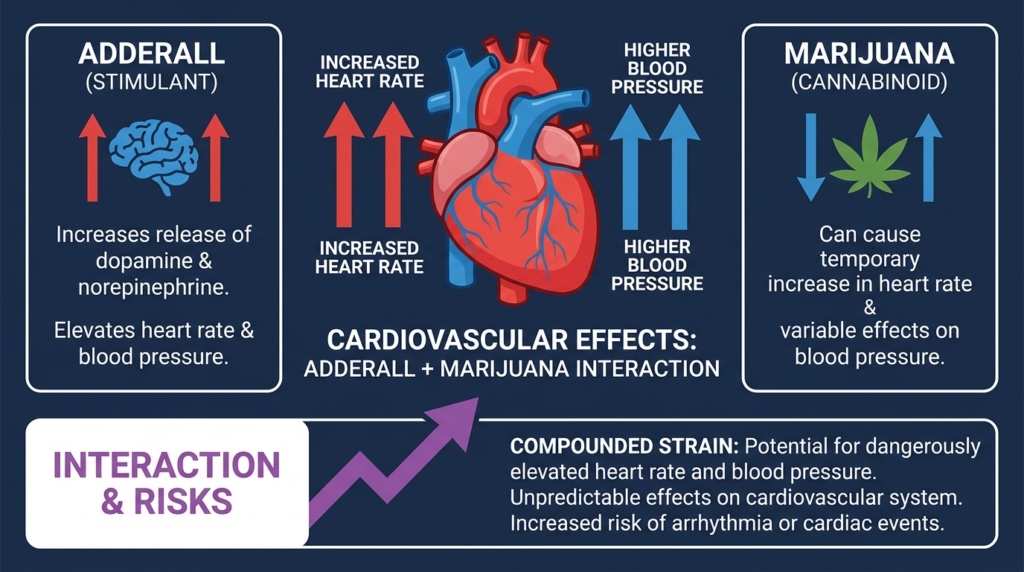
The interaction between Adderall and marijuana is not neutral. A controlled human study examining methylphenidate combined with THC found additive cardiovascular stimulation, meaning both substances increased heart rate and blood pressure together more than either alone.
The study also documented changes in subjective drug responses and performance outcomes, contradicting the popular belief that weed simply softens stimulant effects without consequence.
Adderall contains mixed amphetamine salts that increase dopamine and norepinephrine signaling in the brain. This improves attention and reduces impulsivity in many ADHD patients, but it also raises heart rate, blood pressure, and sympathetic nervous system activity.
Cannabis, particularly high-THC products, can produce its own cardiovascular effects including tachycardia, along with cognitive impairment, anxiety, and altered perception.
When combined, these substances create a pharmacologically active state rather than canceling each other out. The methylphenidate-THC research showed that co-administration produced measurable physiologic and behavioral consequences, suggesting the Adderall and weed interaction likely follows a similar pattern.
Psychosis and Serious Psychiatric Risks
Stimulant-Related Psychosis Risk
Amphetamine-class medications like Adderall carry a small but real risk of psychotic symptoms, particularly at higher doses. A 2024 study found that higher doses of prescription amphetamines were associated with substantially elevated odds of psychosis or mania in people aged 16 to 35, with doses above 30 mg dextroamphetamine equivalents linked to more than a five-fold increase in risk.
Cannabis and Psychotic Symptoms
Cannabis independently carries psychosis-related concerns, especially in younger users and those with personal or family vulnerability to schizophrenia or bipolar disorder. High-THC products appear to pose greater risk than lower-potency cannabis.
Compounded Risk When Combined
When Adderall and marijuana are used together, the psychiatric risk architecture becomes more concerning because:
- Both substances can independently destabilize perception and arousal
- Amphetamines increase dopaminergic signaling, which can trigger psychotic symptoms in vulnerable individuals
- THC can distort perception and increase suspiciousness
- The combined state may be harder for users to interpret correctly, delaying recognition of warning signs
People at highest psychiatric risk include those with:
- Personal or family history of psychosis or schizophrenia
- Bipolar disorder
- Severe anxiety or panic disorder
- Prior stimulant-induced paranoia or hallucinations
- Heavy or high-potency THC use patterns
Who Faces the Highest Risk?
Adolescents and Young Adults
Professional guidance from the Canadian ADHD Resource Alliance specifically cautions people with ADHD against using cannabis recreationally or as treatment for ADHD symptoms, especially those under age 25. This age group faces elevated risk because:
- Brain development continues into the mid-twenties
- ADHD itself increases vulnerability to substance use problems
- College environments often involve sleep deprivation, academic pressure, and polysubstance use
- Stimulant diversion and misuse are common in this population
People With Cardiovascular Conditions
Anyone with hypertension, arrhythmia, structural heart disease, or strong family history of cardiac problems should avoid the combination. The documented additive cardiovascular effects mean co-use likely increases acute strain on the heart and vascular system.
Individuals With Anxiety or Panic Disorders
While some people report that cannabis reduces stimulant-related anxiety, the broader evidence suggests this often reflects self-medication of a treatment problem rather than a validated therapeutic strategy. People with anxiety disorders may experience worsened panic, paranoia, or emotional instability when mixing these substances.
Those Using High Doses or Non-Prescribed Stimulants
Risk escalates sharply when Adderall is used at high doses, obtained without prescription, or combined with other substances. In these contexts, the distinction between medication interaction and polysubstance misuse disappears, and the potential for serious harm increases substantially.
Cannabis as ADHD Treatment: What the Evidence Shows?
Lack of Clinical Support
Despite widespread use, cannabis is not an evidence-based ADHD treatment. The Canadian ADHD Resource Alliance states that research on cannabis and ADHD is sparse, but existing evidence is sufficient to caution against using cannabis recreationally or therapeutically for ADHD symptoms.
A review of ADHD and cannabis notes that available studies suggest cannabis may worsen ADHD symptoms or have no effect at all, and that cannabis commonly impairs attention, inhibition, memory, and motivation, the very domains ADHD treatment aims to improve.
Why Do People Believe It Helps?
Many individuals with ADHD report subjective benefits from cannabis use, including:
- Feeling calmer or less restless
- Reduced irritability
- Improved sleep
- Less anxiety about tasks
- Ability to use lower stimulant doses
These experiences are real to users, but they do not constitute evidence of therapeutic efficacy. The anxiety and cannabis literature suggests much of the perceived benefit reflects self-medication of untreated or undertreated symptoms rather than validated treatment effects.
The Self-Medication Problem
When someone feels they “need” cannabis to tolerate Adderall or manage ADHD symptoms, the appropriate clinical response is not to endorse the combination but to reassess:
- Whether the stimulant dose is appropriate
- Whether the formulation or timing needs adjustment
- Whether comorbid anxiety, sleep, or mood disorders require treatment
- Whether non-stimulant ADHD medications might be better tolerated
- Whether behavioral interventions are being adequately utilized
Physical Effects of Mixing Adderall and Weed
Cardiovascular Strain and Heart Rate Changes
The most evidence-supported physical concern involves cardiovascular stress. Cannabis itself has documented cardiovascular effects, and when added to a sympathomimetic stimulant like Adderall, the combination likely increases acute cardiovascular burden in many users.
People mixing these substances may experience:
- Rapid or irregular heartbeat
- Elevated blood pressure
- Chest discomfort or palpitations
- Increased sweating
- Tremulousness or shakiness
- Dizziness or lightheadedness
These symptoms become particularly concerning in individuals who already notice cardiovascular side effects from Adderall alone, those using high-THC cannabis products, or anyone with underlying heart conditions.
The additive cardiovascular stimulation documented in controlled research means the combination creates more physiologic stress than either substance individually.
Other Physical Side Effects
Beyond cardiovascular effects, the combination commonly produces:
- Dry mouth and increased thirst
- Appetite suppression or unusual eating patterns
- Sleep disruption or insomnia
- Restlessness and inability to sit still
- Headaches
- Nausea or gastrointestinal discomfort
The severity and specific pattern of physical effects vary based on dose, timing, individual sensitivity, and whether other substances like caffeine or nicotine are also involved.
Psychological and Cognitive Effects
Anxiety, Paranoia, and Panic Reactions
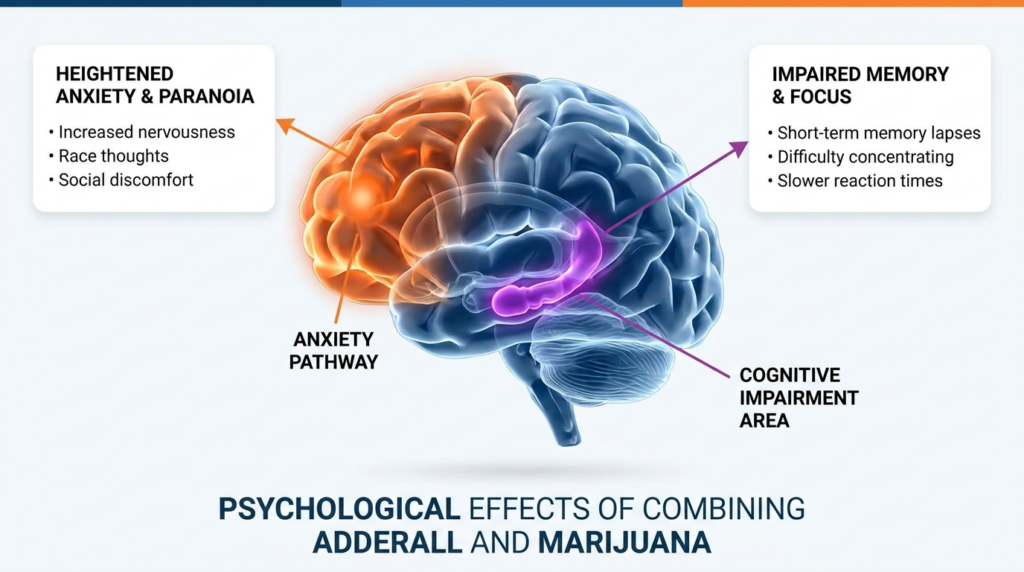
One of the most common psychological effects of mixing Adderall and weed involves heightened anxiety. A critical review of cannabis and anxiety found that anxious individuals are more likely to use cannabis to cope, but the association appears driven by self-medication rather than therapeutic benefit.
When combined with Adderall’s stimulant effects, cannabis can amplify rather than reduce anxiety in many users. The combination may trigger:
- Intense anxiety or panic attacks
- Paranoid thoughts or suspiciousness
- Racing thoughts that feel uncontrollable
- Emotional instability or mood swings
- Irritability and agitation
- Feelings of derealization or depersonalization
These psychological effects are especially pronounced in people with underlying anxiety disorders, those using high doses of either substance, or individuals in stressful environments like college campuses.
Cognitive Performance and Executive Function
Many people assume cannabis helps them focus or complements Adderall’s cognitive benefits. The evidence does not support this. Cannabis is known to impair attention, working memory, and cognitive flexibility, the same executive functions that Adderall is prescribed to improve.
Research on ADHD and cannabis use found that ADHD itself was associated with worse verbal memory, processing speed, decision-making, working memory, and response inhibition.
While that specific study did not find cannabis adding measurable impairment beyond ADHD-related deficits, it certainly did not show benefit. The controlled methylphenidate-THC study documented performance effects from the combination, indicating that co-use changes cognitive function in ways users may not accurately perceive.
People taking Adderall to improve academic or work performance may find that adding cannabis:
- Reduces sustained attention despite subjective feelings of calm
- Impairs memory consolidation and learning
- Slows information processing
- Weakens impulse control and decision-making
- Creates a false sense of productivity
The disconnect between feeling calmer and actually performing better is a critical problem. Cannabis may reduce the mental friction or anxiety someone feels while working, but that does not mean their objective output improves.
What Doctors and Clinical Guidelines Say?
Professional Guidance Position
Medical guidance consistently advises caution rather than endorsement. The Canadian ADHD Resource Alliance explicitly recommends against cannabis use for ADHD, particularly in people under 25.
Clinical reviews emphasize that cannabis is not FDA-approved for psychiatric conditions and that high-quality evidence for ADHD, anxiety, and sleep uses remains limited or absent.
Clinical Management Approach
When doctors encounter patients using both substances, evidence-based practice involves:
- Asking openly about frequency, route, and reasons for cannabis use
- Assessing for cannabis use disorder and other substance problems
- Reviewing stimulant dose, formulation, and timing
- Screening for anxiety, sleep disorders, and psychiatric symptoms
- Monitoring blood pressure, pulse, and cardiovascular side effects
- Considering long-acting scheduled stimulant dosing rather than as-needed use
- Discussing safer alternatives for managing side effects or comorbid symptoms
A pilot trial of Adderall in adults with comorbid ADHD and cannabis use disorder found that supervised stimulant treatment was tolerable and significantly reduced weekly cannabis use days compared to placebo.
This suggests that properly managed ADHD treatment in cannabis-using patients is not automatically contraindicated, but it occurred in a tightly controlled clinical context with careful screening and monitoring, not in recreational co-use settings.
Harm Reduction When Co-Use Continues
If a patient continues using both substances despite counseling, doctors may still offer harm-reduction guidance:
- Avoid high-THC products
- Do not escalate Adderall dose without medical supervision
- Avoid combining with alcohol or other stimulants
- Monitor for chest pain, palpitations, or psychiatric symptoms
- Seek urgent care for severe reactions
- Reconsider whether cannabis is truly helping or creating new problems
This pragmatic approach acknowledges reality without endorsing unsafe practices.
Substance Use Disorder and Dependency Risk
ADHD and Elevated Substance Vulnerability
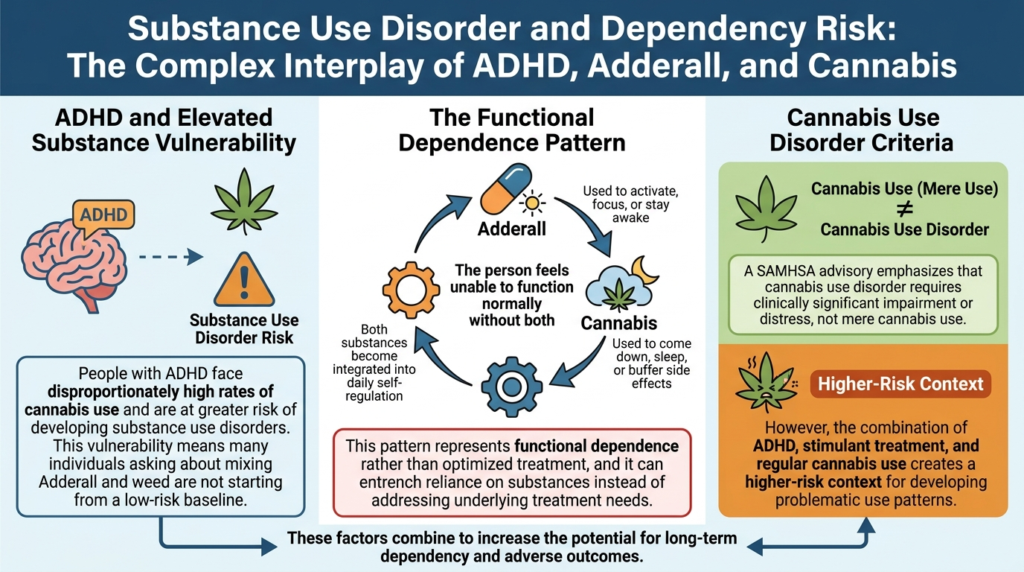
People with ADHD face disproportionately high rates of cannabis use and are at greater risk of developing substance use disorders. This vulnerability means many individuals asking about mixing Adderall and weed are not starting from a low-risk baseline.
The Functional Dependence Pattern
A concerning pattern can develop where:
- Adderall is used to activate, focus, or stay awake
- Cannabis is used to come down, sleep, or buffer side effects
- Both substances become integrated into daily self-regulation
- The person feels unable to function normally without both
This pattern represents functional dependence rather than optimized treatment, and it can entrench reliance on substances instead of addressing underlying treatment needs.
Cannabis Use Disorder Criteria
It is important to distinguish between cannabis use and cannabis use disorder. A SAMHSA advisory emphasizes that cannabis use disorder requires clinically significant impairment or distress, not mere cannabis use.
However, the combination of ADHD, stimulant treatment, and regular cannabis use creates a higher-risk context for developing problematic use patterns.
Safer Alternatives for Managing Stimulant Side Effects
Medication Adjustments
Rather than adding cannabis to manage Adderall side effects, evidence-based alternatives include:
- Switching to a different stimulant formulation or dose
- Trying extended-release rather than immediate-release versions
- Adjusting timing to reduce sleep interference
- Considering non-stimulant ADHD medications like atomoxetine or viloxazine
Behavioral and Lifestyle Interventions
Many stimulant side effects respond to non-pharmacologic strategies:
- Structured sleep hygiene practices
- Regular exercise and physical activity
- Mindfulness or relaxation techniques
- Cognitive-behavioral therapy for anxiety
- Nutritional support for appetite suppression
- Scheduled breaks and stress management
Treating Comorbid Conditions
If anxiety, insomnia, or mood problems are driving cannabis use, appropriate treatment might include:
- Evidence-based psychotherapy
- Non-addictive anxiety medications if indicated
- Sleep disorder evaluation and treatment
- Addressing underlying trauma or emotional dysregulation
Practical Scenarios and Clinical Responses
“I Only Use Weed at Night Because Adderall Keeps Me Awake”
This common pattern may indicate stimulant dose too high, dose taken too late in the day, wrong formulation, caffeine interaction, or inadequate sleep hygiene. The better medical response involves adjusting ADHD treatment rather than normalizing cannabis as a nightly counterweight.
“Weed Helps My Anxiety From Adderall”
This may reflect stimulant overactivation, an untreated anxiety disorder, or reinforcement of a coping habit. The anxiety-cannabis literature supports a self-medication framework here rather than therapeutic synergy.
“I Smoke on Weekends Only and Take My Prescribed Dose”
Risk may be lower than with daily heavy use, but the interaction remains plausible. Clinicians should still ask about pulse, palpitations, panic, paranoia, driving safety, and cognitive effects.
“I Use High-Dose Adderall to Study and Weed to Come Down”
This represents a high-risk pattern associated with sleep deprivation, psychiatric destabilization, tolerance cycles, and possible dose escalation. This pattern should be treated as clinically unsafe.
Summary of Key Risks
| Risk Domain | Evidence Level | Clinical Significance |
|---|---|---|
| Cardiovascular strain | Strong (controlled human study) | Additive heart rate and blood pressure effects documented |
| Cognitive impairment | Moderate to strong | Cannabis impairs domains Adderall aims to improve |
| Anxiety/panic | Moderate | Self-medication pattern common; may worsen in vulnerable users |
| Psychosis risk | Moderate | Both substances carry independent risk; compounded in vulnerable individuals |
| Substance dependence | Strong (observational) | ADHD populations have elevated vulnerability |
| Treatment interference | Moderate | Cannabis may undermine ADHD treatment goals |
The Bottom Line on Mixing Adderall and Weed
The available evidence does not support mixing Adderall and marijuana as a safe or effective strategy. The combination produces measurable cardiovascular effects, can impair the cognitive functions Adderall is meant to improve, and increases psychiatric risk in vulnerable individuals. While some people report subjective benefits like reduced anxiety or improved sleep, these experiences often reflect self-medication of treatment problems rather than validated therapeutic synergy.
Professional guidance advises against using cannabis recreationally or therapeutically for ADHD, especially in people under 25. The strongest direct interaction evidence shows additive cardiovascular stimulation and altered performance outcomes rather than a simple balancing of effects. People with anxiety, cardiovascular conditions, psychosis vulnerability, or those using high stimulant doses face particularly elevated risk.
If you are taking Adderall and considering cannabis use, or if you are already combining these substances, the appropriate step is honest discussion with your healthcare provider. Many perceived benefits of the combination can be better addressed through medication adjustments, treatment of comorbid conditions, or evidence-based behavioral interventions.
If you or someone you care about is struggling with substance use alongside ADHD or mental health challenges, our professional support can help. Reach out to The Summit Wellness Group and explore our evidence-based treatment options that address both conditions safely and effectively.