Mixing kratom and weed is increasingly common among people seeking pain relief, mood enhancement, or self-treatment of substance use disorders, yet this combination carries serious and poorly understood risks.
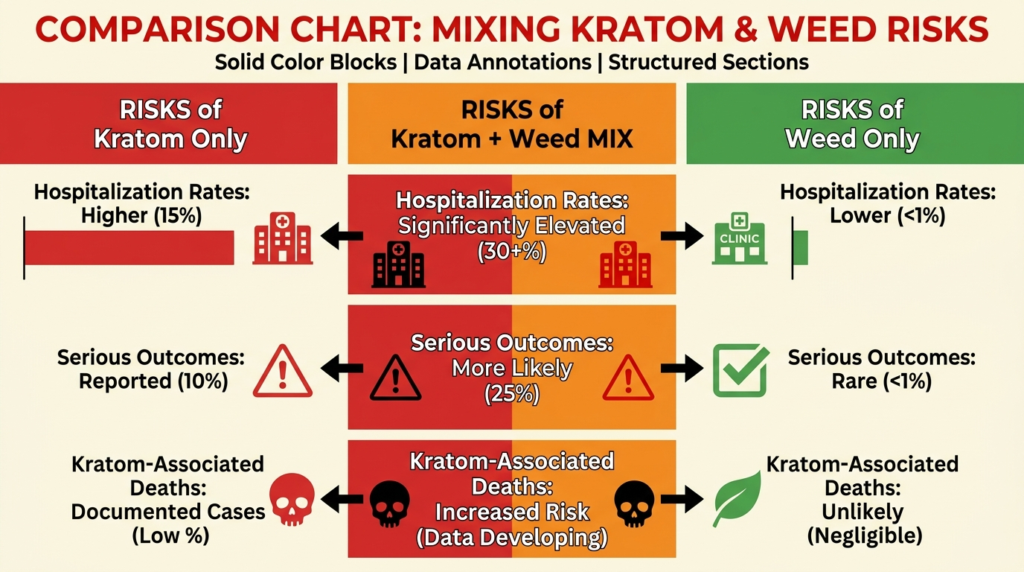
Recent U.S. surveillance data show that kratom-related poison center reports involving multiple substances produce substantially worse outcomes than single-substance exposures, with hospitalization rates of 44–56% annually compared to 24–29% for kratom alone, and multiple-substance exposures accounting for 79% of kratom-associated deaths during 2015–2025.
This article explains what happens when you combine these substances, who is most at risk, and what the evidence says about safety.
What Kratom and Weed Are and Why People Mix Them?
Kratom is a psychoactive botanical derived from *Mitragyna speciosa*, a Southeast Asian tree whose leaves contain alkaloids that interact with opioid receptors.
In the United States, kratom is sold as powders, capsules, tablets, gummies, shots, and increasingly as high-potency extracts enriched with 7-hydroxymitragynine, a potent opioid-receptor agonist. Kratom produces dose-dependent effects: stimulation at low doses and opioid-like sedation and analgesia at higher doses.
Cannabis, commonly called weed or marijuana, contains psychoactive compounds including THC and CBD that interact with the endocannabinoid system. Cannabis is widely used for pain relief, anxiety reduction, sleep, and recreation.
People mix kratom and weed for several reasons. A 2022 review of U.S. kratom epidemiology found that 48.4% of current users named pain relief as their primary reason for use, and most rated kratom as very helpful for pain.
Other common motivations include management of anxiety, depression, and self-treatment of opioid withdrawal. Cannabis is often used for similar reasons, making the combination appealing to people seeking enhanced symptom relief or polysubstance self-medication.
However, the appeal of combining these substances does not translate to safety. Both kratom and cannabis affect the central nervous system, and their interaction is poorly studied in humans.
The Kratom and Weed Interaction: What the Evidence Shows?
The pharmacologic interaction between kratom and weed has not been rigorously studied in controlled human trials. What is known comes primarily from surveillance data, case reports, and the broader toxicology of polysubstance use.
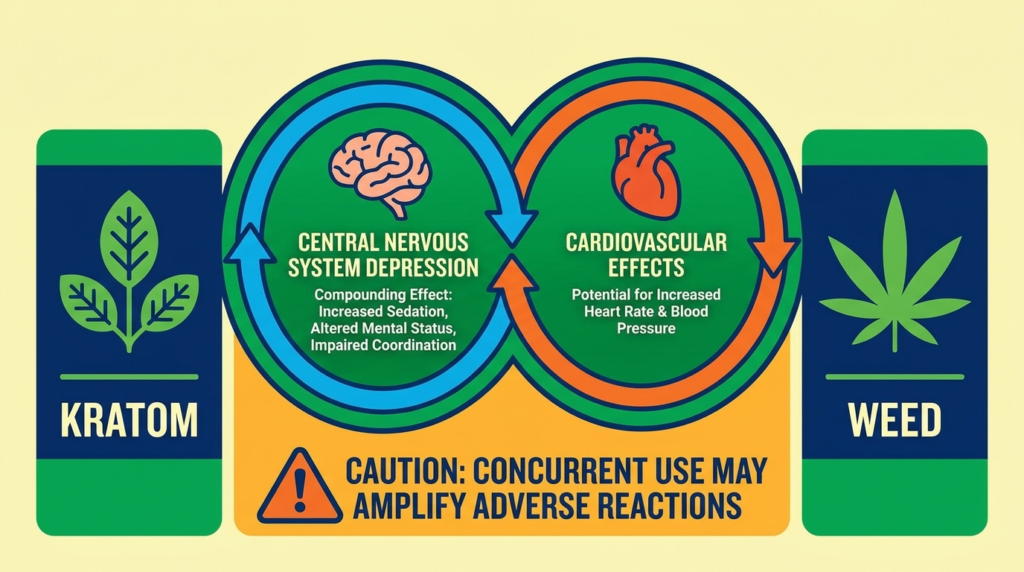
Central Nervous System Depression
Both substances can produce sedation, altered mental status, and impaired coordination, especially at higher doses. Kratom’s opioid-like effects at higher doses include respiratory depression, sedation, and altered consciousness.
Cannabis can produce sedation, cognitive impairment, and in some users, anxiety or paranoia. When combined, these effects may be additive or synergistic, increasing the risk of excessive sedation, impaired judgment, and accidents.
Cardiovascular and Psychiatric Effects
Kratom has been associated with cardiovascular effects including tachycardia and hypertension in some users. Cannabis can also affect heart rate and blood pressure.
A 2024 clinical pharmacology review noted that kratom users report drug interaction concerns through CYP3A4 and CYP2D6 inhibition, which may alter the metabolism of other substances, including cannabinoids and any medications the person is taking.
Psychiatric effects are another concern. A 2024 systematic review identified 10 cases in which kratom use was associated with mania and psychosis, most involving individuals with preexisting psychiatric conditions.
Cannabis is also known to trigger or worsen psychosis, anxiety, and paranoia in vulnerable individuals. Mixing the two may compound these risks, especially in people with underlying mental health disorders.
Lack of Standardization and Unpredictable Potency
One of the most dangerous aspects of mixing kratom and weed is product variability. Kratom products vary widely in alkaloid content due to seasonal, geographic, and manufacturing differences.
The CDC’s 2026 poison center analysis explicitly noted concern over products enriched with isolated alkaloids, particularly 7-hydroxymitragynine, which have raised safety concerns significant enough to prompt FDA calls for regulatory action. Cannabis products also vary in THC and CBD content, especially in unregulated markets.
This means that even if someone has mixed kratom and weed before without obvious harm, the next use could involve a much more potent product, leading to unpredictable and potentially dangerous effects.
Can Kratom and Weed Cause Overdose?
Yes, mixing kratom and weed can contribute to overdose, especially when combined with other substances. While cannabis alone rarely causes fatal overdose, kratom can produce life-threatening toxicity, and the combination increases risk.
Evidence From Poison Center Surveillance
The most authoritative recent data come from the CDC’s analysis of National Poison Data System reports from 2015 to 2025. The findings are stark:
- Kratom-related poison center reports increased from 258 in 2015 to 3,434 in 2025, roughly a 1,200% increase.
- Multiple-substance exposures accounted for 38% of reports but produced much worse outcomes.
- Hospitalization rates for multiple-substance exposures were 44–56% annually, compared to 24–29% for single-substance exposures.
- Serious outcomes occurred in 57–66% of multiple-substance cases versus 41–49% of single-substance cases.
- Multiple substances were involved in 79% of kratom-associated deaths during the study period.
Among fatalities, opioids were reported in 62%, followed by benzodiazepines (20%), stimulants (20%), and ethanol (19%). While cannabis was not broken out separately in this report, the pattern is clear: polysubstance use dramatically worsens outcomes.
Kratom Overdose Can Mimic Opioid Overdose
A 2023 case report described kratom toxicity that closely resembled opioid overdose, including unresponsiveness, apnea, cyanosis, constricted pupils, and initial response to naloxone plus airway support.
The authors warned of rebound hypoxia 12–24 hours after ingestion, even after initial improvement, emphasizing that patients with significant toxicity should be observed during this high-risk period rather than discharged after brief improvement.
This means that even if someone appears to recover after mixing kratom and weed, delayed worsening is possible, especially if high doses or potent products were involved.
Cannabis May Mask or Complicate Recognition of Kratom Toxicity
Cannabis intoxication can produce altered mental status, tachycardia, anxiety, and sedation. These effects may overlap with or obscure the signs of kratom toxicity, delaying recognition and treatment.
Additionally, standard hospital drug screens may fail to detect kratom, even when the clinical presentation is opioid-like, further complicating diagnosis.
Who is Most at Risk When Mixing Weed and Kratom?
Not everyone who mixes kratom and weed will experience severe harm, but certain populations face substantially elevated risk.
People With Opioid Use Disorder
The most concerning recent evidence comes from a 2026 analysis of U.S. National Survey on Drug Use and Health data from 2021–2023. The study found that serious mental illness increased most sharply among adults with co-occurring opioid use disorder and kratom use.
Predicted serious mental illness prevalence in this subgroup rose from 20% in 2021 to 50% in 2023, while comparison groups remained relatively stable.
This suggests that kratom may not merely mark generalized psychiatric risk but may amplify psychiatric burden in the context of opioid use disorder.
People with OUD who also use cannabis face compounded risk, especially if they are self-treating withdrawal, using multiple substances, or have unstable psychiatric symptoms.
People With Mental Health Disorders
Kratom use is concentrated among people with elevated mental health burden. A 2026 NSDUH analysis found that past-year kratom prevalence exceeded 2% among adults reporting serious psychological distress or major depressive episode, much higher than the general population prevalence of 0.68%.
An estimated 37.8% of those with prior-to-past-year kratom use experienced serious psychological distress.
Cannabis use is also common among people with anxiety, depression, PTSD, and other mental health conditions. Mixing the two in this population may worsen psychiatric symptoms, trigger psychosis or mania, or interfere with psychiatric medications.
People Using Other Substances
A 2022 NSDUH analysis found that alcohol use disorder was positively associated with kratom use, with relative risk ratios of approximately 2.04, 2.25, and 1.88 across mild, moderate, and severe AUD categories. Illicit drug use disorder other than marijuana showed especially strong associations, including a relative risk ratio of 5.48 for past-30-day kratom use.
People who mix kratom and weed are often using other substances as well, including alcohol, opioids, benzodiazepines, and stimulants. This polysubstance pattern is the dominant driver of severe outcomes in kratom-related poison center reports.
People Using High-Potency or Adulterated Products
The U.S. kratom market has evolved toward high-potency extracts and alkaloid-enriched formulations. The CDC’s 2026 report specifically noted concern over products enriched with 7-hydroxymitragynine, which have raised safety concerns significant enough to prompt FDA calls for regulatory action.
Product contamination and adulteration are also major hazards. A 2024 public health review highlighted that the most serious risks of life-threatening illness and overdose death may involve co-ingested drugs, contaminants such as salmonella, and adulterants such as opioids including fentanyl and methamphetamine.
Cannabis products, especially those from unregulated sources, may also be contaminated or adulterated. Mixing two poorly standardized products compounds unpredictability and risk.
Practical Risks of Mixing Weed and Kratom
Impaired Driving and Accidents
Both kratom and cannabis impair coordination, reaction time, and judgment. Mixing them increases the risk of motor vehicle accidents, falls, and other injuries.
A 2016 CDC warning advised that both the public and health care providers should be aware that kratom can lead to severe adverse effects, especially when consumed in combination with alcohol or other drugs.
Dependence and Withdrawal
Kratom can produce dependence and withdrawal, with symptoms commonly resembling opioid withdrawal: irritability, anxiety, restlessness, insomnia, cravings, sweating, nausea, diarrhea, and muscle aches.
Cannabis can also produce dependence, though withdrawal is generally milder. People who use both substances regularly may face compounded withdrawal symptoms if they stop, making cessation more difficult.
Drug Interactions With Medications
Kratom alkaloids may inhibit CYP3A4 and CYP2D6, creating potential interactions with a broad range of medications. A 2020 study predicted clinically relevant interaction potential, especially with CYP3A substrates.
Cannabis also interacts with some medications. People taking psychiatric medications, pain medications, or other CYP-metabolized drugs face elevated risk when mixing kratom and weed.
Delayed Medical Care
People who use kratom and weed for self-treatment of pain, anxiety, or substance use disorders may delay seeking evidence-based medical care.
This can worsen underlying conditions, increase the risk of complications, and lead to more severe outcomes when toxicity or psychiatric crisis eventually occurs.
What to Do if You or Someone Else Has Mixed Kratom and Weed?
Recognize Warning Signs
Seek emergency care immediately if you or someone else experiences:
- Slow, shallow, or stopped breathing
- Inability to wake up or extreme sedation
- Blue lips or skin
- Severe confusion or agitation
- Seizures
- Chest pain or irregular heartbeat
- Severe paranoia or psychosis
Naloxone May Help
Case evidence indicates naloxone can reverse kratom-associated respiratory depression and altered mental status in presentations resembling opioid toxidrome.
If someone is unresponsive or has stopped breathing after using kratom, administer naloxone if available and call 911 immediately. Continue rescue breathing and CPR as needed until help arrives.
Do Not Assume Improvement Means Safety
A 2023 case report emphasized that patients with significant kratom toxicity should be observed for 12–24 hours because of the risk of rebound hypoxia, even after initial improvement with naloxone and supportive care.
Do not leave someone alone after they appear to recover, and do not discharge yourself from medical care without clinician approval.
Be Honest With Medical Providers
Standard drug screens may not detect kratom or may not distinguish cannabis from other substances. Tell emergency and medical providers exactly what was used, including product type, dose, timing, and any other substances involved.
This information is critical for appropriate treatment and may be lifesaving.
Can Mixing Kratom and Weed Ever Be Safe?
The evidence does not support a clear answer to this question because the interaction has not been studied in controlled human trials. However, several points are clear:
- Mixing kratom and weed increases risk compared to using either substance alone.
- The risk is highest in people with opioid use disorder, mental health disorders, polysubstance use, or exposure to high-potency or adulterated products.
- Even people who have mixed these substances before without obvious harm may experience severe toxicity with a different product batch or dose.
- The U.S. kratom market is poorly regulated, highly variable, and increasingly dominated by high-potency extracts that differ substantially from traditional leaf products.
A 2024 review concluded that kratom has plausible harm-reduction potential in some contexts but emphasized that the evidence base remains too limited and heterogeneous to support clinical recommendation. The same review noted that real-world U.S. harms are often tied to polysubstance use, product quality failures, and vulnerable populations.
My evidence-based opinion is that the current U.S. retail environment does not support safe or predictable use of kratom, especially in combination with other psychoactive substances.
The strongest current evidence suggests that kratom functions primarily as a risk amplifier in already vulnerable populations, not as a validated harm-reduction tool.
Safer Alternatives to Mixing Kratom and Weed
If you are using kratom and weed to manage pain, anxiety, depression, or substance use disorders, safer and more effective options exist.
For Pain
- Consult a pain management specialist about evidence-based treatments including physical therapy, non-opioid medications, and when appropriate, carefully managed opioid therapy.
- Explore integrative approaches such as acupuncture, massage, and cognitive-behavioral therapy for chronic pain.
For Anxiety and Depression
- Seek evaluation and treatment from a mental health professional. Evidence-based therapies such as cognitive-behavioral therapy, dialectical behavior therapy, and medications such as SSRIs or SNRIs are more effective and safer than self-treatment with kratom and cannabis.
For Opioid Use Disorder
- Evidence-based treatments including buprenorphine, methadone, and naltrexone are the gold standard for opioid use disorder. These medications are proven to reduce overdose risk, improve quality of life, and support long-term recovery.
- Do not substitute kratom for evidence-based OUD treatment. The current evidence does not support this approach and suggests compounded psychiatric risk in people with OUD who use kratom.
For Substance Use Disorders Involving Cannabis or Polysubstance Use
- Seek evaluation at an addiction treatment center that offers integrated care for substance use and mental health disorders.
- Programs that offer medical detox, dual diagnosis treatment, and evidence-based therapies provide safer and more effective pathways to recovery than self-directed polysubstance use.
Key Takeaways on Kratom and Weed Interaction
- Mixing kratom and weed increases risk of sedation, impaired judgment, psychiatric destabilization, and overdose, especially when combined with other substances.
- Multiple-substance kratom exposures produce substantially worse outcomes than single-substance exposures, with higher hospitalization rates, more serious outcomes, and 79% of kratom-associated deaths involving multiple substances.
- People with opioid use disorder, mental health disorders, or polysubstance use face the highest risk when mixing kratom and weed.
- Kratom overdose can resemble opioid overdose and may respond to naloxone, but delayed worsening is possible 12–24 hours after ingestion.
- Product variability, high-potency extracts, and contamination or adulteration make the kratom and weed interaction unpredictable and potentially dangerous.
- Safer, evidence-based alternatives exist for pain, anxiety, depression, and substance use disorders.
Why Does This Matter Now?
Kratom use remains relatively uncommon in the general U.S. population, but it is concentrated among people with elevated behavioral health risk.
A 2026 NSDUH analysis found that serious mental illness increased most sharply among adults with concurrent opioid use disorder and kratom use, with predicted prevalence rising from 20% in 2021 to 50% in 2023. This pattern suggests that kratom is not merely a marker of risk but may amplify psychiatric burden in vulnerable populations.
At the same time, kratom-related poison center reports increased roughly 1,200% from 2015 to 2025, with multiple-substance exposures driving the worst outcomes. The U.S. kratom market has evolved toward high-potency extracts and poorly regulated products, increasing unpredictability and harm.
Cannabis use is widespread and often perceived as low-risk. However, when combined with kratom in the context of opioid use disorder, mental health disorders, or polysubstance use, the interaction can produce severe and potentially life-threatening outcomes.
The evidence does not support the claim that mixing kratom and weed is uniformly dangerous for all users, but it strongly supports the conclusion that this combination is a serious risk amplifier in already vulnerable populations.
The safest approach is to avoid mixing these substances, seek evidence-based care for underlying conditions, and recognize that self-treatment with poorly regulated products is not a substitute for professional medical and psychiatric care.
If you or someone you care about is struggling with substance use, chronic pain, or mental health challenges, reach out for The Summit Wellness Group’s treatment that can address both addiction and psychiatric needs in an integrated, compassionate setting.