Mixing Ambien and cocaine creates a dangerous pharmacological state that goes far beyond simple sedative-stimulant opposition.
When you combine these substances, you’re not just layering two drugs, you’re triggering unpredictable cardiovascular, neurological, and behavioral risks that can turn fatal.
Recent emergency department data show that stimulant-sedative co-use is strongly linked to cardiac arrest, behavioral disturbance, and self-harm presentations, with outcomes that standard toxicology screens often fail to predict.
This article explains what happens when Ambien meets cocaine in your system, why the interaction is more hazardous than either drug alone, and what the medical evidence reveals about protecting yourself or someone you care about.
What Happens When You Mix Ambien and Cocaine?
Ambien (zolpidem) is a non-benzodiazepine hypnotic prescribed for insomnia. It works by enhancing GABA activity in the brain, which normally promotes sleep and reduces neural excitation.
Cocaine is a powerful stimulant that blocks the reuptake of dopamine, norepinephrine, and serotonin, flooding your brain with excitatory signals that drive euphoria, alertness, and cardiovascular activation.
When these two drugs are used together, the result is not a simple cancellation of effects. Instead, you create a pharmacologically unstable state where your brain and cardiovascular system are simultaneously pushed in opposite directions. Cocaine drives your heart rate up, constricts blood vessels, and increases blood pressure.
Ambien, especially at higher doses, can produce paradoxical effects including disinhibition, amnesia, and in some cases, unexpected stimulation rather than sedation.
A case report documented in PubMed described a 30-year-old man who used Ambien to manage cocaine cravings. After taking cocaine and escalating to 300 mg per day of zolpidem, he became euphoric and hyperactive.
The authors suggested that at high doses, zolpidem may stimulate dopaminergic reward pathways similar to cocaine, creating a dangerous amplification rather than suppression of stimulant effects.
This is not an isolated phenomenon. Research on zolpidem misuse shows that high doses can produce psychostimulant-like effects including well-being, euphoria, energy, alertness, and talkativeness, directly contradicting the drug’s intended sedative purpose.
Cardiovascular Dangers of Cocaine and Ambien Interactions
Cocaine alone is a well-established cardiovascular toxin. It suppresses heart muscle contractility, reduces coronary blood flow, increases heart rate and blood pressure, and blocks cardiac sodium and potassium channels. These effects create a dangerous substrate for myocardial ischemia, heart attack, arrhythmias, and sudden death.
Adding Ambien to this mix does not neutralize these risks. In fact, the combination may worsen cardiovascular instability through several mechanisms. Cocaine-related emergency presentations frequently involve chest pain, palpitations, and hypertension.
In a Swiss emergency department case series of 165 blood-confirmed acute cocaine intoxications, the most common symptoms were chest pain, palpitations, anxiety, restlessness, and psychotic symptoms, with 64% involving psychiatric manifestations.
When sedatives like Ambien are introduced, they can mask warning symptoms without addressing underlying cardiac toxicity. You might feel less anxious or agitated, but your heart is still under severe stress.
Worse, Ambien’s effects on consciousness and memory can prevent you from recognizing or responding to cardiac warning signs like chest pain or shortness of breath.
Recent emergency department polydrug-use data found a significant association between benzodiazepine-type sedatives and cocaine use, with co-users predominantly male, aged 40 to 49, and presenting with self-harm or behavioral disturbance in nearly 20% of cases.
This pattern suggests that stimulant-sedative combinations create a distinct clinical risk profile characterized by psychiatric and behavioral instability, not just cardiovascular symptoms.
Ambien and Cocaine: Neurological and Behavioral Risks
One of the most underappreciated dangers of mixing Ambien and cocaine is the neurological and behavioral chaos that can result. Ambien is notorious for causing complex sleep behaviors, including sleepwalking, sleep-driving, sleep-eating, and amnesia. These effects are dose-dependent and more likely in people with substance use histories.
When you add cocaine to the equation, you introduce a drug that causes agitation, paranoia, psychosis, and seizures. The combination can produce a state of profound disinhibition where you engage in dangerous behaviors with little memory or awareness.
A comprehensive review of zolpidem misuse documented cases of bizarre behavior, psychomotor agitation, hallucinations, and even psychotic symptoms associated with high-dose zolpidem use.
Cocaine itself is a known seizure trigger. It lowers the seizure threshold through multiple mechanisms, including sodium channel blockade and excessive stimulation of excitatory neurotransmitter systems.
While benzodiazepines are used medically to treat cocaine-related seizures, Ambien is not a benzodiazepine and does not have the same anticonvulsant properties. There is no evidence that Ambien protects against cocaine-induced seizures, and the combination may actually increase neurological risk through unpredictable interactions.
The psychiatric burden is equally serious. Cocaine intoxication commonly produces anxiety, panic, paranoia, and psychotic symptoms.
Ambien, particularly at high doses or in vulnerable individuals, can cause confusion, hallucinations, and paradoxical agitation. When these effects overlap, the result can be a psychiatric emergency requiring restraint, sedation, and intensive monitoring.
Can You Mix Ambien and Cocaine Safely?
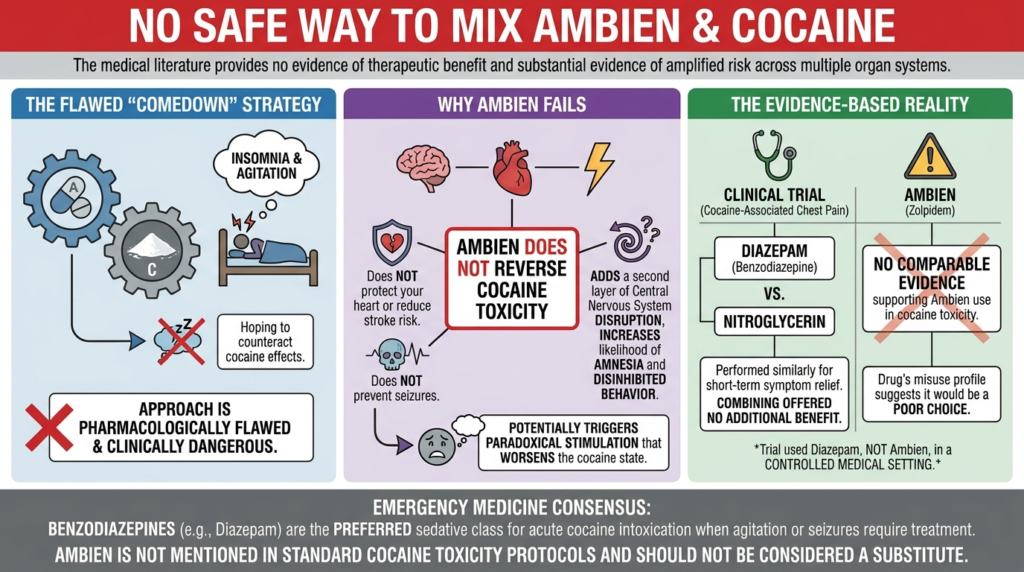
No. There is no safe way to mix Ambien and cocaine. The medical literature provides no evidence that combining these drugs offers any therapeutic benefit, and substantial evidence that it amplifies risk across multiple organ systems.
Some people use Ambien as a “comedown” strategy after cocaine, hoping to counteract insomnia and agitation. This approach is pharmacologically flawed and clinically dangerous.
Ambien does not reverse cocaine toxicity. It does not protect your heart, reduce stroke risk, or prevent seizures. What it does is add a second layer of central nervous system disruption, increase the likelihood of amnesia and disinhibited behavior, and potentially trigger paradoxical stimulation that worsens rather than calms the cocaine state.
A randomized trial of sedatives in cocaine-associated chest pain found that diazepam, a benzodiazepine, performed similarly to nitroglycerin for short-term symptom relief, but combining the two offered no additional benefit.
Importantly, this trial used diazepam, not Ambien, and was conducted in a controlled medical setting. There is no comparable evidence supporting Ambien use in cocaine toxicity, and the drug’s misuse profile suggests it would be a poor choice.
The emergency medicine literature is clear: benzodiazepines like diazepam are the preferred sedative class for acute cocaine intoxication when agitation or seizures require treatment. Ambien is not mentioned in standard cocaine toxicity protocols and should not be considered a substitute.
Why Ambien is Especially Risky With Cocaine?
Ambien’s pharmacology makes it particularly hazardous in the context of cocaine use. Unlike benzodiazepines, which broadly modulate GABA-A receptor subtypes across the brain, Ambien preferentially targets alpha-1-containing GABA-A receptors. This selectivity gives it strong hypnotic effects but weaker anxiolytic and anticonvulsant properties.
Research on GABA-A receptor subtypes shows that zolpidem selectively inhibits high-frequency neuronal firing via alpha-1 receptors in the cortex, which contributes to sleep induction.
However, this receptor profile does not effectively modulate the mesolimbic reward circuitry that drives cocaine’s reinforcing effects. In contrast, benzodiazepines like diazepam engage alpha-2-containing receptors in the nucleus accumbens, a brain region central to reward and motivation.
Animal studies provide additional insight. In a rat conditioned place preference study, diazepam pretreatment prevented cocaine-induced place preference, suggesting it interfered with cocaine’s rewarding effects.
Zolpidem, however, failed to block cocaine place preference in the same experimental design. This finding suggests that Ambien does not meaningfully counteract cocaine’s motivational or rewarding properties, undermining the rationale for using it as a comedown aid.
More concerning, Ambien itself has documented abuse liability. A case report of zolpidem dependence in a patient with prior polysubstance abuse emphasized that the drug’s abuse potential should not be underestimated.
Broader reviews confirm increasing evidence of Ambien misuse, dependence, and withdrawal across case reports and pharmacovigilance databases.
What the Research Shows About Sedative-Stimulant Combinations?
The broader scientific literature on sedative-stimulant combinations reveals a consistent pattern: these mixtures do not simply balance each other out.
Instead, they create a distinct toxicological and behavioral syndrome characterized by unpredictability, increased emergency presentations, and elevated mortality risk.
A systematic review of alcohol and cocaine co-use found that simultaneous use increased cardiovascular mortality despite inconsistent findings for symptom severity.
The key mechanism was formation of cocaethylene, a metabolite produced only when alcohol and cocaine are present together. Cocaethylene is a more potent blocker of cardiac sodium and potassium channels than cocaine alone and was associated with an 18- to 25-fold higher risk of sudden death.
While Ambien does not form a unique metabolite with cocaine the way alcohol does, the principle is the same: combining a sedative with cocaine shifts the risk profile toward catastrophic outcomes, especially sudden death and cardiac arrest, even when initial symptoms do not appear dramatically worse.
Emergency department data support this interpretation. In a 2023 cohort study of overdose patients, those with cocaethylene exposure had a cardiac arrest rate of 6.1% compared to 0.67% in cocaine-only patients, despite lower initial troponin levels.
This finding suggests that sedative-stimulant combinations increase the risk of lethal rhythm disturbances and acute instability without necessarily producing proportionally greater biomarker evidence of heart muscle damage.
The clinical implication is clear: you cannot judge the danger of mixing Ambien and cocaine by how you feel in the moment. The most serious risks, cardiac arrest, arrhythmia, sudden death, can occur without dramatic warning symptoms.
Ambien and Cocaine Interactions: What Happens in Your Brain?
Understanding what happens in your brain when you mix Ambien and cocaine requires looking beyond simple “upper versus downer” logic. Cocaine floods your brain with dopamine, norepinephrine, and serotonin by blocking their reuptake. This creates intense euphoria, alertness, and motivation, but also anxiety, paranoia, and cardiovascular stress.
Ambien enhances the activity of GABA, the brain’s primary inhibitory neurotransmitter. In theory, this should calm neural activity and promote sleep. In practice, especially at higher doses or in people with substance use histories, Ambien can produce paradoxical effects.
These include disinhibition, amnesia, complex behaviors performed without conscious awareness, and in some cases, stimulant-like activation.
The case report of cocaine and zolpidem co-use suggested that high-dose zolpidem may stimulate dopaminergic reward pathways, potentially amplifying rather than counteracting cocaine’s effects.
This is consistent with broader evidence that Ambien’s effects on consciousness, memory, and behavior are not simply dose-dependent sedation but involve complex interactions with reward, arousal, and executive control systems.
Animal research adds mechanistic depth. Studies of cocaine reward in dopamine-deficient mice show that cocaine can still produce conditioned place preference through serotonergic mechanisms when dopamine is absent.
This means cocaine’s rewarding and motivational effects are distributed across multiple neurotransmitter systems, not just dopamine. A drug like Ambien, which primarily targets GABA-A receptors, is unlikely to comprehensively suppress these diverse pathways.
The result is a brain state characterized by conflicting signals: excitation and inhibition, reward and sedation, arousal and amnesia. This neurochemical chaos translates into unpredictable behavior, impaired judgment, and increased risk of accidents, violence, and self-harm.
Medical Treatment for Ambien and Cocaine Toxicity
If you or someone you know has mixed Ambien and cocaine and is experiencing symptoms, seek emergency medical care immediately. Do not wait to see if symptoms improve on their own. The most dangerous complications, cardiac arrest, seizures, stroke, can develop rapidly and require immediate intervention.
In the emergency department, treatment for cocaine toxicity focuses on supportive care and symptom management. Standard protocols include benzodiazepines like diazepam or lorazepam for agitation, anxiety, and seizures. These drugs reduce central sympathetic outflow and help control dangerous elevations in heart rate and blood pressure.
Importantly, Ambien is not used in this setting. The preferred sedatives are benzodiazepines because they have broader anxiolytic, anticonvulsant, and muscle-relaxant properties. Ambien’s narrower receptor profile and potential for paradoxical effects make it unsuitable for acute cocaine toxicity management.
For chest pain or suspected cardiac ischemia, treatment may include nitroglycerin, aspirin, and close cardiac monitoring. The randomized trial of diazepam versus nitroglycerin in cocaine-associated chest pain found that both agents provided similar short-term relief, but combining them offered no additional benefit. This suggests that symptom-directed therapy is reasonable, but there is no magic antidote for cocaine cardiotoxicity.
If Ambien toxicity is also present, supportive care includes airway protection, monitoring for respiratory depression, and management of any complex behaviors or agitation.
Flumazenil, a benzodiazepine receptor antagonist, is generally not used for Ambien overdose because it can precipitate seizures and does not reliably reverse zolpidem’s effects.
The most important clinical point is that mixing Ambien and cocaine complicates treatment. It creates a polydrug toxicity syndrome that requires careful assessment, extended monitoring, and often psychiatric consultation.
The Swiss case series found that 64% of acute cocaine intoxications involved psychiatric symptoms, and many required psychiatric referral. When sedatives are added to the mix, the psychiatric and behavioral burden often increases.
Long-Term Risks of Combining Ambien and Cocaine
Beyond the immediate dangers of acute toxicity, regularly mixing Ambien and cocaine carries serious long-term health risks.
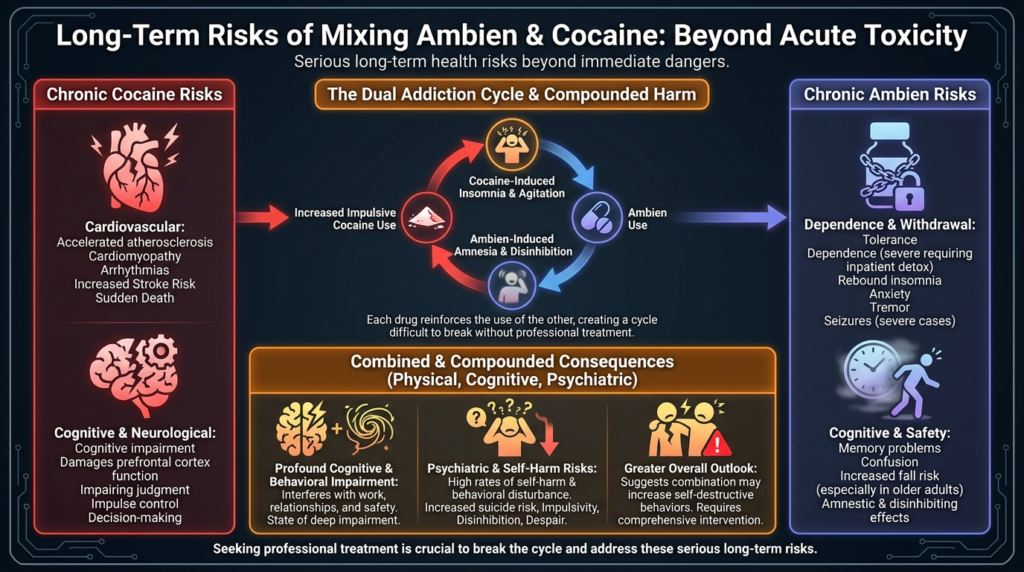
Chronic cocaine use is associated with accelerated atherosclerosis, cardiomyopathy, arrhythmias, cognitive impairment, and increased risk of stroke and sudden death. Adding Ambien to this pattern introduces additional layers of harm.
Chronic Ambien use, especially at high doses, can lead to tolerance, dependence, and withdrawal. The comprehensive review of zolpidem misuse documented cases of severe dependence requiring inpatient detoxification. Withdrawal symptoms can include rebound insomnia, anxiety, tremor, and in severe cases, seizures.
When Ambien dependence develops in the context of cocaine use, you face a dual addiction problem. Each drug reinforces the use of the other: cocaine creates insomnia and agitation that seem to demand a sedative, while Ambien’s amnestic and disinhibiting effects may increase impulsive cocaine use. This cycle is difficult to break without professional treatment.
The cognitive and psychiatric consequences are equally serious. Chronic cocaine use damages prefrontal cortex function, impairing judgment, impulse control, and decision-making.
Chronic Ambien use is associated with memory problems, confusion, and increased fall risk, especially in older adults. Together, these drugs can produce a state of profound cognitive and behavioral impairment that interferes with work, relationships, and safety.
The emergency department polydrug-use study found that stimulant-sedative co-users had high rates of self-harm and behavioral disturbance presentations.
This suggests that the combination may increase suicide risk and other self-destructive behaviors, possibly through a combination of impulsivity, disinhibition, and despair.
Safer Alternatives to Mixing Ambien and Cocaine
If you are using Ambien to manage cocaine-related insomnia or agitation, there are safer and more effective approaches. The first and most important step is to stop using cocaine. No sleep aid or sedative can adequately compensate for the damage cocaine inflicts on your brain and body.
If you are struggling with cocaine use and need help, evidence-based addiction treatment is available. Programs that combine behavioral therapy, medical support, and holistic care offer the best chance for lasting recovery.
Cognitive behavioral therapy, motivational enhancement, and contingency management have all shown effectiveness for cocaine use disorder.
For insomnia related to cocaine withdrawal or early recovery, non-pharmacological approaches should be tried first. These include sleep hygiene education, cognitive behavioral therapy for insomnia, relaxation training, and exercise.
If medication is needed, options like trazodone or certain antidepressants may be safer than Ambien, though any medication decision should be made with a physician who understands your substance use history.
Benzodiazepines are sometimes used in early cocaine withdrawal to manage anxiety and insomnia, but they carry their own addiction risk and should be used cautiously and for limited periods.
Ambien should generally be avoided in people with active or recent cocaine use because of its abuse liability, paradoxical effects, and lack of evidence for benefit in this population.
The most effective long-term solution is comprehensive addiction treatment that addresses the underlying drivers of cocaine use, builds coping skills, and provides ongoing support.
This is not a quick fix, but it is the only approach with strong evidence for sustained recovery.
When to Seek Help for Cocaine and Ambien Use?
If you are mixing Ambien and cocaine, or using either drug in ways that concern you, it is time to seek professional help. Warning signs that you need immediate support include:
- Using Ambien at doses higher than prescribed or without a prescription
- Taking Ambien specifically to manage cocaine comedown effects
- Experiencing blackouts, memory gaps, or engaging in behaviors you don’t remember
- Feeling unable to sleep or function without one or both drugs
- Continuing to use despite negative consequences to your health, relationships, or work
- Experiencing chest pain, heart palpitations, or other cardiac symptoms
- Having thoughts of self-harm or suicide
Emergency warning signs that require immediate medical attention include:
- Chest pain or pressure
- Severe headache or confusion
- Seizures or loss of consciousness
- Difficulty breathing
- Extreme agitation or psychosis
- Suicidal thoughts or behavior
Even if you are not experiencing acute symptoms, regular use of cocaine and Ambien together is a serious health risk that warrants professional evaluation. Addiction medicine specialists, psychiatrists, and addiction counselors can provide confidential assessment and connect you with appropriate treatment.
Many people delay seeking help because of shame, fear of judgment, or concern about the cost or time commitment of treatment. These are understandable feelings, but they should not prevent you from getting the care you need. Addiction is a medical condition, not a moral failing, and effective treatment is available.
Contact Summit to Get Help With Ambien and Cocaine Addiction
Mixing Ambien and cocaine is dangerous, unpredictable, and medically unjustified. The combination does not safely counteract the effects of either drug.
Instead, it creates a high-risk state characterized by cardiovascular instability, neurological chaos, behavioral disinhibition, and increased likelihood of catastrophic outcomes including cardiac arrest and sudden death.
Ambien is not a treatment for cocaine toxicity and should not be used as a comedown strategy. The medical literature provides no evidence of benefit and substantial evidence of harm.
If you are using cocaine and struggling with insomnia or agitation, the solution is not to add another dangerous drug to the mix. The solution is to stop using cocaine and seek evidence-based treatment for addiction.
If you or someone you care about is caught in the cycle of stimulant-sedative co-use, our professional help is available. Our comprehensive addiction treatment can address both the cocaine use and any co-occurring sleep or mental health issues in a safe, supportive environment.
You don’t have to go through this alone! Reach out to The Summit Wellness Group and learn about our addiction treatment program that understands the complexities of polysubstance use and can provide the individualized care you need to build a healthier, safer future.