You reach for a drink to calm your nerves, and for a little while it works. Here is the hard part: people who drink to self-medicate anxiety have roughly six times higher odds of developing alcohol dependence, based on a large U.S. population study. This article explains how anxiety and alcohol feed each other, why relief backfires the next morning, and when it is time to get help.
Anxiety and Alcohol: Why the Relief Never Lasts
Alcohol can quiet anxiety at first because it boosts a calming brain chemical called GABA. A clinical review notes that acute alcohol has an anxiolytic effect partly by increasing GABA activity. That is why one drink can feel like a switch turning off worry.
But the effect is short. Alcohol wears off over a few hours, and your brain pushes back. The same systems that produced calm swing toward overexcitement. That rebound is why anxiety often feels worse the morning after.
I think this is the piece most people miss. The drink that helped last night is part of why you feel wired, shaky, and full of dread today.
The Morning After: Alcohol and Anxiety Effects Explained
Morning anxiety after drinking is not one thing. It stacks several problems on top of each other.
Withdrawal timing matters here. The NHS says alcohol withdrawal symptoms can start 6 to 12 hours after your last drink, and they include anxiety, poor sleep, nausea, sweating, and tremor. If you drank at night, you may wake up right inside that window.
Common morning-after symptoms include:
- racing thoughts and restlessness
- trembling and sweating
- a rapid heartbeat
- nausea and poor sleep
- irritability or panic-like feelings
- guilt, dread, or shame
There is also a mental layer. You may replay the night, worry about what you said, or feel embarrassed. Fragmented memory, dehydration, and physical arousal all make those thoughts louder. The trap is that this morning anxiety becomes a reason to drink again.
Does Alcohol Relieve Stress and Anxiety?
Short-term, yes. Long-term, no. That gap is the whole problem.
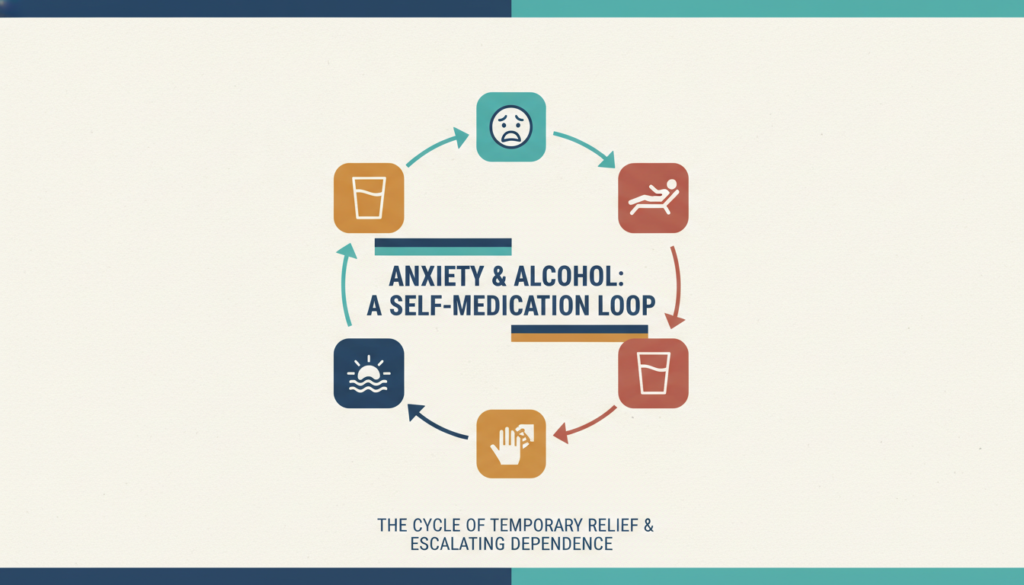
Drinking alcohol and anxiety relief work through negative reinforcement. Alcohol removes an unpleasant feeling fast, so your brain learns a simple rule: when I feel anxious, alcohol works. Each drink seems to prove the point because relief comes within minutes.
Here is the catch. That relief is evidence your body now depends on alcohol to regulate mood, not evidence that alcohol treats the anxiety underneath. Over time the relief gets shorter and the rebound gets harsher.
Alcohol can also block recovery in a quieter way. Smith and Randall note that drinking during stress may interfere with the extinction learning you need to adapt to fear. A socially anxious person who always drinks before events never learns they can handle those events sober.
Social Anxiety and Alcohol: A Common Starting Point
Social anxiety and alcohol often go together because a couple of drinks can make you feel more talkative and less watched. That early relief feels like a solution.
The pattern tends to tighten. Two drinks stop working, so it takes four. You avoid sober gatherings, so your confidence never grows. Eventually you cannot picture attending anything without a drink first. The anxiety disorder subtype matters too. In one national survey, social phobia and specific phobia more often came before alcohol dependence, while panic and generalized anxiety more often appeared after heavy drinking started.
How Anxiety and Alcohol Use Tighten Over Weeks
The loop rarely explodes overnight. It builds.
In the first week, drinking follows stress or precedes social events, and it seems optional. By the second week, rebound anxiety and poor sleep raise your baseline distress, so the next drink feels more justified. Now alcohol is partly treating a problem it helped create.
By week three, tolerance can set in. The DSM-5-TR lists tolerance as one of its criteria, meaning you need more alcohol for the same calm. Drinking starts earlier, drinks get stronger, and alcohol slips into your sleep routine.
Around week four and beyond, some people start drinking to relieve morning tremor, nausea, or anxiety. That crosses into a more dangerous zone. The NHS warns that stopping suddenly can be dangerous for dependent drinkers, and severe withdrawal needs urgent care.
Anxiety and Alcohol Withdrawal: A Warning Sign
Drinking in the morning to feel normal is one of the clearest red flags. It suggests alcohol is no longer a nighttime sedative but a fix for your body’s alcohol-offset state.
The table below shows how alcohol use and anxiety move through phases.
| Phase | Main driver | Typical signs |
| Self-medication | Anxiety relief | Drinking before events or to sleep |
| Rebound | Morning anxiety | Hangxiety, poor sleep, shame |
| Tolerance | Reduced effect | More drinks for the same calm |
| Withdrawal relief | Drinking to feel normal | Morning drinking, tremor relief |
| Impairment | Alcohol priority | Missed duties, conflict, risky use |
| Entrenched loop | Compulsion | Failed cut-downs, cravings, harm |
If reducing alcohol brings on anxiety, tremor, insomnia, or nausea, treat that as a signal, not a personal failing.
Anxiety Meds and Alcohol: The Risks You Cannot Ignore
Mixing anxiety medication and alcohol depends heavily on the drug class. This is where “just one drink” advice gets dangerous.
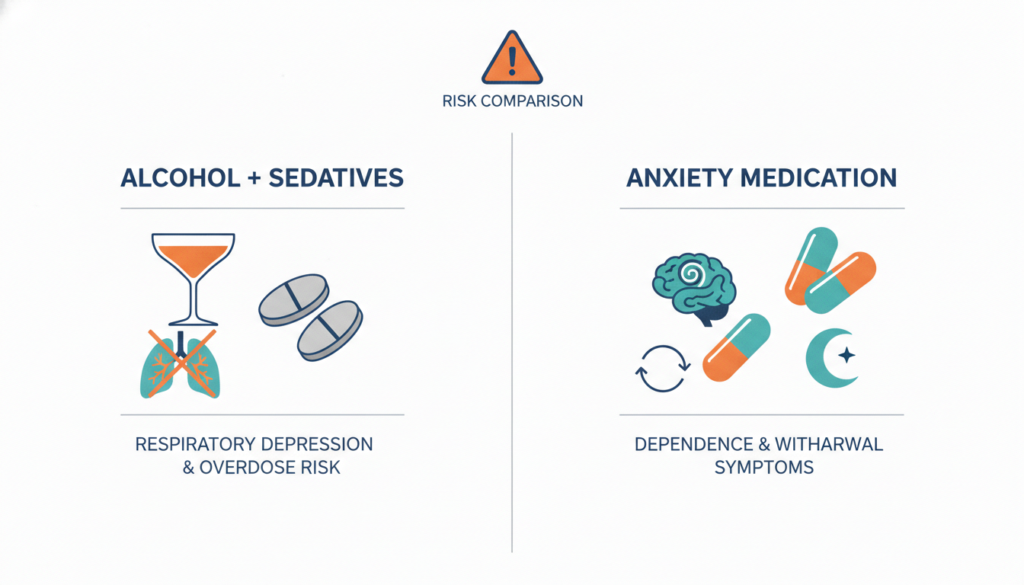
Benzodiazepines like alprazolam, lorazepam, and diazepam are the biggest concern. Both alcohol and benzodiazepines depress the central nervous system, and the NIAAA warns they can have synergistic effects on breathing. StatPearls notes that benzodiazepines alone rarely cause major toxicity, but adding ethanol can produce serious respiratory depression and airway problems.
There is no reliable safe threshold here. The dose that harms breathing depends on your weight, age, tolerance, and other sedatives, so alcohol should be avoided with benzodiazepines, not just limited.
SSRIs and SNRIs, such as sertraline or venlafaxine, carry lower acute danger because they are not primarily sedatives. Still, alcohol and anxiety meds in this class do not mix well long-term. Alcohol can worsen mood and sleep, and one review cautioned that SSRIs may increase drinking in some actively drinking patients. Always talk to your prescriber rather than guessing.
When Alcohol Use and Anxiety Need Real Treatment
Self-medication becomes a disorder when alcohol shifts from a choice to a need. The DSM-5-TR defines alcohol use disorder by counting symptoms over 12 months, where 2 to 3 symptoms is mild, 4 to 5 is moderate, and 6 or more is severe.
Watch for these signals:
- drinking more or longer than you meant to
- failed attempts to cut down
- strong cravings
- needing alcohol to face ordinary situations
- drinking despite worsening anxiety or sleep
The severity of these findings is real. A clinical review found alcohol dependence reached 34.5% among anxious people who self-medicated, compared with 9.3% among those who did not.
Why It Matters
Treating only one side of this problem usually fails. If you fix the drinking but ignore the anxiety, anxiety drives relapse. If you treat the anxiety but keep drinking heavily, alcohol undermines the treatment through poor sleep, avoidance, and withdrawal.
The NIAAA is direct on this: treatment works best when both conditions are addressed. The safest path is to stabilize drinking first, reassess anxiety after a few weeks, then treat alcohol use and anxiety together with therapy and medication when needed.
Rebound anxiety after drinking is not just a rough hangover. It is an early sign that a loop is forming, and catching it early gives you the best chance to break it.
If anxiety and alcohol have become tangled in your life, you do not have to sort it out alone. Reach out for dual diagnosis treatment and start on a plan that treats both at once.