Mixing DXM and alcohol can turn a night out into a medical emergency faster than most people expect. Both drugs slow the brain and breathing, and together they can cause vomiting while unconscious, dangerously slow breathing, seizures, and death, which is why the U.S. sees about 6,000 emergency visits a year tied to DXM misuse. This article explains the real dangers, the warning signs, and exactly what to do.
What Happens When You Mix DXM and Alcohol
Dextromethorphan, or DXM, is a cough suppressant found in more than 120 over-the-counter cold products. Alcohol is a central nervous system depressant. Both slow down the parts of your brain that control consciousness, breathing, and reflexes. So can you mix DXM and alcohol safely? The honest answer is no. The combination is not just two sedatives stacked together. It creates an unstable state where sedation, vomiting, and slowed breathing collide with dissociation, hallucinations, and heart rhythm problems.
At normal doses, DXM is safe. MedlinePlus warns that taking large amounts can cause serious harm or death. When you add alcohol, the risk climbs. Alcohol suppresses the gag reflex and slows breathing. DXM can add its own respiratory depression, seizures, and serotonin toxicity. The result is a body that struggles to protect its own airway and keep breathing.
DXM and Alcohol Interaction Dangers You Should Know
The most direct problem is overlapping brain depression. Alcohol reduces consciousness, breathing, and temperature control. DXM overdose can cause drowsiness, coma, and slowed breathing. Put together, they reinforce each other.
Poison Control describes DXM misuse as intentional use above recommended doses to reach altered perception and hallucinations, while noting severe toxicity such as slow breathing, fast heart rate, high blood pressure, psychosis, seizures, coma, and death. Alcohol adds its own overdose risk. The NIAAA lists confusion, trouble staying conscious, vomiting, seizures, slow or irregular breathing, clammy skin, an absent gag reflex, and low body temperature as overdose signs.
Here is what makes the mix so unpredictable.
- Alcohol slows breathing. DXM toxicity can cause slowed breathing that may progress to apnea.
- Alcohol removes the gag reflex. DXM can cause coma or deep sedation. Vomit can then enter the lungs.
- Both cause vomiting, and a sedated person who vomits is at high risk of choking.
- DXM can add agitation, hallucinations, high fever, and racing heart rate, which pull the body in the opposite direction of alcohol sedation.
- Alcohol levels can keep rising after the last drink, so a person who looks asleep may still be getting worse.
Alcohol and DXM Can Hide Each Other
The combined state is misleading. Someone may look “just drunk” when they are actually facing drug toxicity or a poly-substance overdose. Emergency medicine experts stress that altered mental status is a symptom, not a diagnosis. The Society for Academic Emergency Medicine explains that causes range from low blood sugar to brain bleeds and meningitis. So even if you know a person drank, that does not rule out DXM toxicity, acetaminophen poisoning from a combination cold product, a head injury, or serotonin syndrome.
Combination Products Add Hidden Danger
Many DXM cold products also contain acetaminophen, antihistamines, or decongestants. StatPearls warns that clinicians should check for acetaminophen poisoning and antimuscarinic toxicity when DXM products are involved. That means the danger is not always immediate. Acetaminophen can cause delayed organ damage even after the sedation fades. Save every bottle and box so responders know what was taken.
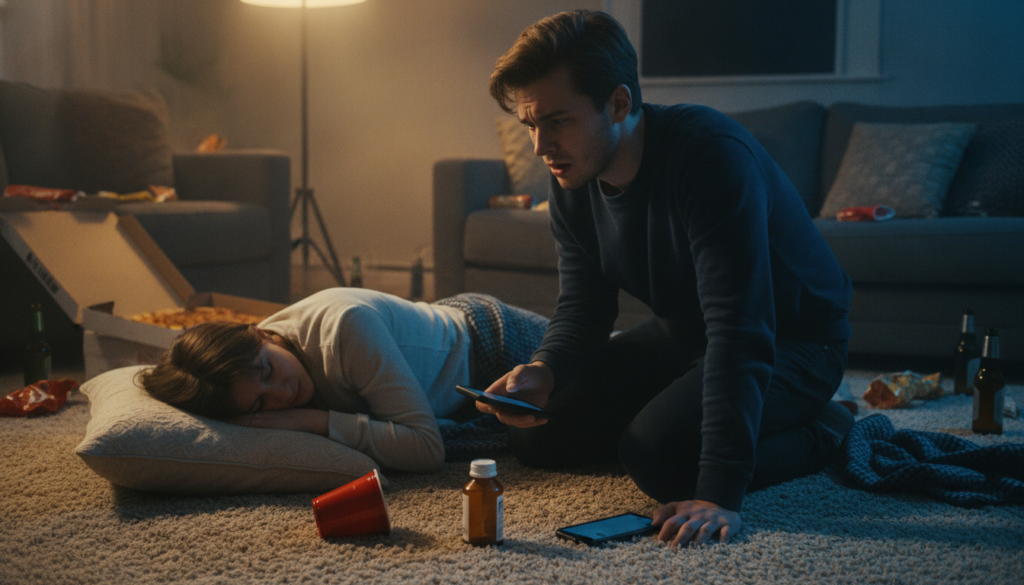
Effects of DXM and Alcohol on the Body
The effects of DXM and alcohol span two very different toxic pictures, and a person can swing between them.
DXM toxicity can present with delirium, hallucinations, fast heart rate, dilated pupils, prominent nystagmus, and brisk reflexes. High fever may signal severe poisoning or serotonin syndrome. Alcohol adds slurred speech, poor coordination, vomiting, blackouts, and sedation.
That is why the same night might look like any of these:
- A person who is sedated, vomiting, and breathing too slowly.
- A person who is agitated, hallucinating, overheated, and racing, then collapses.
- A person who swings between agitation and near-unconsciousness.
- A person who fell or got hurt but cannot report the pain.
DXM does not make alcohol safer or more predictable. It widens the range of ways things can go wrong.
Warning Signs: When It Becomes an Emergency
The safest way to judge risk is not by how much someone took. It is by their breathing and responsiveness. Heavy intoxication becomes an emergency when consciousness, breathing, airway, circulation, or temperature is compromised.
| Domain | Heavy intoxication | Emergency warning signs |
| Consciousness | Sleepy but wakes to voice | Cannot be awakened, unconscious, stupor, coma |
| Breathing | Slower but regular | Fewer than 8 breaths a minute, pauses of 10 seconds or more, gasping, stopped breathing |
| Vomiting | Vomits while awake and sitting up | Vomits while passed out, repeated vomiting, does not wake after vomiting |
| Skin | Flushed or sweaty | Cold, clammy, pale, blue lips or nails |
| Neurologic | Slurred speech, poor balance | Seizure, severe confusion, hallucinations, delirium |
| Behavior | Poor judgment | Severe agitation, psychosis, suicidal intent |
| Context | Moderate drinking only | DXM taken, unknown pills, mixed substances, head injury |
The NIAAA defines slow breathing as fewer than eight breaths a minute and irregular breathing as ten seconds or more between breaths. If a person took DXM and alcohol and shows any of these signs, treat it as an emergency even if they seem to be sleeping.
The “Cannot Wake Them” Sign
If a person cannot be roused by loud shouting or a firm pinch, that is not normal sleep. It points to severe brain depression and airway risk. Do not let anyone “sleep it off.” Alcohol levels can keep rising, and breathing can fail silently.
What to Do in the Moment
If you see danger signs, act fast. Waiting is the biggest mistake bystanders make.
- Call 911 first. The NIAAA advises calling right away and not waiting for every symptom to show. Call if the person cannot wake, breathes slowly or irregularly, vomits while passed out, seizes, turns blue or cold, becomes severely agitated, or took an unknown amount.
- Call Poison Control at 1-800-222-1222 for expert guidance. It is free and available 24 hours a day. But do not let this replace emergency services when danger signs are present.
- Stay with the person. Symptoms can worsen quickly, so do not leave them alone.
- Use the recovery position. If they are unconscious but breathing, place them on their side. St John Ambulance advises this so they do not choke on vomit.
- Watch breathing closely. Count breaths and note long pauses or gasping. Begin CPR if breathing stops and follow the dispatcher.
- Keep them warm with a blanket. Skip cold showers, coffee, food, walking them around, and never try to make them vomit. The DXM consensus guideline says not to induce vomiting and not to use activated charcoal at home.
- Gather details for responders. Save the product bottles, note the amount and time, and list any other drugs, especially antidepressants, opioids, or sleep medicines.
When Recreational Use Becomes a Pattern
For a teen or young adult, repeated DXM-and-alcohol use deserves a lower threshold for concern than most parents assume. The clearest framework comes from the DSM-5 model, which does not require withdrawal to diagnose a substance use disorder. Two or more of these signs within a year point to a disorder: using more than intended, failed attempts to cut down, cravings, spending lots of time getting or recovering from use, missed school or work, giving up activities, hazardous use, continued use despite harm, tolerance, and withdrawal-like distress.
A parent cannot diagnose this at home. But you can watch for missing cough medicine bottles, medicinal smells, declining grades, new secretive peer groups, and promises to stop that never hold. Poison Control specifically advises parents to watch for empty cough medicine containers, falling grades, and lost interest in activities. This matters because early onset is a strong risk factor. Research shows that people who use substances before age 15 are far more likely to develop a disorder than those who wait.

Treatment Options Once You Recognize It
Once a pattern is clear, treatment should be early, family-involved, and matched to severity. Start with safety. Lock up alcohol and cough products, check labels for acetaminophen and antihistamines, and get a medical evaluation after any overdose or severe episode.
For DXM misuse, there is no simple medication cure. Care relies on therapy, family involvement, and treatment for any co-occurring anxiety, depression, or trauma. Family-based approaches have strong evidence for teens. When alcohol is a repeated driver, NIAAA identifies three FDA-approved medications for alcohol use disorder: naltrexone, acamprosate, and disulfiram. These pair well with counseling.
Levels of care range from outpatient counseling for mild patterns to intensive outpatient programs, partial hospitalization, and residential treatment for severe cases. If alcohol is repeatedly paired with DXM, do not ignore the alcohol side just because DXM is the more unusual drug. Reducing alcohol craving may break the ritual that ties the two together.
Why This Matters
DXM and alcohol interact through overlapping brain and breathing depression, but the combination is broader and stranger than simple sedation. Alcohol can suppress life support functions and keep rising after the last drink. DXM can add hallucinations, seizures, serotonin syndrome, and hidden toxicity from combination products. Together they create an unpredictable and potentially fatal state.
The takeaway is direct. Mixing DXM and alcohol should lower, not raise, your threshold for calling for help. Waiting for someone to sleep it off is unsafe because the body can fail quietly, and the window to prevent aspiration, brain injury, or death may be short. If you or someone you love is caught in this cycle, reach out for evidence-based treatment and take the first step toward safety and recovery today.