Mixing naproxen and alcohol can raise your risk of stomach bleeding, ulcers, and kidney stress. A safer practical rule is to avoid alcohol while taking naproxen, and after one single dose, wait at least 24 hours, since naproxen has a 12 to 17 hour half life. This guide explains the naproxen and alcohol interaction, how long to wait, and when the pattern needs medical or alcohol use support.
Naproxen and Alcohol: The Plain Answer
Can you take naproxen and drink alcohol? The plain answer is no, not as a routine choice.
Naproxen is a nonsteroidal anti-inflammatory drug, often called an NSAID. It can help with pain and inflammation, but it also reduces protective chemicals in the stomach. Alcohol can irritate the stomach lining on its own. Put them together, and the risk is not just an upset stomach. The concern is bleeding, ulceration, and dehydration related kidney strain.
The FDA label lists naproxen’s elimination half life as 12 to 17 hours, which means a large share can still be in your body the next day. A 12 hour wait does not mean naproxen has cleared.
If you took one standard dose and you are otherwise low risk, waiting at least 24 hours before drinking is a harm reduction step, not a safety guarantee. If you took repeated doses, took a prescription dose, drank heavily, vomited, felt dehydrated, or have stomach symptoms, waiting 48 hours or avoiding alcohol is the safer call.
Why Alcohol and Naproxen Can Be Risky
The risk with alcohol and naproxen is not only that both substances are present in your blood at the same time. The bigger issue is that they stress the same body systems in different ways.
Naproxen lowers prostaglandins. These are chemicals that help protect the stomach lining, support blood flow in the stomach, help repair tissue, and help platelets respond when bleeding starts. When those defenses are weaker, irritation can turn into injury more easily.
Alcohol can directly irritate the stomach lining. It can also make nausea, vomiting, poor food intake, and dehydration more likely. That matters because vomiting and dehydration can make the stomach and kidneys more vulnerable at the same time naproxen is lowering normal protection.
NSAIDs can cause serious GI bleeding, ulceration, and perforation, and these events can happen without warning symptoms. That warning is one reason the casual question, “can you mix naproxen and alcohol,” deserves a careful answer.
Human data also support caution. A study of major upper gastrointestinal bleeding found that higher alcohol intake increased risk, and heavy alcohol intake was linked with about a threefold higher risk compared with not drinking. The study focused on aspirin and ibuprofen, not naproxen, but it still supports the larger point: alcohol plus NSAID exposure is a bad setup for the upper digestive tract.
Another study found alcohol intake above 15 grams per day, about one standard drink or more, was linked with higher upper GI bleeding risk among men, especially peptic ulcer bleeding. That alcohol intake finding matters because the stomach risk does not start only after extreme drinking.
How Long Naproxen Stays in Your Body
Naproxen lasts longer than many people expect. The pain relief may fade before the drug has mostly left your body.
A half life means the time it takes for the amount of drug in your body to fall by half. Naproxen’s half life is 12 to 17 hours. So if you take naproxen at night, you may still have about half or more of the absorbed dose in your body the next morning.
After one dose, rough estimates based on that half life look like this:
| Time after last naproxen dose | Estimated amount still present | What it means |
|---|---|---|
| 12 hours | About 50 percent to 61 percent | A next morning drink still overlaps with a lot of naproxen |
| 24 hours | About 25 percent to 38 percent | Risk is lower than at 12 hours, but naproxen is not gone |
| 48 hours | About 6 percent to 14 percent | Much less overlap, better for cautious spacing |
| 3 to 4 days | Near complete clearance for many people | Best estimate when trying to avoid almost all drug overlap |
These numbers are estimates, not personal test results. Your body may clear naproxen differently based on dose, repeated use, age, kidney function, illness, hydration, and other medicines.
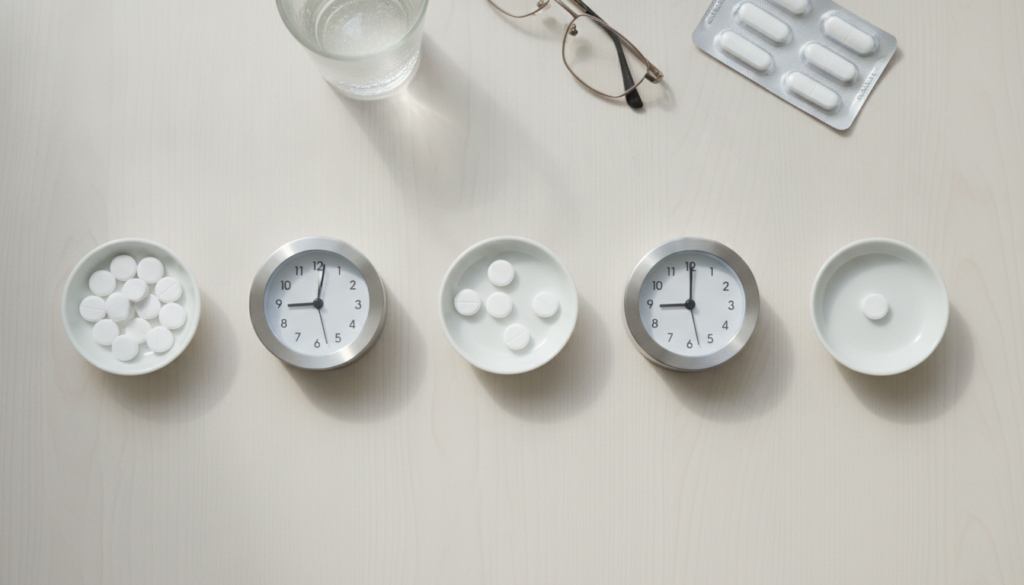
Repeated use changes the picture. If you take naproxen twice daily for several days, the body does not start from zero each time. The label says steady state is reached after about 4 to 5 days of repeated dosing, so a quick drinking window during ongoing treatment is not reliable.
That is why the best advice for daily naproxen is simple: avoid alcohol while using it.
How Long to Wait Before Drinking
If you are asking how long after naproxen you can drink alcohol, the safest answer is to avoid drinking until you are done with naproxen and your risk factors are clear.
For one isolated dose in a healthy adult, 24 hours after the last dose is a reasonable minimum wait before limited alcohol. It is better than 12 hours because the remaining drug level is lower. Still, one quarter to more than one third of the dose may remain after 24 hours.
A 48 hour wait is more cautious. It makes sense if you took more than one dose, used prescription strength naproxen, are older, plan to drink more than a small amount, have had stomach pain, or felt dehydrated. It is also a better choice if you take medicines that raise bleeding risk, such as aspirin, blood thinners, steroids, or some antidepressants.
Near complete clearance can take about 3 to 4 days after the last dose. That may sound long, but it follows from the 12 to 17 hour half life. If you have a history of ulcers, GI bleeding, kidney disease, liver disease, heavy drinking, or repeated naproxen use, this longer window is worth discussing with a clinician or pharmacist.
The key point is this: alcohol and naproxen are not made safe by waiting until you no longer feel pain relief. The drug can still be active in your body after the pain benefit seems gone.
How Long After Alcohol to Take Naproxen
The reverse question is also common: how long after drinking can you take naproxen?
This is harder to answer because alcohol’s effects do not end the moment you feel sober. Your stomach may still be irritated. You may be dehydrated. You may have vomited, eaten poorly, or slept badly. Those details change the risk.
After light drinking, a cautious approach is to wait until you are fully sober, hydrated, have eaten, have no vomiting or stomach pain, and preferably about 24 hours have passed since your last drink.
After binge drinking, heavy drinking, vomiting, dehydration, or a rough hangover, naproxen the next morning is not a smart default. Waiting 24 to 48 hours and asking a pharmacist or clinician is safer, especially if you have stomach burning, nausea, dark stool, or repeated vomiting.
NIAAA defines binge drinking as a pattern that usually brings blood alcohol concentration to 0.08 percent, often five or more drinks for males or four or more drinks for females in about two hours. That kind of drinking is very different from one drink with food.
If you drank heavily and now have pain, it is worth asking why. A headache may be from dehydration or poor sleep. Belly pain could be gastritis, ulcer irritation, pancreatitis, or something else that should not be covered up with an NSAID. Chest pain, severe belly pain, fainting, blood in vomit, black stool, confusion, or severe weakness needs urgent medical care.
Who Should Avoid Mixing Them
Some people should not rely on timing rules at all. For them, the issue is not whether 24 hours or 48 hours is enough. The safer answer is to avoid combining naproxen and alcohol and get personal medical advice.
This includes people with a past stomach ulcer, prior GI bleeding, chronic gastritis, severe reflux symptoms, kidney disease, liver disease, heart failure, unexplained anemia, or bleeding problems. Older adults are also at higher risk from NSAID related stomach harm.
Medication combinations matter too. Naproxen can raise bleeding risk when taken with aspirin, blood thinners, antiplatelet medicines, steroids, selective serotonin reuptake inhibitors, or serotonin norepinephrine reuptake inhibitors. Alcohol adds more stomach irritation and can make it easier to miss early warning signs.
Kidney risk is another part of the naproxen and alcohol interaction. Alcohol related vomiting, poor intake, and dehydration can reduce fluid volume. Naproxen can reduce prostaglandin supported kidney blood flow. The naproxen label warns about serious renal injury and says naproxen containing products are not recommended in moderate to severe renal impairment.
Liver injury from naproxen appears uncommon, but liver disease still changes the risk picture. LiverTox reports clinically apparent naproxen injury at about 1 in 10,000 new users, while also noting rare severe hepatic injury. If alcohol related liver disease is present, bleeding and medication handling can become more complicated.
Naproxen and Alcohol: When to Get Help
Get urgent medical care if you have vomit that looks bloody or like coffee grounds, black or tarry stool, severe or worsening abdominal pain, fainting, severe weakness, chest pain, confusion, or signs of shock. Those symptoms can point to GI bleeding or another emergency.

Do not take more naproxen to push through these symptoms. The label directs prompt evaluation when serious GI events are suspected, and naproxen should be stopped until a serious event is ruled out.
You should also talk with a clinician or pharmacist before using naproxen if you drank heavily, vomited, took multiple NSAIDs, take aspirin or a blood thinner, have kidney or liver disease, or need pain medicine several days in a row.
One more pattern deserves attention: repeated hangover naproxen use. If you often need naproxen the morning after drinking, the question is no longer just “how many hours should I wait?” It may be a sign that drinking is causing repeated health problems.
The USPSTF recommends adult screening for unhealthy alcohol use in primary care, followed by brief counseling for risky drinking. NIAAA also supports brief screening methods, including asking how often someone has five or more drinks in a day if male or four or more if female.
That screening is not about shame. It is about safety. Pain, alcohol, dehydration, stomach symptoms, sleep problems, and repeated NSAID use can start feeding one another. Getting help early can prevent a bigger medical problem.
Safer Ways to Think About Pain
If naproxen is risky for you, do not automatically switch to another NSAID. Ibuprofen, aspirin, diclofenac, and similar drugs share many of the same stomach and kidney risks. Taking two NSAIDs together is especially risky and rarely helpful.
The safer path depends on why you hurt. A sprain, dental infection, migraine, ulcer, nerve pain, arthritis flare, withdrawal symptom, or injury all need different care. If alcohol is involved, the right pain plan may include hydration, food as tolerated, rest, medical evaluation, physical therapy, topical options, or a clinician approved medicine.
Acetaminophen is sometimes used when NSAIDs are not safe, but it is not risk free for people who drink heavily or have liver disease. It can also be hidden in cold, flu, sleep, headache, and prescription pain products. If heavy alcohol use or liver disease is part of the picture, ask for dosing guidance instead of guessing.
If you are in early alcohol recovery, be extra careful. Pain, poor sleep, dehydration, poor nutrition, withdrawal symptoms, and medication risk can overlap. Severe tremor, hallucinations, seizures, confusion, severe vomiting, or chest pain needs medical care, not home pain management.
Why This Matters
The question “can you mix naproxen and alcohol” sounds simple, but the real answer depends on timing, dose, drinking pattern, health history, and symptoms.
For most people, the safest rule is to avoid alcohol while taking naproxen. After one isolated dose, 24 hours is a practical minimum for a healthy low risk adult, while 48 hours is more cautious. If you take naproxen repeatedly, use prescription doses, drink heavily, or have stomach, kidney, liver, bleeding, or medication risks, do not use a generic timing rule.
The biggest danger is assuming that no pain, no buzz, or no stomach symptoms means no risk. Naproxen can remain in your body into the next day, and serious GI bleeding can happen without much warning.
If alcohol and pain medicine are starting to feel hard to manage, reach out for addiction treatment today at The Summit Wellness Group.