Wondering if you can take Adderall while breastfeeding without putting your baby at risk? Many mothers on a stable, prescribed dose continue nursing safely, since research shows a small amount of the drug transfers into milk, with one closely studied group averaging a relative infant dose of about 5.7 percent of the maternal dose. This guide breaks down what adderall and breastfeeding research shows, the signs worth watching for, and the questions to bring to your care team.
Adderall and Breastfeeding: What the Evidence Shows
Here is the direct answer up front: taking a stable, prescribed dose of Adderall while breastfeeding a healthy, full term baby is often considered a reasonable choice, as long as you and your pediatrician keep an eye on feeding, sleep, and growth. That is not the same as saying every dose or every situation is risk free.
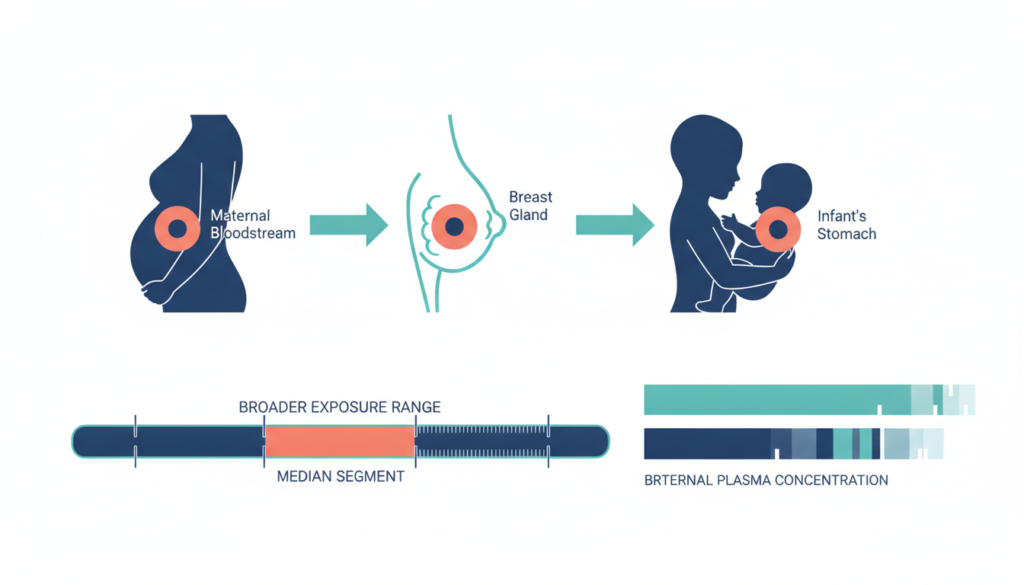
Adderall contains mixed amphetamine salts, a blend of dextroamphetamine and levoamphetamine. Most of the direct measurement data does not come from Adderall itself. It comes from a small group of mothers taking plain dextroamphetamine, plus a couple of older case reports on racemic amphetamine. In the main dexamphetamine transfer study, four breastfeeding mothers had a median relative infant dose of 5.7 percent, with individual results ranging from about 3.9 percent up to 13.8 percent. The medication also showed up in milk at concentrations roughly three times higher than in the mothers’ blood.
So if you are asking, can I take Adderall while breastfeeding and expect a totally predictable result, the honest answer is no. The numbers vary a lot between people, even at similar doses.
How Much Adderall Reaches Your Baby Through Milk
Two separate measurements matter here, and they answer different questions.
The milk to plasma ratio tells you how concentrated the drug gets in milk compared with your bloodstream. For dexamphetamine, that ratio averaged 3.3, with a range of individual results spanning about 1.9 to 5.3 across the small group studied. Amphetamine is a weak base, and milk is slightly more acidic than blood, so the drug tends to get trapped there in higher amounts. That sounds worrying on its own, but it does not tell you how much your baby actually absorbs.
The relative infant dose answers that second question. It compares the estimated amount your baby gets through milk with your own weight adjusted dose. Based on the LactMed dextroamphetamine summary, the median estimated infant dose was about 21 micrograms per kilogram per day, and blood testing found the drug present in two of three infants tested, at levels equal to roughly 6 percent and 14 percent of their mothers’ blood levels.
Those infants were not reported to have any obvious problems. But measurable blood levels mean the drug does reach a nursing baby’s system, not just their stomach.
Can You Breastfeed on Adderall Safely
This is where the evidence gets a little thinner, because there is no large study measuring Adderall itself in nursing mothers. The closest match is a group of thirteen children whose mothers took either mixed amphetamine salts or a related medication called lisdexamfetamine, reviewed in the amphetamine class research compiled by the National Library of Medicine.
Five of those thirteen children had mild symptoms that might have been related to the medication, including fussiness, trouble settling, constipation, or sleepiness. None had a serious reaction, and all had normal development checks at a follow up age of about eighteen months.
That is genuinely reassuring, but thirteen children is a small number. It cannot rule out rarer problems, and it says little about what happens with a newborn or a much higher dose. If you take an extended release version like Adderall XR, keep in mind that steady, all day exposure has not been separately measured in milk, so it is fair to ask your prescriber whether immediate release dosing gives you more flexibility around feeds.
What Changes If You Take More Than Prescribed
Everything above describes a stable, prescribed dose taken as directed. That evidence does not stretch to cover a missed dose made up later, a higher than prescribed amount, or any use of a nonprescribed stimulant.
The clearest illustration of why this matters comes from a small methamphetamine transfer study involving two mothers who had used an illicit, unknown strength product. Their milk levels in the first day after use varied more than two and a half times between each other, despite a similar reported history. That single fact should discourage anyone from trying to calculate a safe extra dose based on therapeutic numbers, because the two situations do not behave the same way.
If a dose was missed, doubled, taken by an unusual route, or combined with any other substance, the safer move is to pause direct nursing, keep pumping to protect your supply, and call your prescriber or the baby’s pediatrician right away. The clinical protocol guidance published by the Academy of Breastfeeding Medicine recommends exactly this kind of individualized, team based plan after any nonprescribed or excessive stimulant exposure.
Signs to Watch For in Your Baby
Most babies of mothers on a steady, prescribed dose show no obvious effects. Still, it helps to know what would count as a reason to call your pediatrician sooner rather than later.
- Trouble feeding, a weaker suck, shorter feeds, or fewer wet diapers than usual
- Slow weight gain or an unexpected drop on the growth chart
- New irritability, restlessness, or crying that is hard to soothe
- Trouble falling asleep or unusually broken sleep
- Jitteriness, trembling, or an exaggerated startle
- Unusual sleepiness or trouble waking for a feed
- Fast heartbeat, breathing trouble, vomiting that will not stop, or any seizure like movement, which need same day medical care
None of these signs proves the medication caused a problem. Babies get fussy and sleep poorly for plenty of ordinary reasons. But a pattern that starts or worsens after a dose change is worth mentioning at your next appointment, and anything on that last line deserves an urgent call.

Milk Supply and Feeding Timing Questions
A common worry is whether Adderall while breastfeeding will dry up your supply. Stimulants can lower prolactin levels, the hormone behind milk production, and this effect may matter more in the early weeks before your supply is well established or at higher doses. Most parents on a routine therapeutic dose do not report major supply problems, but if your output drops, that is worth raising with a lactation consultant rather than assuming it is unrelated.
Many parents also ask whether feeding right before a dose, rather than after, keeps the medication out of milk. There is no solid data pinning down exactly when Adderall peaks in milk, and the InfantRisk Center notes that repeated daily dosing tends to keep some drug present between doses rather than clearing out completely. Timing a feed around your dose might shift things slightly, but do not count on it as a guarantee, especially with an extended release product.
Pumping and dumping milk after every dose is not usually necessary or helpful for a stable prescription. It can hurt your supply without meaningfully lowering your baby’s exposure, since the drug does not clear that quickly. Save that strategy for situations involving a missed dose, an accidental overdose, or nonprescribed use, not routine daily treatment.
Questions to Ask Your Doctor or Lactation Consultant
Bring specifics, not just the drug name, to this conversation. Ask your prescriber what your exact dose is and whether a lower effective amount is possible while you are nursing. Ask whether immediate release or extended release makes more sense for your situation, given that the two formulations behave differently in your bloodstream and likely in milk as well.
Ask your pediatrician what weight gain, feeding, and sleep milestones they want you watching for, and how soon to call if something looks off. If you have a newborn, were born early, or have any other medical condition, say so, since the existing research mostly reflects older, healthy infants rather than this group. According to the MotherToBaby fact sheet on this medication class, temporary newborn symptoms have mainly been described after misuse, not after directed prescription use, which is useful context to bring into that conversation.
Finally, ask what the plan should be if you ever take more than prescribed, miss several doses in a row, or need to stop the medication suddenly. Having that answer ahead of time beats trying to figure it out during a stressful moment.
Adderall and Breastfeeding: Making a Plan That Works
The research on adderall and breastfeeding is not perfect. Much of the strongest data comes from a handful of women on plain dexamphetamine rather than Adderall itself, and nobody has run a large trial answering every question a new parent might have. What the evidence does support is a reasonable, monitored path forward for many families: a stable prescribed dose, a healthy baby, and a pediatrician who knows the full picture.
What tips the decision one way or another usually comes down to your own situation. A parent managing significant ADHD symptoms may do better, and so may their baby, staying on effective treatment with monitoring than stopping cold and struggling to function or bond. A parent just starting stimulant treatment after delivery, or caring for a preterm baby, has more reason to move carefully and discuss alternatives like methylphenidate, which transfers into milk at much lower amounts.
There is no single right answer that fits everyone, and that is exactly why this decision belongs to you and your care team together, not a search result.
If you or someone you love is managing stimulant use alongside bigger questions about substance use and recovery, our team at The Summit Wellness Group can help you sort out next steps. Reach out and contact our team to talk through what support actually fits your life.