Struggling with addiction and a mental health condition at once can make weekly therapy feel too light, but you may not need round the clock care either. A dual diagnosis IOP fills that gap with group therapy, individual counseling, and coordinated psychiatric care delivered across a defined weekly hour range while you keep living at home. This article covers how a dual diagnosis IOP works, who needs one, and how to find a program that truly treats both conditions together.
What Is a Dual Diagnosis IOP?
A dual diagnosis IOP is an intensive outpatient program built for adults who have a substance use disorder and a mental health condition happening at the same time. Think depression paired with alcohol use, or PTSD alongside opioid use. Instead of treating one issue and quietly ignoring the other, this level of care treats both together, in the same sessions, with the same team.
The American Society of Addiction Medicine built its placement approach around one core idea: match each person to the least intense setting that can still keep them safe and help them get better. Under the ASAM placement framework, a diagnosis alone, whether it is the addiction piece or the mental health piece, never decides the level of care by itself. What matters is how the whole clinical picture adds up.
In ASAM’s system, this level of outpatient care is often called Level 2.1. It sits between standard once a week outpatient therapy and the heavier structure of a partial hospitalization program. Industry guides describe the Level 2.1 IOP standard as intensive outpatient care that gives people enough structure to work on recovery and mental health together without pulling them out of daily life. Not every IOP dual diagnosis program is built the same way, though, and that gap is exactly what the rest of this article gets into.
How Does a Dual Diagnosis IOP Work?
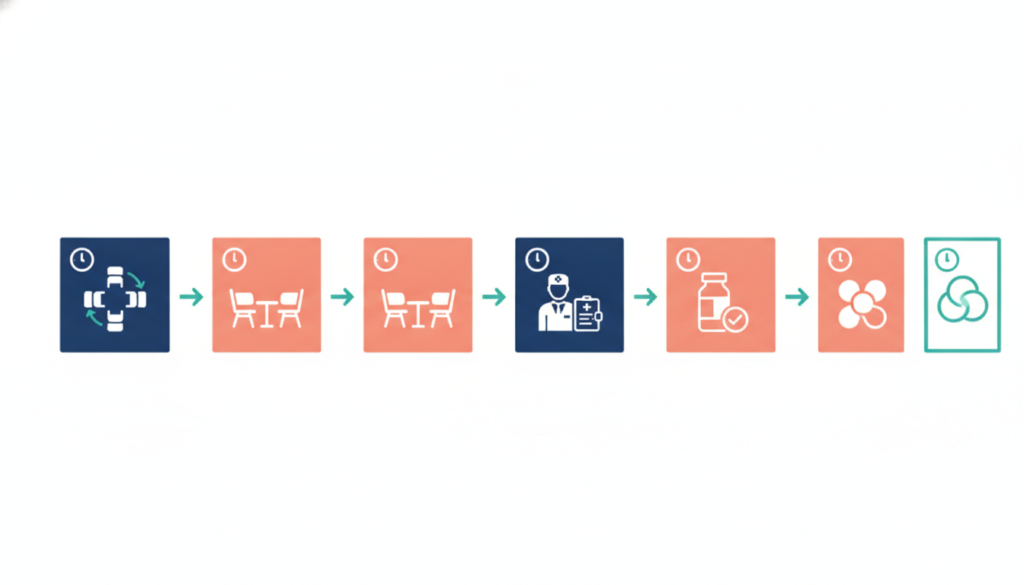
Here is a direct answer. A dual diagnosis IOP works by combining group therapy, individual counseling, and psychiatric coordination into a set weekly schedule, usually several days a week for a few hours at a time, while you keep going to work, school, or taking care of family.
Virginia’s Medicaid rules give a concrete example of what this looks like in practice. Adult IOP there must run at least three hours per service day and average a weekly hour range of 9 to 19 hours. That range is not universal across every state or payer, but it reflects how most programs build a schedule in practice. It is enough contact to matter, without needing an overnight stay.
A typical week folds in structured group sessions built around relapse prevention and coping skills, one on one counseling to work through personal history and current stress, and contact with a psychiatric provider when medication or diagnosis questions come up. None of this should happen in separate silos. Asking how does dual diagnosis IOP work is really asking whether the pieces talk to each other, and in a program that does this well, they do. Counselors know what the prescriber changed last week. The prescriber knows what came up in group.
Who Needs IOP for Dual Diagnosis Care
Not everyone with a mental health diagnosis needs this level of care, and not everyone needs to be checked into a hospital either. According to the Fourth Edition criteria, ASAM’s Dimension 3, which covers psychiatric and cognitive conditions, is meant to be read alongside every other part of a person’s life, not treated as a standalone box to check.
IOP for dual diagnosis tends to fit someone whose depression, anxiety, trauma symptoms, or mood swings are serious enough that once a week therapy has not been working, but who can still keep themselves safe at home, get to appointments, and follow a safety plan if things get hard between sessions. A person with bipolar disorder who is currently stable, taking medication as prescribed, and living with supportive family might do well here. Someone in the middle of a manic episode or an active psychotic break needs a different, more immediate kind of help first.
The living situation matters just as much as the symptoms do. Someone with mild depression but no safe place to sleep, or a home where substance use happens every night, may need a more structured setting even when their psychiatric symptoms alone look manageable on paper. Placement should always weigh both sides of that equation.
What a Strong Dual Diagnosis Program Includes
Integrated Assessment and Treatment Planning
A program worth choosing does not run one intake for addiction and a separate one for mental health. It builds a single plan that names both conditions and explains how they interact, matching what SAMHSA describes as fully integrated care, rather than simply housing two separate providers under one roof and calling it dual diagnosis treatment.
Psychiatric Coordination and Medication Support
Medication questions come up constantly in early recovery. A strong program can explain who prescribes, how often that person checks in, and what happens if a medication is not working or side effects show up. This does not mean every patient needs a weekly psychiatric visit. It means the frequency should match the person’s actual need, not a fixed script the program applies to everyone.
Case Management and Everyday Support
Housing, transportation, work schedules, and family relationships all shape whether treatment actually sticks after the program ends. Good programs build in case management, family sessions when appropriate, and a plan for connecting people to peer support and community resources once IOP is done, rather than leaving that step for the client to figure out alone.
Warning Signs You May Need More Than IOP
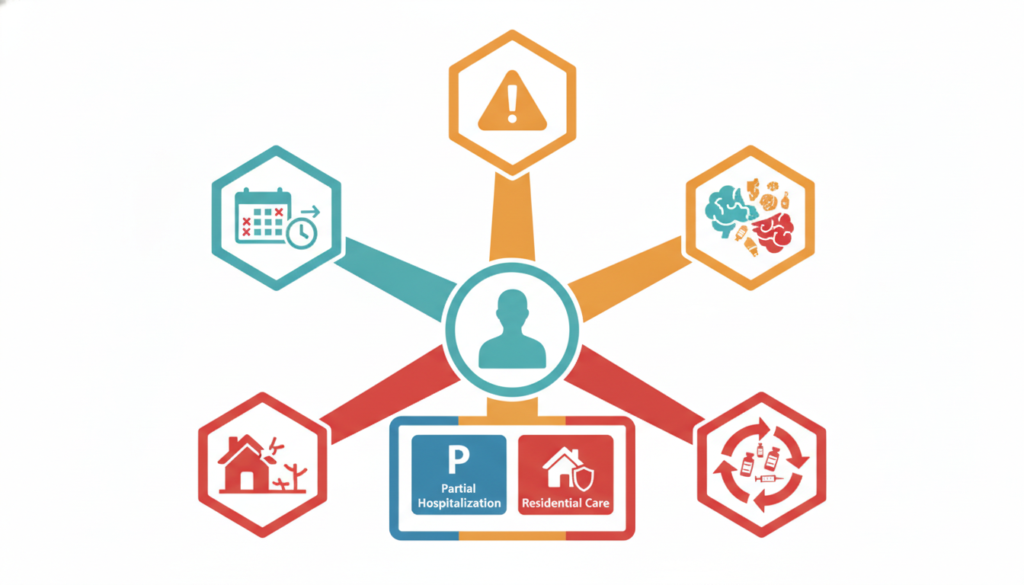
IOP is not meant to be permanent, and it is not meant to stay the right fit forever if things get worse. Certain signs during treatment suggest a need to move up to a more structured level, whether that is a high intensity outpatient program, sometimes described as offering twenty hours weekly or more, or a residential setting with round the clock support.
Watch for:
- New thoughts of suicide, a plan, or trouble staying safe between sessions
- Signs of mania, psychosis, or confusion that make it hard to follow along in group
- Relapse that keeps happening despite showing up and trying the skills taught in session
- A living situation that keeps exposing you to danger or ongoing substance use nearby
- Missing sessions again and again because of psychiatric symptoms rather than scheduling conflicts
None of these signs mean treatment failed. They mean the level of care needs to catch up with what is actually happening in your life right now. A program that takes reassessment seriously will notice these shifts and help arrange the next step quickly instead of waiting for a crisis to force the issue.
How to Find a Dual Diagnosis IOP Near You
Knowing how to find dual diagnosis IOP care starts with asking better questions than “do you treat dual diagnosis,” since almost every program will answer yes to that one. Ask instead who manages psychiatric care and addiction treatment, whether those clinicians share records and treatment plans, and how often they actually meet to talk about your case specifically.
A few starting points can help narrow the search. The federal treatment locator run by SAMHSA lists programs by state and service type, including options for people with overlapping conditions, though a listing there is a starting point rather than proof of how integrated a program actually is. Accreditation from bodies offering behavioral health accreditation adds another layer of confidence, since it means an outside reviewer has looked closely at the organization’s systems and processes.
For a deeper look at organizational capability, researchers use a tool sometimes called the diagnosis capability index, which rates addiction programs on how well they actually serve people with both conditions rather than just referring them elsewhere and calling that dual diagnosis care. None of these resources replace a direct conversation with the program, but together they give you a much clearer picture than a website alone.
Why This Matters for Recovery
Treating addiction while ignoring anxiety, depression, trauma, or another mental health condition tends to leave the door open for relapse. Treating mental health while ignoring substance use often does the same thing in reverse. A well built dual diagnosis IOP gives you a middle path. You get enough structure to make real progress on both fronts, without stepping away from your job, your family, or your daily routine for weeks at a time.
If you are trying to figure out what a dual diagnosis IOP looks like for your own situation, or you are supporting someone who needs this kind of care, talking with a program that treats both conditions as one connected story, not two separate files, is worth the extra time it takes to ask.
If you are ready to see what integrated care looks like in practice, our team at The Wellness Summit Group is ready to help you learn more about our dual diagnosis program and how it might fit your situation.