Wondering how much does drug and alcohol detox cost before you commit to treatment? In 2026, a typical detox episode without insurance costs about $1,500 to more than $12,000, depending on the drug involved, the setting, and how many days of care you need. This guide breaks down real detox cost ranges by substance and setting, then shows practical ways to lower what you actually pay.
How Much Does Drug Detox Cost in 2026?
If you strip away the marketing language, medical detox is a service that ranges from brief outpatient monitoring to a full hospital stay. That is really the question behind how much does detox cost for anyone facing this decision, because the price swings wildly depending on where care happens.
National estimates from a 2026 cost analysis place typical self pay detox episodes between $1,500 and $12,000 or more, with the biggest swings driven by drug type, length of stay, and how much monitoring the patient needs.
Freestanding vs Hospital Pricing
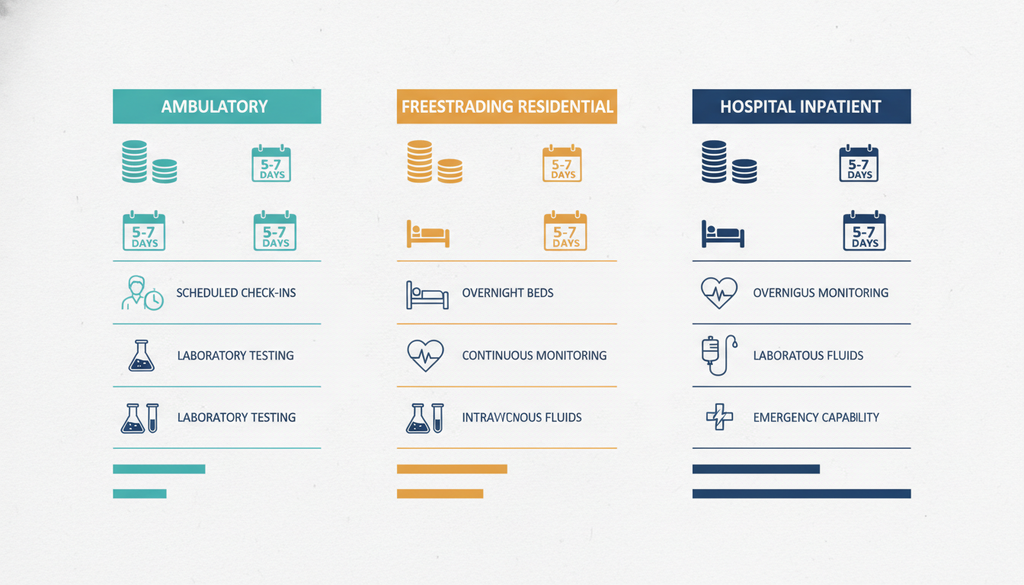
Setting matters just as much as substance. Freestanding detox facilities often charge roughly $250 to $850 per day, while hospital based detox units can run $1,000 to $3,000 or more per day because they carry the cost of physician coverage around the clock, labs, and emergency capability. Multiply either rate over a five to seven day stay and you can see why one program’s quote looks nothing like another’s, even for the same substance.
ASAM Levels of Care and Why They Matter
Cost should never be the only factor in choosing a detox setting. The ASAM Criteria sort withdrawal care into levels such as Level 1.7 outpatient withdrawal management, Level 2.7 intensive outpatient withdrawal management, Level 3.7 medically managed residential care, and Level 4 hospital inpatient care.
Older labels like Level 1 WM or Level 4 WM still show up in facility ads and old payer paperwork, but current Fourth Edition guidance folded those older withdrawal management labels into the levels above. Level 4 has to happen inside an acute care hospital, not a residential building with a medical sounding name attached to it.
Placement is based on six areas, including withdrawal risk, medical conditions, psychiatric symptoms, and how safe a person’s living situation is, not on price or a single symptom score alone. This matters financially too, since a hospital level stay almost always costs more than an outpatient or residential one, and picking a cheaper setting for the wrong reasons can end up dangerous rather than simply expensive.
Alcohol Withdrawal Risk and Level of Care
How much does alcohol detox cost on average? Reported ranges put alcohol withdrawal management at roughly $1,750 to $5,600 for five to seven days, though a severe case that needs hospital care can push well past that figure.
Clinicians often use the CIWA Ar scale to track withdrawal severity, with scores under 10 generally seen as mild, 10 to 18 as moderate, and 19 or higher as severe according to the ASAM alcohol guideline. A low score does not automatically mean outpatient care is safe. A history of seizures, confusion, hallucinations, or serious medical illness can call for hospital level monitoring no matter what the number on the scale says, and choosing the cheaper option in that case is not really a reasonable trade.
Alcohol detox cost also climbs when a person needs repeated medication dosing, intravenous fluids, or close observation for delirium. Those services are exactly what pushes a five day stay from the low end of the range toward the high end, and they are not optional extras. They are the reason the setting was recommended in the first place.
Detox Only vs a Full Rehab Program
A lot of confusion around alcohol detox cost and drug detox cost comes from mixing up two different products. A five to seven day detox is not the same purchase as a thirty day residential treatment stay, even though both get marketed under the word rehab.
Published estimates place a full month of Level 3.7 residential treatment at roughly $20,000 to $60,000, and a month of Level 4 hospital based treatment at $30,000 to $80,000 or more, according to a rehab program breakdown. Compare that to a five day alcohol detox at $1,750 to $5,600, and it becomes clear why asking a simple question first, is this quote for detox only or for a full program, can save a family from a very unpleasant surprise.
Detox is meant to stabilize a person medically. It does not by itself treat the substance use disorder that led to the withdrawal in the first place. Whatever the total bill ends up being, the plan after detox, whether that is counseling, medication, or a longer program, matters just as much as the number on the invoice.
What Drives Your Total Detox Cost
So how much does a detox center cost once you account for the substance itself? The table below lines up typical self pay ranges reported for 2026, along with the length of stay most programs plan around.
| Substance | Typical length of stay | Reported detox only cost range |
| Alcohol | 5 to 7 days | $1,750 to $5,600 |
| Opioids | 5 to 7 days | $2,000 to $6,500 |
| Fentanyl | 7 to 10 days | $2,500 to $8,000 |
| Benzodiazepines | 10 to 14+ days | $3,500 to $12,000 or more |
These figures come from a national detox estimate and should be treated as planning ranges rather than a quote for any specific facility.
Benzodiazepine withdrawal carries the highest ceiling in that table, and not because the drug is rare or the medication itself is expensive. It is because safe withdrawal often needs a longer taper, closer seizure monitoring, and more medical judgment along the way. Abrupt cessation, high doses, and short acting agents all raise the risk, which is exactly what raises the price of doing it safely.
Fentanyl withdrawal sits above standard opioid withdrawal for a similar reason. The course tends to run longer, medication induction can be trickier, and polysubstance exposure is more common now than it used to be. None of that means a person should try to detox from fentanyl without support. It means the cost reflects real added complexity, not padding.
Ways to Lower an Uninsured Detox Bill
The cost of detox listed on a facility’s website is rarely the final bill. A few routes tend to matter most for someone paying out of pocket.
Medicaid and State Funded Options
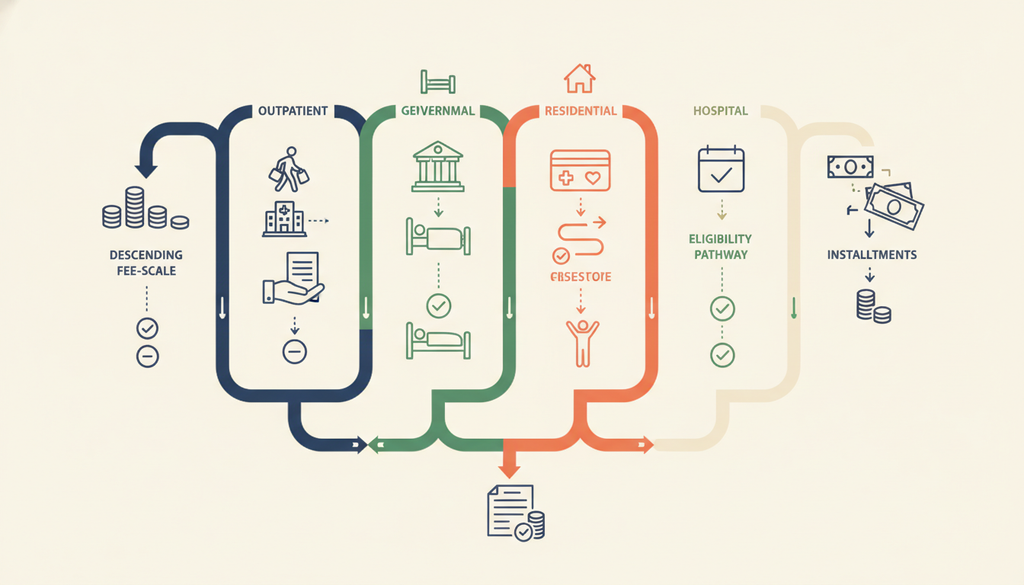
Medicaid is usually the biggest lever available. In states that expanded Medicaid, adults ages 19 to 64 can often qualify with income at or below about 138 percent of the federal poverty level, and county eligibility data from Washington shows a single adult could qualify with a monthly income near $1,835 in 2026. Every state sets its own rules, so checking current eligibility rather than assuming you do not qualify is worth the ten minute phone call.
Beyond Medicaid, publicly funded treatment often draws on a mix of state money, opioid settlement funds, and a major federal grant program that state funding research describes as a key source for people who are uninsured or underinsured. That grant generally cannot pay for inpatient hospital care, which is why it tends to matter most for outpatient, residential, and step down services rather than a severe hospital admission.
Hospitals themselves are required to publish their prices, including discounted cash rates, under federal price transparency rules. Asking for the hospital’s self pay discount and its financial assistance policy before an elective admission, rather than after the bill arrives, can meaningfully shrink what you owe. Sliding fee scales, county funded detox beds, and simple payment plans round out the list, and it is worth asking about all of them before assuming the advertised detox cost is fixed in stone.
Detox Cost If You Have Insurance
If you have coverage, the question shifts from how much does a detox cost to how much of that cost actually lands on you. Your share depends on whether the facility is in network, how much of your deductible you have already used, your coinsurance rate, and how close you are to your yearly out of pocket maximum.
A simple example shows how this plays out in practice. If $1,500 of deductible remains and the plan pays 80 percent after that, a $24,000 allowed charge could leave a patient owing about $6,000, based on a coinsurance example using standard plan math. Change any one of those numbers and the final bill changes right along with it.
Insurance also will not simply hand over a bed on request. Most plans require prior authorization before admission, and they lean on ASAM based clinical review to decide whether the requested level of care is truly needed rather than just preferred. Getting that clinical picture documented clearly, in writing, before admission is often what separates a covered stay from a bill nobody expected.
Why Getting This Right Matters
Detox cost numbers only become useful once you have the right setting in mind. Choosing outpatient care because it is cheaper, when a person actually has a seizure history or unstable vital signs, does not save money in the end. It usually adds an emergency room bill, a second admission, and lost time on top of the original detox cost.
On the other side, assuming hospital care is the only option can push someone away from treatment altogether, when a stable person could safely start with outpatient or residential withdrawal management at a fraction of the price. The honest goal is matching the level of care to the actual risk, then working every available discount, from Medicaid to sliding fees to a hospital’s own cash price, to bring the bill as low as it can safely go.
If you or someone you love is weighing detox costs against getting real help, reaching out to The Summit Wellness Group and exploring a dual diagnosis outpatient program can be a solid next step.