Wondering if detox and rehab are the same thing, or which one you need first? They are not the same: detox manages physical withdrawal, which for alcohol can turn dangerous within 48 to 72 hours, while rehab treats the substance use disorder itself once you are medically stable. This guide breaks down detox vs rehab in plain terms, including why the order between them matters for safety and lasting recovery.
Detox vs Rehab: What Each One Actually Does
Detox and rehab solve two different problems, even though people often use the words like they mean the same thing.
Detox, short for withdrawal management, deals with the body’s immediate reaction to stopping a substance. It is short, medical, and focused on safety. Rehab, on the other hand, is where the actual treatment happens. It addresses cravings, triggers, mental health, and the behaviors that led to substance use in the first place.
If detox is putting out a fire, rehab is rebuilding the house. You need both, but you need them in the right order, and skipping straight to rehab before your body is stable can be unsafe, especially with alcohol or sedatives.
What Happens During Detox
Detox focuses on one question: is the person medically safe right now? Depending on the substance, that can mean monitoring vital signs, giving medication to ease symptoms, or watching closely for complications like seizures.
Detox typically lasts a few days to about a week. It is not designed to fix the reasons someone uses substances. It is designed to get a person through the physically risky part of stopping.
What Happens During Rehab
Rehab is longer and looks completely different from detox. Instead of monitoring withdrawal, the focus shifts to therapy, education, and building skills for staying sober. This usually includes individual counseling, group sessions, family involvement, and sometimes medication to support recovery long term.
Rehab can happen in a few settings, including residential programs where you live on site, partial hospitalization programs with full day treatment, or intensive outpatient programs that let you keep working or attending school while getting several hours of structured care each week.
Is Detox the Same as Rehab? Key Differences
Short answer: no. They differ in purpose, length, and what they actually treat. The table below lays out the main contrasts.
| Feature | Detox | Rehab |
| Main goal | Manage withdrawal safely | Treat the substance use disorder |
| Typical length | A few days to about a week | Weeks to months, depending on level |
| Focus | Physical stabilization | Therapy, coping skills, relapse prevention |
| Medication use | Often symptom control or tapering | May include ongoing medication for recovery |
| What it does not fix | Underlying cravings or triggers | Nothing, but it needs detox first if withdrawal risk exists |
Detox without rehab often leaves the core problem untouched. Rehab without detox can be dangerous if the person is still going through active withdrawal, particularly from alcohol or benzodiazepines.
Detox or Rehab First: Why Order Matters
The order is not a personal preference. It is driven by what is medically safest for the substance involved.
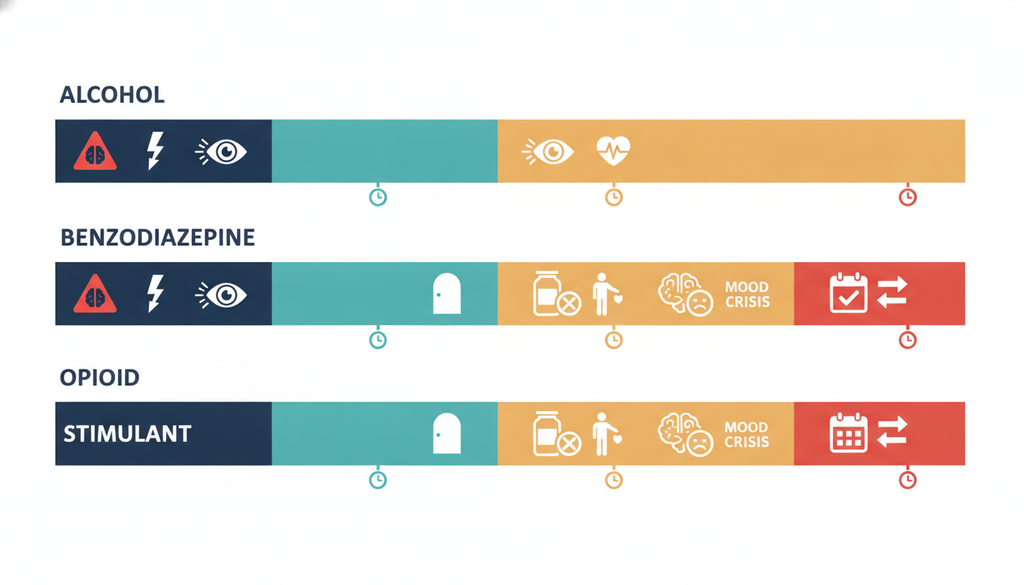
For alcohol and benzodiazepines, the body can react in serious ways when the substance is removed. Generalized seizures are most common at 24 to 48 hours after the last drink, and alcohol withdrawal delirium commonly begins around 48 to 72 hours, sometimes peaking near day five. Skipping detox and jumping into a talk-therapy-heavy rehab schedule during this window ignores a real medical risk.
For opioids, the danger shifts. Withdrawal itself is miserable but rarely as immediately life threatening as alcohol withdrawal. The bigger risk shows up after detox, when tolerance has dropped and a person returns to a dose their body can no longer handle. Discharge from a detox program is a recognized high risk discharge period for overdose, which is exactly why rehab, or at minimum medication and follow up care, needs to start right away, not weeks later.
So detox or rehab first really depends on the substance:
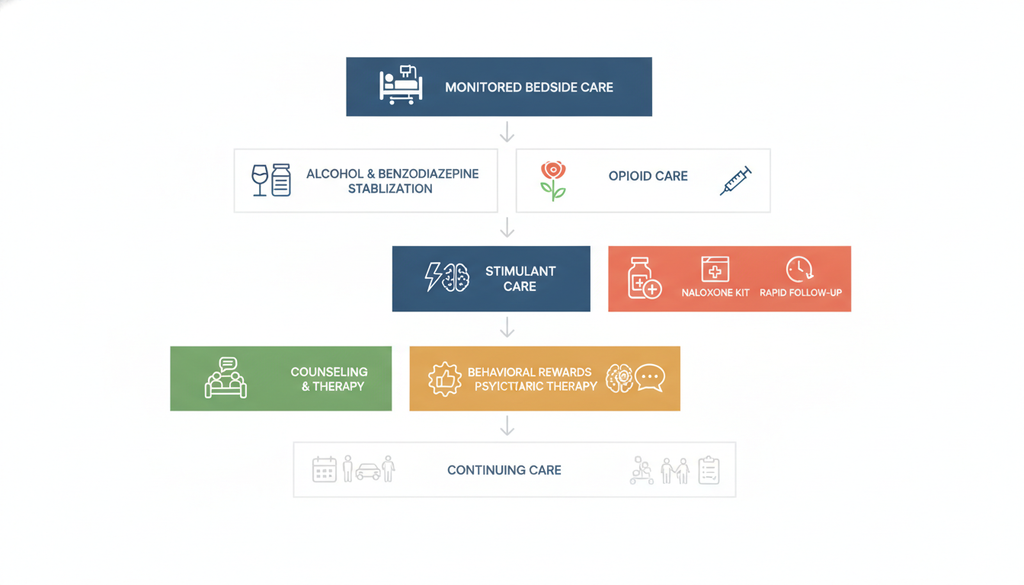
- Alcohol or benzodiazepines: detox first, with monitored stabilization before starting intensive rehab work
- Opioids: detox alongside or immediately followed by medication support, since waiting even a few days raises overdose risk
- Stimulants: detox is usually shorter and less medically dramatic, but rehab, especially behavioral treatment, needs to start fast because psychiatric symptoms can worsen quickly
Why Skipping Rehab After Detox Is Risky
Detox completion is sometimes treated like a finish line. It is not. It is a transition point, and what happens right after matters as much as the detox itself.
For opioid use disorder, this gap can be deadly. Research summarized by Penn State’s Evidence to Impact Collaborative found that mortality risk in the first month after ending opioid treatment is roughly fivefold higher without medication and roughly twofold higher even with medication, compared with later periods. That is a strong argument against a detox only plan for opioids.
For stimulants, there is no approved medication that treats the disorder directly, which makes behavioral rehab even more important. Contingency management, a treatment that rewards drug free progress with small incentives, is considered the strongest available approach and works best when started quickly after detox rather than delayed.
Clinical guidance also notes that post acute withdrawal symptoms from stimulants, including depression, anxiety, and paranoia, can last weeks to months. A person who finishes detox and goes home without rehab may still be facing these symptoms with no support in place.
Detox vs Rehab by Substance: What Changes
The detox vs rehab picture looks different depending on what someone is coming off of.
Alcohol and Benzodiazepines
Detox needs monitoring because complications can appear suddenly. An individualized withdrawal plan based on symptoms, medical history, and support at home matters more than a fixed number of days. Once stable, rehab should start quickly to address the drinking or sedative use pattern itself, along with any depression, anxiety, or sleep problems that were part of the picture.
Opioids
Detox alone rarely solves anything for opioids and can even raise risk if it is not followed by medication and support. Buprenorphine or methadone, paired with naloxone and fast follow up, gives someone the best shot at avoiding an overdose during the vulnerable weeks after detox.
Stimulants
Detox is usually shorter and centers on safety from agitation, severe depression, or suicidal thoughts rather than seizures. Rehab needs to start almost immediately, ideally with contingency management and psychiatric follow up, because the risk of returning to use, or running into fentanyl contaminated supply, stays high for a long stretch after the acute phase ends.
How to Move From Detox to Rehab Safely
A smooth handoff between detox and rehab does not happen by accident. A few things help:
- Confirm your next level of care, whether residential, partial hospitalization, or outpatient, before detox even ends, not on discharge day
- Ask specifically who is arranging transportation, medication, and the first rehab appointment
- Get naloxone and overdose education before leaving detox if opioids are involved, even if the plan is to start rehab right away
- Bring a support person into the conversation early, with your permission, so nothing falls through the cracks
Insurance approval for detox does not automatically carry over to rehab either. They are billed and reviewed as separate services, so it helps to confirm coverage for the next step while you are still in detox rather than assuming it is already handled. Placement decisions should reflect a current assessment across factors like ASAM level of care guidance, not just the fact that detox happened.
Why It Matters for Your Recovery
Detox and rehab are not competing options. They are two steps in the same process, and treating either one as optional or interchangeable creates real risk. Detox keeps you safe through withdrawal. Rehab is where the actual change happens, whether that means learning new coping skills, treating a mental health condition that fed the substance use, or simply having support during the hardest early weeks.
The order matters because the danger window shifts by substance. Alcohol and benzodiazepines are riskiest during withdrawal itself. Opioids and stimulants become riskiest right after, when tolerance has dropped or psychiatric symptoms are still raw. Understanding that difference is what turns a good intention into a safe plan.
If you or someone you love is trying to figure out what comes next, talking to a program that can walk you through both detox and rehab options, and coordinate the handoff between them, makes this decision far less overwhelming. You do not have to map this out alone. Feel free to reach out and explore our treatment programs at The Summit Wellness Group and get a clear plan for what comes after detox.