Detox ends, and then what happens next often feels unclear, even a little scary, especially after opioid withdrawal. Treatment after detox works best when it starts with medication like buprenorphine or methadone, since a large Massachusetts cohort study found this cut mortality rates by at least 49 percent compared with no follow up care. This article walks through what life after detox should look like, from the first risky weeks to choosing the right ongoing care.
What Life After Detox Really Means
Detox handles the physical side of withdrawal. It manages symptoms, keeps a person medically stable, and gets someone through the hardest days of stopping opioids or alcohol. What it does not do is treat the disorder that caused the withdrawal in the first place.
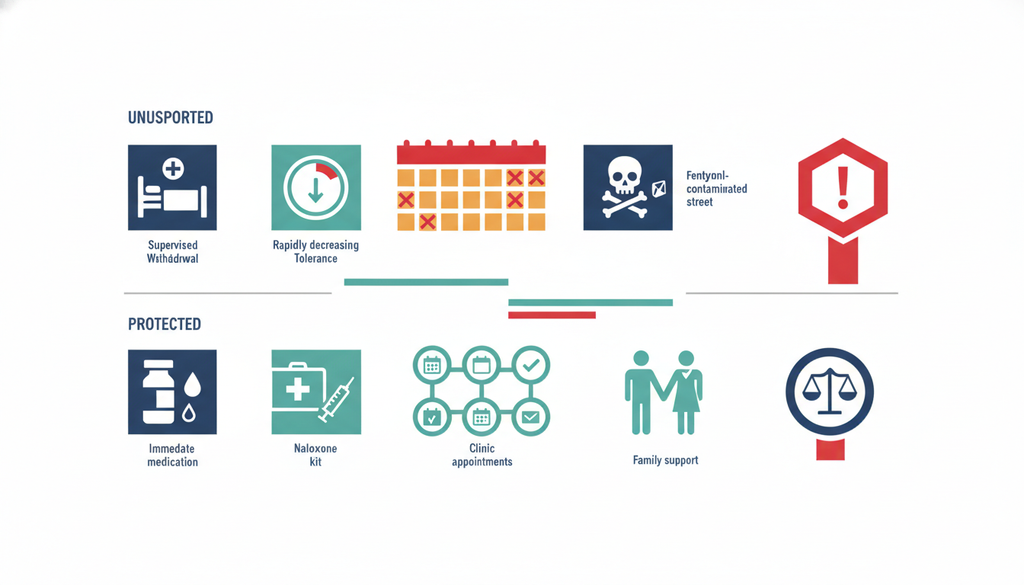
That gap matters more than people expect. Plenty of people leave detox feeling clear headed and proud, only to find that the weeks right after are the most dangerous part of their whole recovery. Research summarized by the Recovery Research Institute explains why, at least for opioids: a body’s tolerance drops fast during a typical five to ten day taper, so a dose someone used safely before detox can turn fatal right after it.
This creates an odd paradox worth sitting with. The more successful someone is at detox, physically speaking, the more their tolerance drops, and the more dangerous a return to old habits becomes. Success in one sense raises the stakes in another. That is exactly why treatment after detox cannot be an afterthought.
Why the First 30 Days Carry the Most Risk
How risky is that first month, really. Data reviewed in a Penn State review puts mortality at roughly five times higher during the first month after treatment ends without medication, and about twice as high even after medication treatment stops, compared with later months.
A few things stack up during this window. Tolerance has usually dropped. Cravings are often still strong. There is no more daily monitoring. Appointments, insurance steps, and pharmacy logistics can cause delays right when a person needs support the most. And street opioids today carry unpredictable amounts of fentanyl, so even a small miscalculation in dose can turn deadly.
Naloxone deserves a mention here too. It will not fix the underlying disorder, but it can reverse an overdose in the moment, and every person leaving detox, along with the people close to them, should know how to use it before they ever need it.
None of this means detox failed or that recovery is doomed. It means the day someone leaves detox should come with a plan already in motion, not a plan to figure out later.
The Next Step After Detox: Choosing a Medication
For opioid use disorder, the next step after detox usually comes down to one of three FDA approved medications: methadone, buprenorphine, or naltrexone. Each works differently, and each has tradeoffs worth understanding before discharge day arrives.
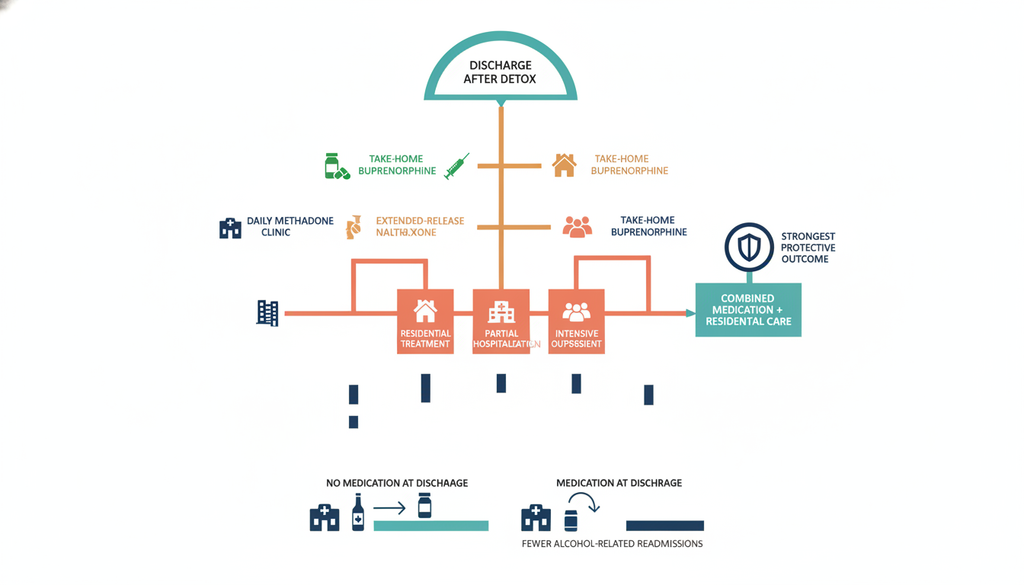
Methadone and buprenorphine reduce cravings and withdrawal directly, which counters the tolerance loss problem head on. A Massachusetts cohort study that followed more than 30,000 people through over 61,000 detox episodes found that starting or continuing one of these medications cut all cause and opioid related mortality rates by at least 49 percent compared with no further treatment. Pairing medication with residential care pushed that estimated reduction as high as 80 to 90 percent, though fewer people in the study received both services together.
Naltrexone works differently. It blocks opioid receptors rather than easing withdrawal, and it requires full abstinence before starting, which can be a hard hurdle right after detox. A 2026 comparison study that tracked over 106,000 discharge episodes found that people who started buprenorphine naloxone within 28 days had fewer nonfatal overdoses over the next 24 weeks than those who started extended release naltrexone, 11.6 percent versus 13.9 percent. Deaths were the same in both groups, at 1.4 percent.
Why Buprenorphine Often Gets Picked First
Buprenorphine can usually start as soon as withdrawal symptoms show up, which fits neatly with the days right after detox. Naltrexone needs a period of complete abstinence first, and that waiting window is exactly when relapse is most likely. In an earlier randomized trial, 94 percent of people assigned to buprenorphine naloxone successfully started the medication, compared with 72 percent assigned to naltrexone, and most of the relapse gap between groups traced back to people who never got started on naltrexone at all, not to the medication failing once someone began it.
None of this rules methadone out. Methadone remains one of the most effective options for people who need daily structure and a strong dose of relief from cravings, and it is delivered through licensed opioid treatment programs rather than a standard prescription. The right choice depends on a person’s history, preferences, and how quickly they need to start.
Treatment After Detox: Matching the Right Level of Care
Medication answers one big question. Level of care answers another: where should someone actually receive treatment day to day.
Residential treatment gives structure, distance from triggers, and daily support, and it was linked to lower mortality while people stayed engaged in the Massachusetts study above. But residential care alone, without medication, did not show the same drop in opioid related deaths after treatment ended. The strongest results came from combining the two.
Residential care tends to fit best when someone’s home environment is not safe, when they have relapsed quickly after outpatient attempts before, or when psychiatric symptoms need daily attention. Partial hospitalization programs (PHP) tend to fit when someone has a safer place to land at night but still needs several hours of structured treatment most days of the week. Neither choice is permanent. Most people move through more than one level as their needs change.
A continuum study that followed a community based program spanning multiple levels of care found reduced detox readmissions over time at some pilot sites, though the broader comparison was largely flat, and use of lower intensity services after discharge stayed low. The lesson is not that PHP or intensive outpatient programs fail. It is that a program only helps if someone actually walks through the door and keeps coming back.
What the Next 30 Days Should Look Like
A safe transition out of detox usually includes a short, concrete list of things lined up before discharge day, not after it. At a minimum, that means:
- A confirmed appointment with a prescriber or clinic within a few days, not weeks
- Enough medication, or a plan for medication, to bridge the gap until that appointment
- Take home naloxone and a quick refresher on how to use it
- A clear answer for where the person will sleep and who they can call if cravings spike
- A specific plan for what happens if they miss an appointment or use again
An Oregon cohort study found that only 5.3 percent of people with an opioid related hospital or emergency visit received medication for opioid use disorder within seven days, yet those who did had notably lower odds of overdose at six months. That gap between what helps and what actually happens is exactly what a solid discharge plan needs to close.
Getting Care Approved Without a Fight
Insurance approval is its own hurdle, and it catches a lot of families off guard right when they are already stretched thin. Detox completion does not automatically unlock coverage for residential care or a partial hospitalization program. Payers want current evidence that a lower level of care would be unsafe or ineffective right now, not just a history of substance use.
The strongest requests describe specific, current risks: recent relapse timing, an unstable or unsafe home, cravings that have not eased, or a psychiatric symptom that needs daily attention. Vague statements like “patient completed detox and needs rehab” tend to get denied. Specific, current facts tend to get approved.
The American Society of Addiction Medicine’s ASAM criteria walk clinicians through six dimensions, covering withdrawal status, medical needs, mental health, substance use risk, home environment, and personal preferences, to find the least intense setting that can still keep someone safe. Behind the scenes, though, plans use different rulebooks, and some still rely on an older edition. That does not change what keeps a person safe, but it does change what documentation gets a request approved.
If a request for residential or PHP care gets denied before discharge, speed matters. Ask for a peer to peer review right away, and if waiting for a standard appeal could put someone’s safety at risk, ask about an expedited internal appeal or expedited external review before the person actually leaves the facility.
Life After Detox: Why This Next Step Matters
Alcohol withdrawal carries its own risks after detox, though the mechanism differs from opioids. Reduced tolerance plays a role, but relapse, injury, and combined use with other substances drive most of the danger. A Medicare alcohol study found that starting medication for alcohol use disorder at discharge, or within two days of it, was linked to a 42 percent relative drop in a 30 day composite of death or hospital return. Only 2 percent of patients in that study actually received the medication, which says a lot about how often this step gets missed.
Whatever substance was involved, the pattern holds. Detox opens a door. What walks through that door next, whether it is medication, a level of care, or a follow up appointment kept on time, decides far more than the detox itself ever could.
Life after detox is not about proving willpower. It is about closing the gap between the moment withdrawal ends and the moment real treatment begins. That gap is where most of the danger lives, and it is also where the right medication, the right level of care, and a specific plan can change what happens next.
If you or someone you love just finished detox and needs a clear next step, reach out to our team at The Summit Wellness Group to explore treatment options and find the right level of support today.