Wondering whether taking naltrexone before drinking can help reduce alcohol cravings without requiring immediate abstinence? The Sinclair Method uses targeted oral naltrexone before anticipated drinking, with the goal of gradually reducing alcohol’s rewarding effects. In one randomized trial of targeted naltrexone, participants receiving the medication had a 26% lower rate of binge-drinking days than those receiving a placebo. This article explains how the Sinclair Method works, what research shows about treatment outcomes, and how targeted dosing compares with daily naltrexone for alcohol use disorder.
What Is the Sinclair Method for Alcohol Use
The Sinclair Method is an approach to treating alcohol use disorder where a person takes oral naltrexone about an hour or two before they expect to drink, rather than every single day. The idea came from researcher John David Sinclair, who proposed that pairing the drug with actual drinking sessions would slowly weaken alcohol’s pull over time.
This stands apart from the usual way naltrexone gets prescribed. For the standard regimen, dosing is determined by the prescribing clinician, and the medication is taken once a day whether or not a person plans to drink that night. The Sinclair Method naltrexone protocol skips dosing on alcohol free days and only uses the medication ahead of anticipated drinking.
One thing worth knowing upfront: you do not need to be sober or have completed detox to start. Current guidance from the New York guideline confirms that active drinking is not a reason to delay naltrexone, and treatment can aim at cutting back rather than stopping outright. That flexibility is a big part of why some patients find this approach appealing, especially if full abstinence feels out of reach right now.
How Naltrexone Works in the Sinclair Method
Naltrexone blocks opioid receptors in the brain. Alcohol triggers the release of natural opioid chemicals that create part of its rewarding feeling, and when those receptors are blocked, that reward gets dulled. Drink while blocked, and the brain gets less payoff for the same glass of wine or beer.
The theory behind the Sinclair Method, often called pharmacological extinction, says that repeating this pattern again and again slowly teaches the brain that drinking no longer delivers the expected reward. Over weeks or months, some people report drinking less, stopping earlier in a session, or losing interest in alcohol altogether.
A Finnish controlled trial enrolled 121 people who had not gone through detox and tracked them through 12 weeks of daily naltrexone or placebo followed by 20 weeks of the assigned medication used only when craving hit. Among those who also received coping skills therapy, 27% of the naltrexone group avoided any relapse to heavy drinking across the full 32 weeks, compared with just 3% on placebo.
That is a meaningful gap, but it describes a specific schedule combining daily dosing with later craving triggered use, not a pure before drinking protocol from day one. It is worth knowing the difference so expectations stay realistic.
Sinclair Method Success Rate: What Studies Show
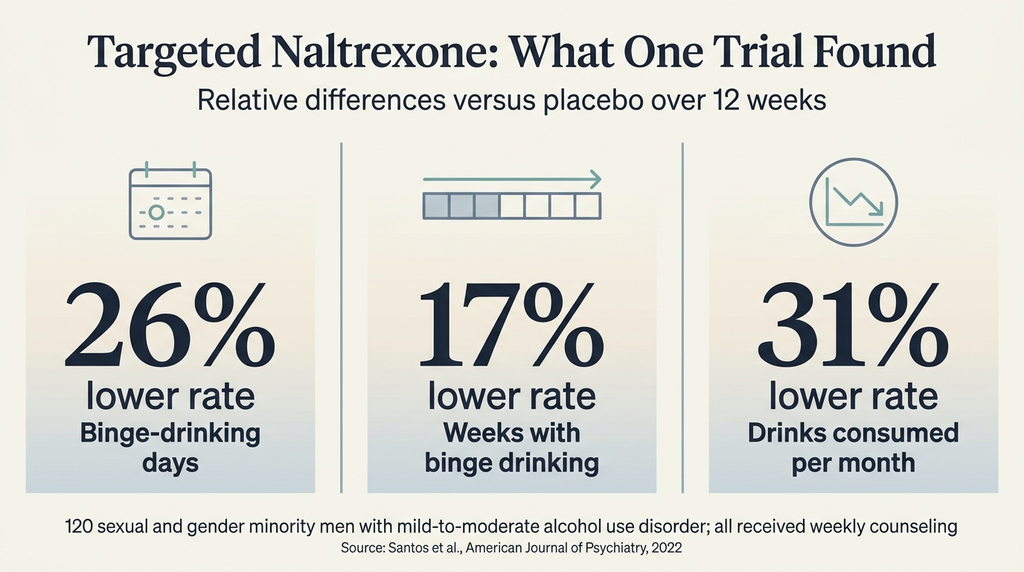
Controlled studies provide a clearer picture of targeted naltrexone’s effectiveness than testimonials or claims of a universal Sinclair Method success rate. A 2022 randomized trial involving 120 sexual and gender minority men with mild to moderate alcohol use disorder compared targeted naltrexone with placebo over 12 weeks. All participants also received weekly counseling, and 93% completed the study.
Compared with placebo, targeted naltrexone was associated with a 26% lower rate of binge-drinking days, a 17% lower rate of weeks involving binge drinking, and a 31% lower rate of drinks consumed per month. Alcohol craving scores also improved. These findings are encouraging, but they represent relative differences between study groups, not the percentage of patients who achieved recovery. The trial also does not establish a universal success rate for the Sinclair Method’s specific before-drinking schedule.
An earlier 2009 clinical trial randomized 163 problem drinkers to naltrexone or matching placebo on daily or targeted schedules and found that men on targeted naltrexone drank less per day at week 12, while both men and women on targeted naltrexone drank less per drinking occasion. Women did not show the same benefit on the daily drinking measure, a reminder that results can vary by sex and by which outcome gets measured.
Zooming out to naltrexone overall, a large systematic review covering 122 trials and more than 22,000 participants found a number needed to treat of 20 to prevent a return to any drinking with standard oral naltrexone. That figure reflects daily dosing research broadly and should not be reassigned as a Sinclair specific statistic, but it does confirm naltrexone’s general value as a treatment for alcohol use disorder.
Daily Naltrexone vs Targeted Dosing
Choosing between the Sinclair Method and the standard daily regimen often comes down to how predictable your drinking is and how reliably you can follow a before drinking schedule.
| Approach | Best fit for | Main tradeoff |
| Daily naltrexone | Frequent or unpredictable drinking | Simple routine, no need to forecast drinking |
| Sinclair Method (targeted) | Planned, predictable drinking occasions | Requires remembering medication before each event |
| Extended release injectable | Difficulty remembering oral doses | Longer acting, needs careful opioid screening |
A recent clinical review notes that standard daily naltrexone carries a number needed to treat of around 11 for preventing a return to heavy drinking in moderate to severe alcohol use disorder. That same review describes targeted dosing taken two to five times weekly as linked to fewer drinking days at three months in milder disorder.
Neither approach has been proven flatly superior to the other across the board. If your drinking happens on random weeknights without warning, daily dosing removes the guesswork. If you can reliably predict social drinking occasions days ahead and want to avoid a daily pill, targeted dosing may suit you better.
Who Should Use Caution With This Approach
Naltrexone is not safe for everyone, and this matters just as much for targeted dosing as for daily use. If you currently take opioid pain medication, are on methadone or buprenorphine, or are in active opioid withdrawal, naltrexone can trigger sudden and severe withdrawal symptoms. According to FDA prescribing information, some of these reactions have required hospitalization. A negative drug screen alone does not guarantee it is safe to start. Naloxone reverses an opioid overdose.
Planned surgery or upcoming pain treatment matters too, since naltrexone can blunt the effect of opioid pain relievers exactly when you might need them most. If a procedure is coming up, this is worth discussing with your prescriber well before the date.
Liver disease needs a nuanced look rather than a blanket rule. The 2024 liver disease guideline from the American College of Gastroenterology permits naltrexone in stable compensated cirrhosis but recommends avoiding it in decompensated cirrhosis or liver failure. An abnormal liver test by itself is not an automatic disqualifier, but it does call for a closer conversation with your doctor.
Pregnancy is another area where this protocol does not fit well. Even setting aside unresolved questions about naltrexone’s safety during pregnancy, a treatment plan built around continued drinking conflicts directly with the goal of avoiding alcohol exposure for the baby.
Side Effects to Expect Early On
Nausea shows up in roughly 10% to 33% of patients according to a clinical pharmacy review of the broader naltrexone evidence. Headache, dizziness, fatigue, and mild sleep changes also appear fairly often.
These symptoms usually ease within a week or two as your body adjusts. For naltrexone, dosing is determined by the prescribing clinician.
If nausea or fatigue keeps you from taking your dose before drinking occasions, that is not a sign the treatment failed. It is a sign the plan needs adjusting, whether through a different starting dose, taking the tablet with food, or simply checking in with your prescriber sooner rather than waiting.
Why It Matters: Real Outcomes to Expect
Put together, the evidence supports a measured expectation rather than a dramatic promise. Naltrexone, whether taken daily or before drinking, can meaningfully reduce heavy drinking days and overall consumption for many people, backed by multiple controlled trials. It does not guarantee complete loss of craving, and it does not treat alcohol withdrawal, so anyone cutting back sharply from heavy daily drinking still needs that risk assessed separately.
There is also no firmly established timeline for how long treatment should last. A treatment duration review from academic pharmacy researchers notes that the ideal length of naltrexone treatment remains unsettled and should be personalized rather than based on a fixed deadline. Popular claims about reaching extinction within exactly four to six months are not solidly confirmed by the controlled research summarized here.
What does seem clear is that progress should be tracked, not assumed. Fewer heavy drinking days, steadier medication use, and improved day to day functioning are realistic markers of whether this approach is working for you, regardless of whether craving ever fully disappears.
If heavy drinking continues despite consistent use, or side effects keep derailing your schedule, that is the moment to revisit the plan with a provider rather than waiting it out.
Recovery rarely follows a straight line, and figuring out whether the Sinclair Method, daily naltrexone, or a different combination fits your life is easier with support. If you are weighing your options, reach out to The Summit Wellness Group for guidance tailored to your situation.