Stopping Ambien after weeks or months of nightly use can feel overwhelming. Many people worry about sleepless nights, anxiety, or worse.
The good news is that most therapeutic users who taper gradually under supervision experience only brief rebound insomnia and mild anxiety that resolve within one to two weeks.
This article explains what to expect during Ambien withdrawal, how long symptoms typically last, and how to detox safely with evidence-based strategies.
What Happens When You Stop Taking Ambien?
Ambien, also known as zolpidem, acts on GABA receptors in the brain to promote sleep. When you use it regularly, your brain adapts to its presence. Discontinuing the medication can trigger withdrawal symptoms as your nervous system readjusts.
The most common withdrawal effects are rebound insomnia and anxiety. Controlled sleep studies show that people stopping zolpidem after short-term use typically see their sleep onset latency increase by about 13 minutes on the first night, with no meaningful change in total sleep time. These effects usually fade within days when the medication is tapered properly.
However, abrupt cessation after prolonged or high-dose use can produce more intense symptoms. Case reports document severe complications including delirium and seizures in people who stopped very high daily doses suddenly, particularly those taking 300 to 600 mg per day or more.
Common Ambien Withdrawal Symptoms
Early Symptoms (First 1 to 3 Days)
The earliest withdrawal signs typically appear within 6 to 8 hours after your last dose of immediate-release Ambien. You may notice:
- Difficulty falling asleep or staying asleep
- Anxiety and restlessness
- Irritability and mood swings
- Sweating and tremors
- Headaches or muscle aches
- Nausea or stomach upset
Reviews of Z-drug withdrawal describe these symptoms as similar to benzodiazepine withdrawal but generally less severe at therapeutic doses.
Peak Symptoms (Days 1 to 5)
Withdrawal symptoms usually peak within the first five days. During this window, insomnia and anxiety are most pronounced. Some people also experience:
- Intense cravings for Ambien
- Nightmares or vivid dreams
- Difficulty concentrating
- Palpitations
- Confusion or brain fog
A detailed case chronology of high-dose cessation showed that early rebound insomnia, anxiety, and flu-like symptoms appeared in the first days, followed by skin sensations and, in rare severe cases, hallucinations around days 8 to 12.
Severe Complications (Rare)
Life-threatening withdrawal is uncommon but documented. Multiple reports describe generalized seizures occurring 16 to 48 hours after abrupt cessation in people taking very high doses. Acute delirium has also been reported when chronic high-dose users stop suddenly.
These severe events are concentrated among individuals with dose escalation, prolonged use, comorbid substance use, and abrupt discontinuation. They underscore the importance of medical supervision during detox.
Ambien Withdrawal Timeline
| Time Window | Therapeutic Users (Tapered) | Abrupt Cessation, High-Dose |
|---|---|---|
| 0 to 24 hours | Mild rebound insomnia first night; mild anxiety | Severe insomnia and anxiety possible; seizure risk begins at ~16 hours |
| 24 to 72 hours | Symptoms easing with sleep hygiene and behavioral therapy | Peak seizure risk up to 48 hours; confusion or delirium may emerge |
| Days 4 to 7 | Residual insomnia and anxiety diminishing; physical symptoms resolve | Physical and cognitive symptoms persist; rare cases develop sensory disturbances |
| Days 8 to 12 | Return to baseline sleep with therapy; minimal residuals | Rare hallucinations or psychosis reported; symptoms begin to attenuate |
| Weeks 2 to 4 | No rebound by 2 to 4 weeks; sustained improvement at 6 months | Most acute withdrawal remits; persistent issues often reflect comorbidity |
Pooled analyses show no significant rebound insomnia at 2 to 4 weeks post-discontinuation in therapeutic users, with sustained outcomes at 6 months.
How Long Does Ambien Detox Take?
For most people tapering under supervision, the acute withdrawal phase lasts one to two weeks. American Addiction Centers reports that symptoms typically peak within 1 to 5 days and often subside within about two weeks.
Extended-release formulations may delay onset to 24 to 72 hours but follow a similar overall course. Some individuals, especially those with prolonged use, higher doses, or psychiatric comorbidities, experience persistent sleep disturbance or psychological symptoms for weeks to months. These cases benefit from slower tapers and ongoing psychosocial support.

Safe Ambien Detox Methods
Gradual Tapering
The cornerstone of safe detox is slow, individualized dose reduction. The 2025 Joint Clinical Practice Guideline on benzodiazepine tapering recommends 5 to 10 percent reductions every 2 to 4 weeks, avoiding cuts larger than 25 percent every two weeks. Pausing or slowing the taper when significant symptoms emerge is essential.
For short-term users, a days-per-week reduction strategy can work well. For example, reduce from nightly use to six nights per week for two weeks, then five nights per week, and so on.
Cognitive Behavioral Therapy for Insomnia
CBT-I combined with supervised tapering achieves higher discontinuation rates and better long-term outcomes than tapering alone. In older adults with chronic hypnotic use, this combination produced sustained benefits at follow-up.
CBT-I addresses the underlying sleep behaviors and thought patterns that perpetuate insomnia. It includes stimulus control, sleep restriction, cognitive therapy, and sleep hygiene education delivered over six to eight weeks.
Cross-Tapering to Non-GABAergic Hypnotics
Switching to medications that do not act on GABA receptors can ease the transition off Ambien. A multicenter trial supports a direct next-dose switch from zolpidem to lemborexant, a dual orexin receptor antagonist. Participants reported better ability to return to sleep after nighttime awakenings on lemborexant compared with zolpidem.
Daridorexant shows lower drug-liking at therapeutic doses than zolpidem in recreational sedative users, and prolonged-release melatonin 2 mg is another facilitator with minimal discontinuation effects. These agents do not require tapering themselves.
Medical Supervision
High-dose users, those with comorbid substance use disorders, or anyone with prior withdrawal complications should detox under medical supervision. Case reports of acute delirium following abrupt cessation emphasize the need for specialist referral and, in some cases, inpatient management.
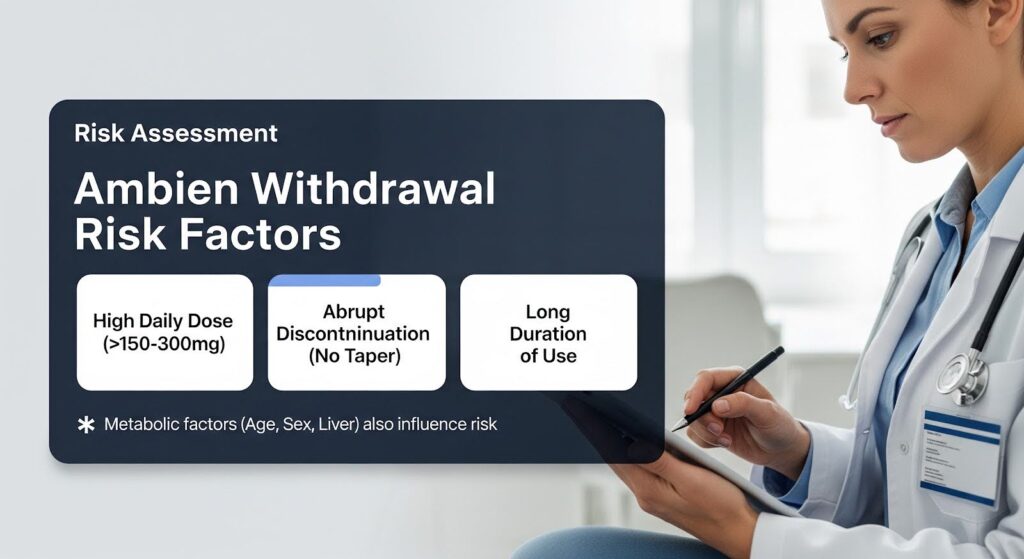
Risk Factors for Severe Withdrawal
Several factors increase the likelihood of difficult withdrawal:
- High daily dose: Doses above 150 to 300 mg per day, especially 450 to 600 mg or more, carry the highest risk.
- Long duration of use: Prolonged exposure increases dependence.
- Abrupt discontinuation: Stopping suddenly rather than tapering raises severity and complication risk.
- Female sex: Women metabolize zolpidem more slowly, leading to higher plasma levels and potentially greater withdrawal vulnerability.
- Comorbid substance use: Co-occurring alcohol or drug dependence heightens risk even at therapeutic doses.
- Older age and liver impairment: Slower clearance and higher exposure require more cautious tapering.
Why Detox Matters?
Continuing Ambien long-term carries real risks, especially for older adults. Systematic reviews associate Z-drugs with increased falls and hip fractures in community and nursing home residents. In a large Medicare cirrhosis cohort, deprescribing zolpidem reduced falls and fractures without increasing decompensation.
These harms often outweigh the small, short-term sleep benefits of continued use, making structured detox a priority for many chronic users.
What to Expect During Detox?
Most people undergoing slow tapers with behavioral support experience mild to moderate symptoms that peak in the first week and recede over one to two weeks. Sleep onset may be slightly delayed for a few nights, but total sleep time typically remains stable.
A minority experience prolonged sleep disturbance or psychological symptoms, warranting extended tapering and ongoing therapy. With patience and the right support, durable discontinuation is achievable.
Getting Help with Ambien Withdrawal
If you are ready to stop Ambien safely, professional support makes all the difference. A structured program that combines medical supervision, gradual tapering, and evidence-based therapies can help you navigate withdrawal with confidence and protect your long-term recovery. Reach out to explore Summit’s addiction treatment options personalized to your needs.