Stopping amphetamines after regular use triggers a withdrawal syndrome that most people underestimate.
The first few days bring fatigue and mood swings, but the real danger often emerges weeks later when anhedonia and sleep disruption quietly erode your ability to function.
This article explains the full amphetamine withdrawal timeline, what symptoms to expect at each stage, and how evidence-based treatment can protect your recovery during the most vulnerable weeks.
What Happens During Amphetamine Withdrawal?
Amphetamine withdrawal is a recognized clinical syndrome that occurs when you stop or reduce chronic use of stimulants like methamphetamine, Adderall, or Vyvanse.
The condition reflects your brain’s adaptation to the drug’s effects on dopamine and other neurotransmitters. When amphetamine use ends, a hypodopaminergic state develops, producing dysphoria, anhedonia, and mood disturbances that can persist well beyond the initial crash.
Withdrawal severity depends on several factors: dose, duration of use, formulation (immediate-release versus extended-release), and individual physiology.
Research shows that 87 to 97 percent of recently abstinent amphetamine users experience withdrawal symptoms, and withdrawal itself predicts relapse risk.
Unlike alcohol or benzodiazepine withdrawal, amphetamine withdrawal is not typically life-threatening. However, the psychological and functional burden can be severe, especially during a subacute phase that extends for weeks after the acute crash subsides.
Amphetamine Withdrawal Symptoms
Amphetamine withdrawal produces a constellation of physical, psychological, and cognitive symptoms. The most commonly reported include:
- Fatigue or hypersomnia
- Increased appetite and weight gain
- Depressed mood and anxiety
- Anhedonia (inability to feel pleasure)
- Irritability and agitation
- Intense cravings for amphetamines
- Vivid or disturbing dreams
- Psychomotor slowing or restlessness
- Difficulty concentrating and memory problems
The Amphetamine Withdrawal Questionnaire identifies three core symptom clusters: hyperarousal, reversed vegetative symptoms (hypersomnia and increased appetite), and anxiety.
These symptoms typically peak within the first 24 hours and decline over the first week, but residual symptoms often persist.
Post-acute withdrawal symptoms can include lingering anhedonia, cognitive impairments, sleep dysregulation, and intermittent craving that extend for weeks to months.
These protracted symptoms carry significant relapse risk because they undermine executive control and motivation precisely when clinical contact often diminishes.
Physical Symptoms of Amphetamine Withdrawal
Physical withdrawal symptoms are generally the reverse of amphetamine’s acute effects. Where the drug suppresses appetite and promotes wakefulness, withdrawal brings hyperphagia and hypersomnia. Common physical manifestations include:
- Extreme fatigue and need for extended sleep (12 to 16 hours daily in early withdrawal)
- Increased appetite, often with cravings for carbohydrates
- Headaches and muscle aches
- Slowed movements and reaction times
- Tremors or shakiness in some individuals
These physical symptoms are most intense during the first three to seven days and typically resolve within two weeks, though sleep disturbances may persist longer.
Psychological Symptoms of Amphetamine Withdrawal
The psychological burden of amphetamine withdrawal often exceeds the physical discomfort. Mood disturbances are prominent and can include:
- Severe depression and dysphoria
- Anxiety and panic symptoms
- Anhedonia that makes previously enjoyable activities feel empty
- Irritability and emotional lability
- Suicidal ideation in severe cases, particularly during the first week
Clinical observations indicate that the crash phase carries heightened risk for self-harm, making early monitoring essential.
Even after acute symptoms subside, residual mood disturbance can persist for weeks, contributing to functional impairment and relapse vulnerability.
Cognitive and Behavioral Effects
Amphetamine withdrawal impairs cognitive function across multiple domains. Studies comparing current users, abstinent individuals, and controls show that executive dysfunction persists into abstinence, with partial but incomplete recovery over time.
Common cognitive effects include:
- Difficulty with planning and task switching
- Slowed processing speed
- Working memory deficits
- Impaired decision-making and impulse control
- Mental fatigue that worsens with cognitive demand
These deficits can disproportionately impair occupational and academic performance, increasing stress and creating a self-medication cycle where stimulant use is resumed to restore productivity.
Amphetamine Detox Timeline
The amphetamine withdrawal timeline unfolds in distinct phases, each with characteristic symptoms and risks. Understanding this progression helps set realistic expectations and guides treatment planning.
The Crash Phase (0 to 7 Days)
Withdrawal symptoms often begin within 24 hours of last use, sometimes extending to 36 hours depending on the formulation. The crash phase is marked by:
- Peak intensity in the first 24 hours: Symptoms reach maximum severity quickly, with profound fatigue, depressed mood, anxiety, and strong cravings.
- Linear decline over the first week: Withdrawal severity decreases roughly linearly across days one through seven.
- Hypersomnia and hyperphagia: Sleep needs spike, and appetite returns with intensity.
- Acute psychological distress: Dysphoria, agitation, and suicidal ideation are most common during this window.
The crash typically lasts seven to ten days, with some sources noting it can extend to two weeks. This phase is visible and clinically recognized, prompting most acute interventions.
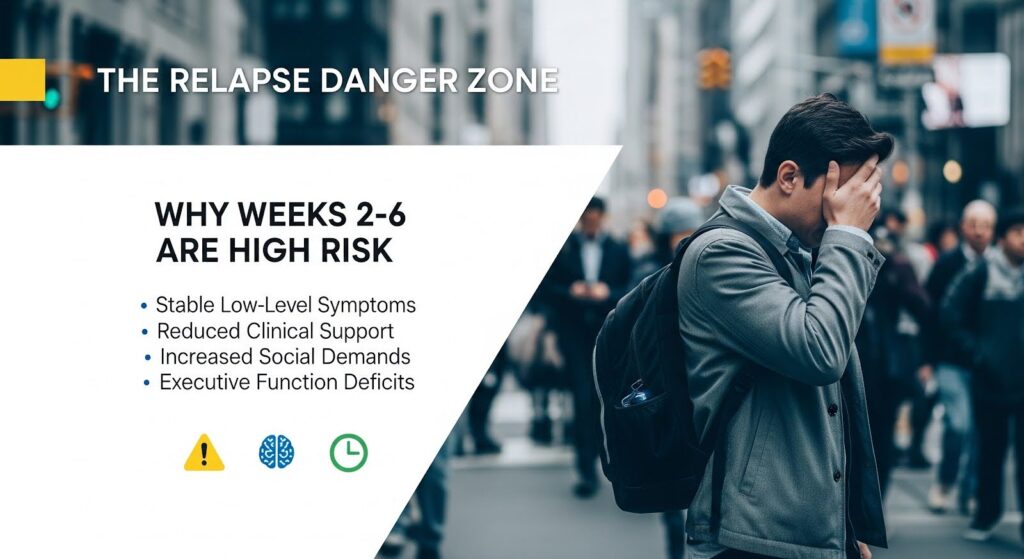
The Subacute “Invisible” Phase (Weeks 2 to 6)
After the crash subsides, a subacute phase emerges that is less dramatic but more dangerous from a relapse standpoint.
Research shows that symptoms remain stable at low levels for at least two additional weeks, and clinical experience suggests functionally important symptoms often continue into weeks five and six.
Key features of this phase include:
- Persistent anhedonia and low motivation: The inability to derive pleasure from non-drug activities continues, undermining natural reward pathways.
- Sleep dysregulation: Insomnia, hypersomnia cycles, and poor sleep quality persist, degrading daytime function.
- Executive inefficiency: Planning, set-shifting, and working memory deficits remain, making normal productivity feel unreachable.
- Intermittent, cue-driven cravings: Triggers like stress, fatigue, or environmental cues provoke craving spikes.
This phase is “invisible” because patients may appear externally recovered while internally battling symptoms that quietly sabotage functioning.
For working professionals, the mismatch between social expectations and internal capacity creates acute relapse risk.
Protracted Withdrawal (Weeks 6 to 12+)
Beyond the first six weeks, some individuals experience protracted withdrawal symptoms, particularly:
- Residual anhedonia and mood lability
- Cognitive complaints, especially under stress
- Sleep disturbances that wax and wane
- Sporadic cravings triggered by context or stress
The duration of protracted symptoms varies widely. Some people achieve near-complete symptom resolution by three months, while others report intermittent difficulties for six months or longer.
| Phase | Timeline | Key Symptoms | Relapse Risk |
|---|---|---|---|
| Crash | 0–7 days | Fatigue, hypersomnia, depression, anxiety, strong cravings | High (acute distress) |
| Subacute | Weeks 2–6 | Anhedonia, sleep dysregulation, executive drag, intermittent cravings | Highest (invisible burden + demand surge) |
| Protracted | Weeks 6–12+ | Residual mood/cognitive symptoms, sporadic cravings | Moderate (context-dependent) |
How Long Does Amphetamine Withdrawal Last?
The total duration of amphetamine withdrawal depends on use patterns and individual factors. Acute withdrawal typically lasts seven to ten days, with the most intense symptoms concentrated in the first 24 to 72 hours. However, the clinically meaningful withdrawal period extends well beyond the crash.
Subacute symptoms persist for at least an additional two to four weeks, and protracted symptoms can continue for weeks to months. Clinical summaries align with naturalistic data showing that while acute symptoms decline rapidly, residual mood, sleep, and cognitive disturbances remain common through the first month and beyond.
For individuals with heavy, chronic use, full neurobiological recovery may take longer. Imaging studies show that regional cerebral metabolic abnormalities in the ventral striatum persist in recently abstinent methamphetamine users, reflecting ongoing dopaminergic dysregulation.
Amphetamine Withdrawal Treatment
No medication has established efficacy or regulatory approval for amphetamine or methamphetamine withdrawal. A 2023 systematic review of nine randomized controlled trials concluded there is insufficient evidence to support any pharmacotherapy for withdrawal, with low to very low quality evidence across all agents studied.
Given this evidence gap, treatment focuses on supportive care, psychosocial interventions, and symptom management.
Evidence-Based Psychosocial Interventions
The ASAM/AAAP Clinical Practice Guideline identifies contingency management as the most effective core treatment for stimulant use disorders. Contingency management delivers immediate, tangible rewards for verified abstinence and treatment engagement, directly counteracting anhedonia and strengthening recovery behaviors.
Other effective psychosocial approaches include:
- Cognitive behavioral therapy (CBT) with modules on sleep hygiene, activity scheduling, and relapse prevention
- Community reinforcement approaches
- Motivational enhancement therapy
- Family therapy and peer support
These interventions are especially crucial during the subacute phase (weeks two through six) when anhedonia and executive dysfunction persist but external support often wanes.
Symptom Management and Supportive Care
While no medication treats withdrawal itself, symptomatic supports can improve comfort and safety:
- Sleep disturbances: Behavioral interventions (consistent wake times, light exposure, sleep hygiene) are first-line. Short-term sleep aids may be considered cautiously when insomnia is severe.
- Mood symptoms: Monitor for depression and suicidal ideation, especially in the first week. Antidepressants may be indicated for comorbid or persistent depression, though they do not treat withdrawal directly.
- Nutrition and hydration: Address appetite changes and ensure adequate intake during hypersomnia phases.
- Cardiovascular monitoring: Track blood pressure and heart rate, particularly during the first week.
The Role of Detox Programs
Medically supervised detox provides a safe, structured environment for the acute crash phase. Inpatient or residential detox is appropriate when:
- Severe psychiatric symptoms (suicidal ideation, psychosis) are present
- Medical comorbidities complicate withdrawal
- Prior withdrawal attempts have failed
- The home environment lacks stability or safety
Detox programs typically last five to ten days and focus on stabilization, symptom monitoring, and transition planning. However, detox alone is insufficient.
The subacute phase requires ongoing psychosocial care, and discharge planning must bridge patients into intensive outpatient or partial hospitalization programs to sustain gains.
Outpatient and Intensive Outpatient Programs
For many individuals, outpatient treatment offers the right balance of structure and flexibility. Intensive outpatient programs (IOP) provide nine to fifteen hours of weekly therapy, including group counseling, individual sessions, and skills training.
Partial hospitalization programs (PHP) deliver higher intensity care (approximately 30 hours per week) while allowing patients to return home nightly.
These programs are well-suited to the subacute phase, offering:
- Contingency management protocols
- CBT and relapse prevention training
- Family therapy and psychoeducation
- Medication management for comorbid conditions
- Peer support and accountability
Outpatient care also allows patients to maintain work, school, or caregiving responsibilities, reducing the functional disruption that can itself trigger relapse.
Why Weeks 2 to 6 Are the Most Dangerous?
The subacute phase is often more dangerous than the crash because the symptom profile undermines self-regulation while social and occupational demands resume. Patients may look “recovered” externally but internally battle anhedonia, cognitive drag, poor sleep, and sporadic craving.
For working professionals, this mismatch is acute. The expectation to perform at pre-cessation levels collides with executive inefficiency and motivational deficits. Stimulants “work” acutely on focus and energy, creating powerful temptation precisely when natural reward pathways lag.
Care intensity typically drops after acute stabilization, inadvertently creating a support vacuum. Clinical data show that while withdrawal severity declines linearly in the first week, functionally important symptoms stabilize at low levels for weeks, and relapse risk concentrates in this window.
The most defensible strategy is to front-load contingency management and structured psychosocial care into weeks two through six, layered with remote monitoring for sleep and mood, practical occupational accommodations, and explicit relapse-prevention scaffolds.

Special Considerations for Prescribed Amphetamine Users
Individuals discontinuing prescribed amphetamines like Adderall or Vyvanse face distinct challenges. These patients often stop due to supply shortages, pregnancy, adverse effects, or preference rather than misuse. Standard detox protocols, optimized for methamphetamine dependence, often underperform in this population.
Key differences include:
- Pharmacokinetics: Extended-release formulations and prodrugs like lisdexamfetamine produce slower rises and declines in active drug, potentially moderating withdrawal dynamics.
- Outcome priorities: Functional impairment (work performance, time management, self-care) matters more than abstinence endpoints.
- Care setting: Outpatient continuity with established providers, not acute detox throughput.
For prescribed users, a deprescribing framework is more appropriate than detox. This includes structured taper planning, cross-class switching safety (with recognition that no dose equivalence exists between methylphenidate and amphetamines), cardiovascular monitoring, and functional outcome measurement using tools like the Weiss Functional Impairment Rating Scale.
Protecting Your Recovery During Amphetamine Withdrawal
Successful navigation of amphetamine withdrawal requires more than symptom control. It demands a comprehensive plan that addresses the biological, psychological, and social dimensions of recovery.
Build a Support Network
Isolation amplifies relapse risk. Engage family, friends, peer support groups, and professional counselors early. Family therapy can address relational dynamics that contribute to use, while peer support provides accountability and shared experience.
Prioritize Sleep and Routine
Sleep dysregulation is both a symptom and a relapse driver. Establish consistent wake times, limit screen exposure before bed, and create a sleep-conducive environment. If insomnia persists beyond two weeks, consult a provider about behavioral sleep interventions or short-term pharmacologic support.
Monitor Mood and Safety
Depression and suicidal ideation peak in the first week but can persist. Use structured mood tracking and establish a safety plan with emergency contacts and crisis resources. If suicidal thoughts emerge, seek immediate help.
Address Functional Impairment
Cognitive and motivational deficits can derail work, school, and relationships. Consider temporary accommodations (reduced workload, flexible scheduling) and use cognitive supports like task lists and time-blocking. Behavioral activation strategies can counteract anhedonia by scheduling rewarding activities even when motivation is low.
Engage in Evidence-Based Treatment
Contingency management, cognitive behavioral therapy, and community reinforcement approaches have the strongest evidence base. Seek programs that integrate these modalities and offer continuity through the subacute phase.
When to Seek Professional Help?
Professional treatment is essential when:
- Withdrawal symptoms are severe or include suicidal ideation
- Prior attempts to quit have failed
- Comorbid mental health conditions complicate withdrawal
- The home environment lacks safety or stability
- Functional impairment threatens job, housing, or relationships
If you or someone you care about is struggling with amphetamine withdrawal, reaching out for help is not a sign of weakness.
It is a strategic decision to access the tools and supports that make sustained recovery possible. Contact us to speak with a specialist who can guide you toward the right level of care for your situation.