Cocaine withdrawal is real, often intense, and one of the most common reasons people return to using before they have a chance to heal.
Most people feel the first symptoms within hours of their last dose, and the hardest stretch typically lasts one to four weeks, though some symptoms can linger for months.
This article walks through what to expect, how long it lasts, and which treatments actually work.
Cocaine Withdrawal Symptoms You Should Know
Withdrawal from cocaine touches nearly every part of how you think, feel, sleep, and function. The symptoms are not just “feeling bad.” They are measurable, clinically significant, and in some cases dangerous if left unmonitored.
The Cocaine Selective Severity Assessment (CSSA), a validated 18-item clinical tool, captures the full range of what people experience during early abstinence. Its inclusion of suicidal ideation as a scored item tells you something important: cocaine withdrawal carries real psychiatric risk, not just physical discomfort.
Here is a breakdown of the main symptom categories:
- Mood and emotion: Dysphoria, depression, anhedonia (the inability to feel pleasure), irritability, and anxiety are among the most consistent early symptoms. Anhedonia in particular can persist well beyond the first week and is linked to poorer recovery outcomes.
- Craving: Intense, frequent urges to use cocaine are a defining feature of withdrawal. Research shows that craving levels measured in the first week predict how likely someone is to relapse, making early craving assessment clinically important.
- Sleep disruption: Hypersomnia (sleeping too much) is common in the first few days, often followed by insomnia. Vivid or disturbing dreams are frequently reported. Objective sleep studies show that even when people say their sleep feels better, brain-level abnormalities in REM sleep persist into weeks two and three.
- Energy and movement: Profound fatigue, low energy, and psychomotor slowing are typical in the first days. Some people experience agitation instead.
- Appetite changes: Increased appetite and carbohydrate cravings are common, especially early on.
- Cognitive difficulties: Problems with attention, concentration, and decision-making are well documented during early abstinence. These cognitive gaps matter because they raise relapse risk even when someone feels subjectively better.
- Suicidal ideation: This is not rare. The CSSA scores it explicitly, and the 2024 ASAM/AAAP guideline on stimulant use disorder emphasizes mandatory suicide monitoring during early abstinence.
- Physical complaints: Muscle aches, sweating, headaches, chills, and tremors are common in the first days, though they tend to ease faster than the psychological symptoms.
Crack Cocaine Withdrawal Symptoms
Crack cocaine, which is smoked rather than snorted, delivers cocaine to the brain faster and at higher peak levels. This means crack cocaine withdrawal tends to start sooner and can feel more intense than withdrawal from intranasal powder cocaine.
The symptoms themselves are the same, but the speed and severity differ because of how quickly the drug acts and how abruptly it leaves the system.
Cocaine Withdrawal Timeline: What to Expect?
How long does cocaine withdrawal last? For most people, the sharpest symptoms concentrate in the first one to two weeks, with many improving steadily over two to four weeks. A meaningful subset experiences persistent mood, sleep, and craving symptoms for weeks to months beyond that.
The old “crash, withdrawal, extinction” model is a useful shorthand, but prospective clinical studies have not confirmed a universal three-phase pattern across all people. What the evidence more consistently shows is a gradual, broadly linear improvement over the first two to four weeks, with substantial variation from person to person.
Phase 1: The Crash (Hours to 3 Days)
For smoked crack or intravenous cocaine, withdrawal can begin within about an hour of the last dose. For intranasal use, onset is typically within hours to a day or two. This early phase is marked by:
- Extreme fatigue and the need to sleep
- Depressed mood and emotional flatness
- Increased appetite
- Irritability and anxiety
- Early, often intense cravings
- Vivid or disturbing dreams
- Sweating, aches, and chills
Sleep studies show a REM rebound during this phase, meaning the brain floods back into dream sleep after cocaine suppressed it. This is associated with the vivid dreams many people report.
Phase 2: Acute and Subacute Withdrawal (Days 4 to 14, Often Extending to Weeks 3 to 4)
This is typically the hardest stretch. Cravings often peak, mood remains low, and cognitive difficulties become more noticeable. A three-week inpatient study of women with severe cocaine use disorder found that CSSA scores declined over time but remained severe in a meaningful subset at the end of week three.
Critically, sleep research shows that objective sleep quality, measured by polysomnography, actually worsens in weeks two and three even as people report feeling better subjectively. REM time drops below normal, and sleep continuity remains poor. This mismatch matters because poor sleep impairs cognitive control and mood regulation, both of which are central to staying well.
Phase 3: Protracted Symptoms (Weeks to Months in Some People)
A subset of people experience lingering anhedonia, mood instability, sleep disruption, and episodic cravings for weeks to months after the acute phase. This is sometimes called post-acute withdrawal syndrome (PAWS), though that label is not recognized in the DSM and formal clinical guidelines for it are limited.
What the evidence does support is that these prolonged psychological symptoms are real, they vary widely between individuals, and they meaningfully shape relapse risk.
The most defensible planning horizon, based on current evidence, is a minimum of four weeks of focused support for most people, with an expectation that those with high baseline severity, polysubstance use, or psychiatric comorbidity may need two to three months or more of enhanced care.
What Makes Withdrawal Worse or Better?
Not everyone experiences cocaine withdrawal the same way. Several factors shape how severe it gets and how long it lasts.
Route of administration is one of the strongest predictors. Smoked and intravenous routes produce faster brain delivery and higher peak effects, leading to earlier and more intense withdrawal. Intranasal use tends toward slower onset and somewhat less intense symptoms.
Polysubstance use significantly raises the stakes. The inpatient women’s cohort study found that a composite measure of recent drug-related problems, including cannabis use, predicted more severe withdrawal at the end of detox better than cocaine-only metrics.
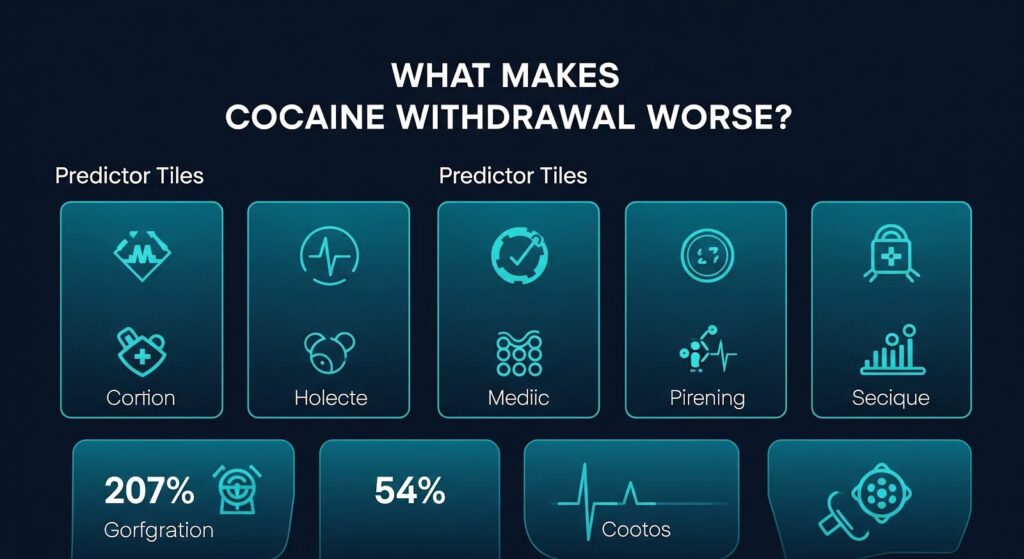
Childhood trauma and psychiatric history also matter. Higher scores on childhood trauma measures and the presence of depression, anxiety, or PTSD at baseline predicted worse withdrawal outcomes in the same study. This is one reason integrated mental health care is not optional in cocaine addiction withdrawal treatment.
Week-one severity is itself predictive. Higher CSSA scores in the first week of abstinence predict worse outcomes and higher dropout rates in outpatient treatment. Early assessment is not just good practice; it is a clinical signal that guides how much support someone needs.
The Cocaine Craving Questionnaire (CCQ) adds another layer of predictive value. Both the full and brief versions predict time to relapse, and subscales measuring intent to use and positive expectancy about cocaine carry particular prognostic weight.
Cocaine Withdrawal Treatment Options
There are no FDA-approved medications for cocaine use disorder as of 2026. That is an important fact to state plainly. But the absence of approved medications does not mean treatment is ineffective. Behavioral interventions, particularly contingency management, have strong and consistent evidence behind them.
Behavioral Treatments
Contingency management (CM) is the single most effective behavioral treatment for stimulant use disorders, including cocaine. It works by providing structured, escalating rewards, such as vouchers or debit cards, when someone produces a negative drug test. The 2024 ASAM/AAAP clinical guideline identifies CM as the first-line behavioral intervention and notes it is now being scaled in VA programs and state Medicaid pilots.
Cognitive behavioral therapy (CBT) teaches people to recognize triggers, manage cravings, and build coping skills. It works well alongside CM and shows durable benefits in some trials. The Community Reinforcement Approach (CRA) and the Matrix Model are also supported by network meta-analyses and are particularly effective when combined with CM.
Telehealth is endorsed by the ASAM/AAAP guideline as a practical way to deliver behavioral care, especially for people with access barriers. Hybrid models that combine remote counseling with in-person urine testing can maintain the integrity of CM while expanding reach.
Medications
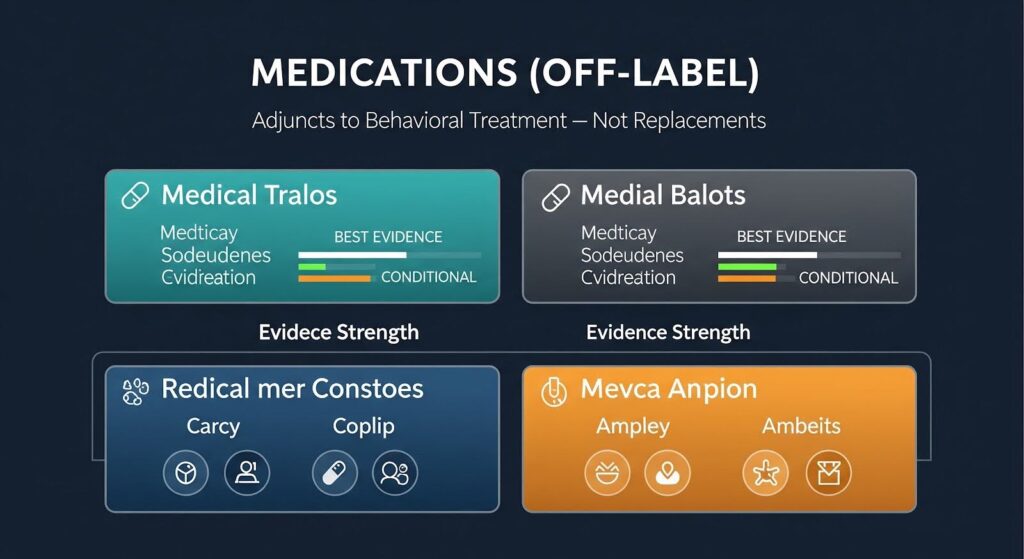
Off-label medications can support recovery in specific situations, but they are adjuncts to behavioral treatment, not replacements.
Topiramate has the strongest current pharmacological evidence. A 2024 meta-analysis of ten randomized controlled trials found that topiramate more than doubled the likelihood of cocaine abstinence compared to placebo (relative risk 2.83), with no significant difference in dropout or adverse events. It is particularly worth considering when alcohol use disorder co-occurs.
Modafinil can be considered for people without co-occurring alcohol use disorder. It shows benefits for end-of-treatment abstinence and retention in some trials, though sustained abstinence effects are less consistent.
Bupropion is a reasonable choice when depression or tobacco use disorder co-occurs, as it may address both conditions simultaneously.
Extended-release mixed amphetamine salts combined with topiramate carry a moderate-certainty conditional recommendation from ASAM/AAAP for reducing cocaine use and craving in selected patients, but this combination requires close monitoring including pill counts, urine testing, and prescription drug monitoring program checks.
A 2019 systematic review and meta-analysis across 66 drugs found only low-to-moderate strength evidence for any pharmacological agent in cocaine use disorder. This underscores why medications should be framed as supports within a broader behavioral treatment plan.
Safety Priorities During Withdrawal
Suicidal ideation must be screened for routinely during early abstinence. It is an explicit item on the CSSA, and the ASAM/AAAP guideline calls for structured suicide risk assessment and crisis planning, particularly in the first two to three weeks.
Chest pain during early abstinence warrants immediate evaluation. The American Heart Association recommends tailored diagnostic approaches for cocaine-associated chest pain, and benzodiazepines and nitroglycerin are the primary acute treatments.
Fentanyl contamination in the cocaine supply is a real and growing danger. Naloxone should be provided to anyone in treatment, and fentanyl test strips are a practical harm reduction tool. During a fentanyl-contaminated crack cocaine overdose cluster, public health workers distributed 300 test strips in five days with no additional overdoses in the weeks that followed, according to a Journal of Addiction Medicine scoping review.
Sleep and Cognitive Recovery
Because objective sleep normalization lags behind how people feel, clinicians should not assume recovery is complete just because someone says they are sleeping better. Sleep hygiene, consistent routines, and light exposure are practical supports.
The cognitive inefficiencies that persist into weeks two and three, even when mood seems to improve, are a real relapse risk factor that warrants continued support rather than a step-down in care.
Why Early Treatment Engagement Matters?
Cocaine withdrawal is not just an uncomfortable week to get through. It is a period of concentrated vulnerability that shapes what comes next. Craving and withdrawal severity measured in the first week predict relapse, dropout, and long-term outcomes. Sleep and cognitive disruption persist beyond what people report feeling. Suicidality is a genuine risk.
The evidence points clearly toward a minimum of four weeks of structured support for most people, with extended care for those with higher severity, polysubstance use, or co-occurring mental health conditions. Withdrawal management is the entry point into treatment, not the treatment itself. The ASAM/AAAP guideline frames cocaine addiction withdrawal within a chronic disease model, meaning the goal is not just getting through the first two weeks but building the sustained support that makes long-term recovery possible.
If you or someone you care about is navigating cocaine withdrawal, connecting with professional support early makes a real difference. Reach out to The Summit Wellness Group to learn about cocaine addiction treatment options and take the first step toward lasting recovery.