If you or a loved one struggles with both mental illness and substance use, understanding how these conditions interact can be lifesaving.
Atlanta dual diagnosis overdose statistics reveal that nearly 22% of people who die from overdose have a documented mental health disorder, and many had contact with healthcare providers within a month of their death.
This article synthesizes CDC surveillance data, Georgia health department resources, and metro Atlanta patterns to show how co-occurring disorders amplify overdose risk and what can be done to prevent tragedies.
Atlanta Dual Diagnosis Overdose Statistics
The intersection of mental health disorders and substance use creates a dangerous amplification of overdose risk in metro Atlanta. CDC’s State Unintentional Drug Overdose Reporting System documented that 21.9% of overdose decedents in 2022 had a non-substance-related mental health disorder, with depressive disorders present in 12.9% and anxiety disorders in 9.4%. These numbers likely underestimate the true burden because they depend on what medical examiners and coroners find documented in medical records.
For Atlanta residents, the picture is complicated by geography. Because city-level overdose data are not publicly available, public health officials use Fulton and DeKalb counties as proxies. In 2022, DeKalb County recorded an emergency department overdose visit rate of 309.4 per 100,000 population, slightly below Georgia’s statewide rate of 318.6 but revealing substantial county variation ranging from 62.2 to 651.4 per 100,000.
What makes these Atlanta overdose data 2025 trends particularly urgent is the environment in which they occur. Fentanyl infiltrated Georgia’s stimulant supply starting in 2020, creating hidden opioid exposure among people who use cocaine and methamphetamine. When combined with the fragmented behavioral health system and gaps in correctional care, people with co-occurring disorders face layered risks that demand integrated responses.
Why Mental Health Disorders Impact Overdose Risk Atlanta?
The CDC explicitly states that people with mental health conditions are at increased risk for nonfatal and fatal overdose. The mechanisms are both direct and systemic. Individuals may use substances to self-medicate symptoms of depression, anxiety, bipolar disorder, or PTSD. The same neurobiological vulnerabilities that underlie mental illness can impair judgment, increase impulsivity, and reduce adherence to safety measures like using fentanyl test strips or avoiding use when alone.
But the risk is not just individual. People with dual diagnoses cycle through emergency departments and urgent care at higher rates than those without mental health disorders. SUDORS data show that decedents with mental health disorders more often had ED visits, inpatient admissions, and contact with substance use treatment within the month before death. These touchpoints represent missed intervention opportunities where integrated screening, medication initiation, and rapid linkage could have changed outcomes.
In metro Atlanta overdose risk factors, this pattern plays out against a backdrop of under-penetration in mental health services. Georgia’s state mental health authority served only 13.64 people per 1,000 population in 2019, well below the U.S. rate of 24.81, suggesting many residents with co-occurring needs are not connected to care.
Co-Occurring Disorders and Overdose Risk Atlanta
Atlanta faces a substantial overlap between mental health conditions and substance use, with hundreds of thousands of residents likely experiencing both. This dual burden heightens vulnerability to overdose, especially as depression, anxiety, and self-medication with alcohol or drugs reinforce one another:
The Scale of Atlanta Substance Use and Mental Health Overlap
National survey data from 2022 found that 23.1% of U.S. adults reported a non-substance-related mental health disorder, and 8.4% had co-occurring mental health and substance use disorders. Translating these prevalence estimates to Atlanta’s metro population of approximately 5.1 million suggests more than 400,000 adults may be navigating both conditions simultaneously.
This overlap is not random. Shared risk factors including trauma, adverse childhood experiences, chronic stress, social isolation, and economic instability predispose individuals to both mental illness and substance use. When these conditions coexist, each can worsen the other. Depression may lead to increased substance use, which in turn deepens depressive symptoms and increases suicide risk. Anxiety can drive self-medication with alcohol or benzodiazepines, escalating physical dependence and overdose vulnerability when combined with opioids.
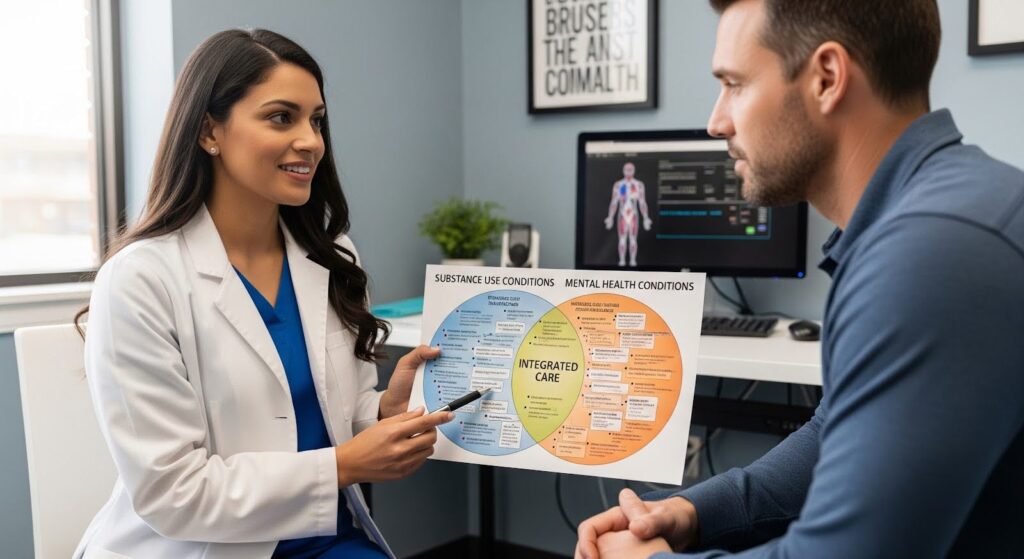
How Fentanyl Contamination Magnifies Dual Diagnosis Risk
The Georgia Department of Public Health’s drug surveillance program highlights the sharp increase in overdoses starting in 2020 due to fentanyl’s presence across illicit drugs, including stimulants. For people with co-occurring mental illness and stimulant use, this shift created a perfect storm. Many individuals who do not identify as opioid users and have no opioid tolerance are now exposed to potent synthetic opioids through contaminated cocaine and methamphetamine.
This hidden exposure is especially dangerous for the dual diagnosis population because stimulant use often masks opioid effects until respiratory depression becomes critical. Clinicians in emergency departments may focus on agitation, psychosis, or cardiovascular symptoms associated with stimulants and miss the need for naloxone until it is too late. At the same time, people using stimulants to cope with depression or anxiety may not carry naloxone or recognize overdose symptoms in time to intervene.
Recent small-scale research among high-frequency users found that fentanyl and methamphetamine co-use was common, perceived overdose risk was high, and willingness to use fentanyl test strips was strong if strips were available. This readiness for harm reduction tools offers a clear pathway to reduce risk if systems can deliver those tools where people with dual diagnoses already appear: emergency departments, community mental health centers, syringe service programs, and correctional facilities.
Dual Diagnosis and SUD Mortality Data Atlanta
Mortality data from Fulton and DeKalb reveal how often mental illness and substance use disorder converge in fatal overdoses. Patterns in recent surveillance show fentanyl’s growing role and highlight missed opportunities for intervention before death among people with documented mental health diagnoses:
Tracking Fatal Overdoses in Fulton and DeKalb
Georgia’s mortality data come from the Office of Health Indicators for Planning OASIS system, which uses death certificates coded with ICD-10 underlying and multiple cause codes. Drug overdose deaths include unintentional poisonings, suicides by drug poisoning, assault, and undetermined intent. Opioid involvement is identified through multiple cause codes for heroin, natural and semisynthetic opioids, methadone, and synthetic opioids like fentanyl.
While city-specific toxicology breakdowns for Atlanta are not public, county-level proxies show Fulton and DeKalb have experienced the same fentanyl-driven surge seen statewide. Local provider summaries indicate that fentanyl is detected in a majority of overdose deaths in DeKalb across recent years, consistent with state and national patterns.
Nationally, the age-adjusted drug overdose death rate decreased slightly from 32.6 per 100,000 in 2022 to 31.3 in 2023, with declines among ages 15 to 54 and increases among adults 55 and older. Rates declined for several opioid categories but increased for cocaine and psychostimulants, reinforcing the need for polysubstance-focused strategies in Atlanta where stimulant involvement is high.
Mental Illness and Overdose Correlation Data Atlanta
The mental health profile of overdose decedents provides direct evidence of correlation. In the 2022 SUDORS analysis, decedents with documented mental health disorders had different distributions of potential intervention opportunities compared to those without. Specifically, they were more likely to have been in current treatment for substance use disorder, to have had a recent emergency department or urgent care visit, to have had a recent inpatient admission, and to have been in an institutional setting like jail, residential treatment, or psychiatric hospital within the month before death.
These patterns indicate that the dual diagnosis relapse and overdose connection operates through repeated contact with fragmented systems. A person with depression and opioid use disorder may cycle through psychiatric hospitalization for suicidal ideation, discharge without MOUD initiation, return to use, present to an ED after nonfatal overdose, receive brief stabilization without integrated SUD and mental health follow-up, and ultimately die of overdose weeks later. Each touchpoint was a chance to intervene, but siloed care models and inadequate care transitions allowed risk to accumulate.
Data Surveillance Tools for Atlanta
Atlanta-area stakeholders can monitor dual diagnosis overdose trends using complementary systems:
- SUDORS provides detailed decedent-level data on substances, circumstances, and mental health documentation, updated annually with ability to compute county-level and multiyear analyses for Georgia.
- DOSE-SYS offers near real-time syndromic surveillance from emergency departments, tracking suspected nonfatal overdoses by nested drug categories including fentanyl, all opioids, all stimulants, cocaine, and methamphetamine.
- DOSE-DIS delivers annual ED and inpatient discharge data with county-level rates for states that participate, enabling medium-term evaluation of trends and interventions.
- Georgia OASIS provides county-stratified overdose mortality and ED/inpatient visit data, including breakdowns by age, race, sex, payer, and socioeconomic vulnerability.
These tools used together allow rapid detection of emerging threats via DOSE-SYS, structural burden estimation via DOSE-DIS and OASIS, and deep understanding of missed opportunities via SUDORS. For dual diagnosis populations, this integration is critical to target screening and care where risk is highest.

Co-Occurring Disorder Overdose Trends Atlanta
Trends in Atlanta show that people with co-occurring disorders are overrepresented in jails, emergency rooms, and repeated overdose events. Justice-system churn, unstable housing, and fragmented care create cyclical risk, making structural reforms crucial to breaking the pattern of preventable deaths:
The Justice System as a Risk Amplifier
People with co-occurring mental health and substance use disorders are overrepresented in jails and prisons. When these individuals cycle through short stays in Fulton and DeKalb county jails, they face abrupt interruptions to medication-assisted treatment for opioid use disorder and psychiatric medications, followed by release into unstable housing and social conditions with lowered opioid tolerance and heightened craving.
National evidence from Washington State shows that overdose is the leading cause of death after prison release, with opioids involved in nearly 15% of all post-release deaths. The early weeks after release are particularly dangerous. Yet public searches for Fulton and DeKalb county jail policies did not identify documents describing MOUD initiation, maintenance during incarceration, or release protocols including naloxone distribution and scheduled post-release appointments.
This lack of transparency suggests structural gaps. Without jail-based MOUD and integrated mental health care, plus robust linkage within 24 to 72 hours of release, people with dual diagnoses return to communities with compounded vulnerability. Georgia’s supervision revocation practices further destabilize care continuity; in 2019, about one-third of Georgia prison admissions were revocations, creating cyclical detention that disrupts treatment and elevates risk.
At the state prison level, Georgia Department of Corrections operates integrated treatment facilities for co-occurring disorders and residential substance abuse treatment programs, indicating a policy direction toward integration. Extending these models to county jails and ensuring seamless post-release linkage would be transformative for overdose prevention in Atlanta.
High Utilizers and Familiar Faces
Data matching in Fulton County identified a cohort of people with complex needs who cycle across jail, homelessness services, and community behavioral health systems. This small group was booked into jail 10 times more frequently and used 20 times more jail bed days than the general jail population. These “familiar faces” are overwhelmingly individuals with co-occurring mental health and substance use disorders, often experiencing homelessness and repeat overdoses.
For this population, the mental health crisis and overdose rates Atlanta connection is stark. Each jail booking, each ED visit, each crisis intervention represents both a failure of upstream prevention and an opportunity for decisive wraparound support. Integrated approaches that combine MOUD, psychiatric stabilization, peer support, housing assistance, and legal navigation can interrupt the cycle. Without them, the revolving door continues, and overdose risk accumulates with each turn.
Preventing Dual Diagnosis Overdose Deaths in Atlanta
Reducing overdose deaths among people with co-occurring disorders in Atlanta requires coordinated action across emergency departments, jails, and community clinics. Standardized screening, timely MOUD initiation, naloxone access, and assertive reentry supports can convert today’s missed chances into lifesaving interventions:
Hardwire Integration in Emergency Departments
Emergency departments are the most actionable point of intervention because they already see people with dual diagnoses at moments of acute crisis. The evidence from SUDORS makes clear that decedents with mental health disorders frequently had ED or urgent care visits within the month before death. Transforming these encounters from missed opportunities to lifesaving interventions requires standardized workflows.
Universal screening for both substance use and mental health disorders should be routine for all patients presenting with overdose, intoxication, withdrawal, or trauma. When opioid use disorder is identified, clinicians should initiate buprenorphine in the ED, provide take-home naloxone, deliver brief overdose prevention education, and schedule a follow-up appointment with a community MOUD provider within 72 hours. When mental health disorders are identified, psychiatric consultation or brief stabilization should occur in the ED, with peer navigators ensuring connection to ongoing care.
For stimulant users, naloxone distribution is critical despite the lack of opioid use identification because fentanyl contamination is pervasive. Fentanyl test strips and education on polysubstance risks should be standard. For individuals with co-occurring disorders who present repeatedly, case management and assertive community treatment teams can provide continuity that episodic ED care cannot.
Expand Correctional MOUD and Reentry Supports
Fulton and DeKalb county jails should implement and publicly document policies for MOUD initiation, continuation, and release. This includes screening all incoming detainees for opioid use disorder, offering methadone, buprenorphine, or naltrexone during incarceration, continuing treatment through release, distributing naloxone at release, and scheduling appointments with community providers within 24 to 72 hours.
For people with co-occurring mental health disorders, integrated care during incarceration and psychiatric medication continuity at release are equally essential. Reentry planning should address housing, benefits enrollment, and transportation to reduce the chaos that drives relapse and overdose in the immediate post-release period.
Federal funding through the State Opioid Response program prioritizes MOUD in correctional settings and supports reentry infrastructure. Atlanta’s counties should pursue these resources aggressively and measure outcomes transparently: MOUD initiation rates in jail, 30-day post-release retention in treatment, and overdose deaths within six months of release.
Community Harm Reduction for Stimulant Users
Given the high co-involvement of stimulants and fentanyl in metro Atlanta overdose risk factors, harm reduction outreach must prioritize stimulant-using networks. This includes naloxone provision to people who use cocaine and methamphetamine, fentanyl test strip distribution, education on overdose recognition when stimulants are primary, and never-use-alone strategies including overdose prevention hotlines.
Mobile outreach teams using DOSE-SYS data to identify hotspot neighborhoods can deliver these tools alongside mental health screening and brief interventions. Syringe service programs and drop-in centers should co-locate mental health services and offer low-barrier access to psychiatric medication and counseling for people with dual diagnoses.
Addressing System Capacity Gaps
Georgia’s under-penetration in community mental health services relative to national rates points to a structural deficit. Expanding access to integrated dual diagnosis treatment that simultaneously addresses mental health and substance use disorders is foundational. This includes increasing assertive community treatment teams, supported housing, supported employment, and peer recovery supports for people with co-occurring disorders.
Managed care and Medicaid incentives should align with retention outcomes, not just referrals. Value-based payment models that reward 30-day and 90-day retention in MOUD and mental health treatment, reduction in ED revisits, and connection to social supports would orient systems toward the continuity that prevents overdose deaths.
Moving Forward with Data and Compassion
Atlanta’s dual diagnosis overdose challenge is solvable, but it requires moving from awareness to action. The surveillance infrastructure is robust: SUDORS documents the who, what, and where of fatal overdoses; DOSE tracks nonfatal patterns in near real-time; and OASIS enables equity analyses by county, race, payer, and neighborhood. What has been missing is the will to implement integrated care at scale, particularly at the critical junctures where people with co-occurring disorders already appear.
The next steps are clear. Emergency departments and urgent care centers must screen universally, initiate MOUD, distribute naloxone and fentanyl test strips, and ensure warm handoffs within 72 hours. County jails must implement MOUD policies transparently, continue treatment through release, and link to community care immediately. Community-based harm reduction must reach stimulant users with tools and information to counter fentanyl contamination. And behavioral health capacity must expand to meet the need, with payment models that reward continuity and recovery.
For individuals and families navigating the intersection of mental illness and substance use, these systemic changes can feel distant. Yet each represents a commitment that your life, and the lives of people you love, are worth the effort of integration and follow-through. Atlanta’s overdose crisis is a system failure, not an individual one, and it demands a system solution built on data, evidence, and compassion.
If you or someone you care about is struggling with co-occurring mental health and substance use disorders, know that effective treatment exists and recovery is possible. Reaching out for help is the first and most important step. Connect with Summit’s evidence-based treatment programs that addresses both conditions together, with the clinical expertise and compassionate support you deserve.