Why does alcohol wake me up at night even though it helped me fall asleep? Alcohol sedates fast, but research shows it can disrupt REM sleep at doses as low as two standard drinks, so that early drowsiness often costs you deeper sleep later. This piece breaks down alcohol and sleep quality, why the effect fades, and what it means for REM recovery.
Alcohol And Sleep Quality: The First Few Hours
Alcohol is a central nervous system depressant, so it makes sense that a drink before bed can make you feel drowsy fast. That part is real, not just in your head. In a controlled study of healthy adults, a bedtime blood alcohol level around 0.10 percent shortened the time it took people to fall asleep and increased slow wave sleep during the first half of the night. A much lower level, around 0.03 percent, barely changed sleep at all.
So the dose matters a lot, and so does the timing. One or two drinks with dinner behaves very differently in your body than a nightcap taken right before lights out. Feeling sleepy after a drink is not an illusion. The real question is what that same dose does later in the night, and what happens if you lean on it night after night.
Why Does Alcohol Wake You Up At Night
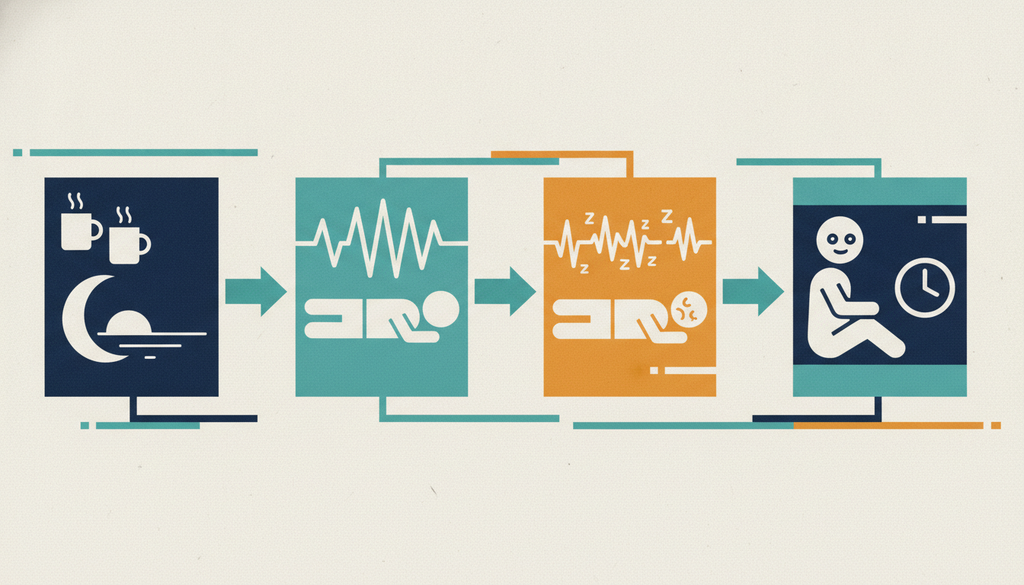
Here is the part most people notice but do not fully connect to the wine or whiskey from a few hours earlier. As your body clears alcohol overnight, sleep tends to get lighter and more broken up. Sleep researchers sometimes call this the two phase night. Early on, alcohol helps you drift off quickly. Later, as blood alcohol drops, your nervous system swings back toward alertness, and you wake up, often wide awake and unable to settle again.
Insomnia is also a recognized early symptom of alcohol withdrawal, and it can appear within 6 to 24 hours of the last drink, alongside anxiety, sweating, and a racing heart. If you drink most nights to fall asleep, your 2 a.m. or 3 a.m. wake up might not just be restless sleep. It could be your body already sliding into a small, early version of withdrawal before the next dose arrives.
What Happens To REM Sleep After You Drink
REM sleep is the stage tied to dreaming, memory processing, and emotional balance. Cut into it repeatedly and the effects tend to show up as grogginess, low mood, or a foggy head, even after what felt like a full night in bed.
A 2025 systematic review that pooled 27 controlled studies found that alcohol delays the start of REM sleep and shortens how long it lasts once it does start. That disruption showed up at doses around two standard drinks and grew worse as the amount increased. This is a low bar. You do not need to drink heavily for your sleep architecture to change. A couple of beers or glasses of wine taken close to bedtime can be enough to blunt the REM sleep you get that night. Add that up over weeks of regular drinking, and you get nights that feel long enough on paper but never quite restorative in practice.
How Fast Tolerance Kills The Sedative Effect
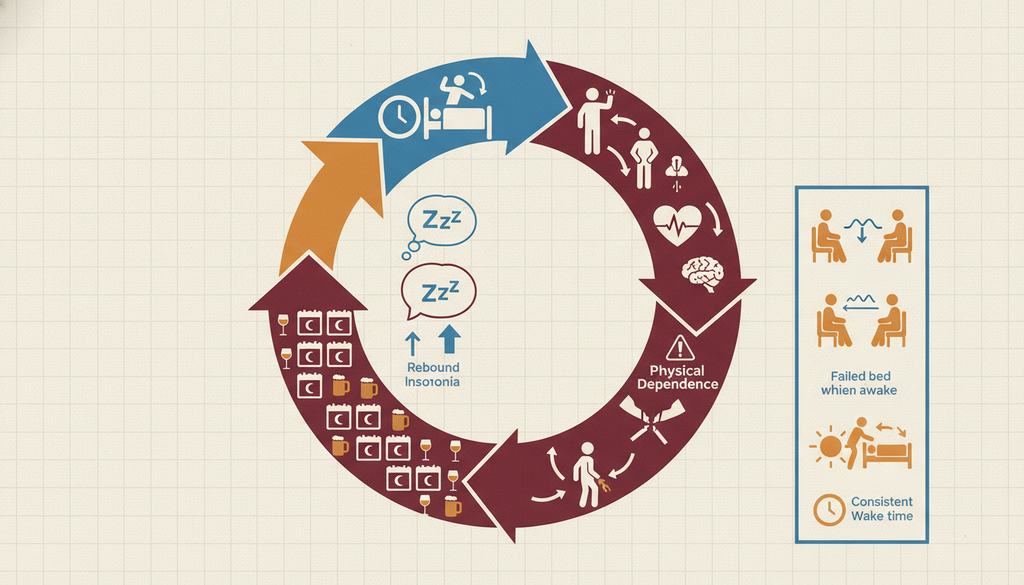
If alcohol worked the same way every single night, this would be a simpler story. It does not. In a small controlled study, adults with insomnia who drank alcohol before bed had real, measurable gains in total sleep time and deep sleep on the second night. By night six, those gains had completely disappeared. A related review found that sedative tolerance can build in as little as three to seven days of nightly use.
This matters because tolerance tends to push people toward more drinking, not less. In that same body of research, people who had been given alcohol nightly for six nights went on to choose stronger doses on later nights than people who had received a placebo. The goal, sleep, stayed exactly the same. The amount needed to reach it kept climbing. That is the quiet trap of using alcohol as a sleep aid. What worked at week one rarely still works by week three, and the natural response is to pour a bit more.
Alcohol And Sleep Quality Over Time
The picture shifts again once you stop looking at a single night and start looking at weeks of use, or at what happens when someone cuts back. Polysomnography research on acute withdrawal found that in the first day or two without alcohol, people had less total sleep time, lower sleep efficiency, less REM sleep than usual, and more frequent snoring compared with people without a drinking history. That finding matters because it shows the earliest days of cutting back are not a simple bounce toward better sleep. Sleep can genuinely get worse before it gets better.
Recovery from there tends to be uneven rather than smooth. Some measures, including total sleep time, how long it takes to fall asleep, and how quickly REM sleep begins, can start improving within one to two weeks of not drinking, based on a sleep review of alcohol use disorder and sleep. Deep sleep tends to lag well behind and can stay reduced for months after the last drink. So if you cut back and feel worse for a stretch before feeling better, that lines up with what the research shows. It is not a sign that alcohol was somehow helping you all along.
Signs Alcohol Is Hurting More Than Helping
A few patterns are worth watching if alcohol has quietly become part of your bedtime routine.
- You reliably wake around 2 or 3 a.m. and struggle to fall back asleep
- The amount you need at bedtime has crept up over weeks or months
- You feel groggy or foggy the next day despite what looks like enough hours in bed
- Snoring or breathing pauses have gotten noticeably worse
- You feel anxious or wired at night if you skip your usual drink
- You have tried cutting back on bedtime drinking and gone right back to it within days
None of these alone means something is seriously wrong. Together, especially if the pattern is getting stronger rather than staying steady, they are a fair signal that alcohol has moved from an occasional sleep aid into something your sleep now quietly depends on.
What Actually Helps You Sleep Without Alcohol
The good news is that insomnia responds well to treatment that does not involve a drink. Cognitive behavioral therapy for insomnia, usually shortened to CBT I, is the approach sleep specialists recommend first, and it has been studied directly in people who drink heavily. A 2025 meta analysis of eight randomized trials in people with alcohol use disorder or heavy drinking found that CBT I lowered insomnia severity scores by about 5.5 points compared with control groups, and the improvement held up at three months and again at six months.
CBT I usually combines a few practical pieces rather than one single trick. A consistent wake time every day, including weekends, helps steady your internal clock. Getting out of bed when you cannot sleep, instead of lying there frustrated, helps break the link between your bed and wakefulness. Challenging the belief that one rough night will wreck the next day reduces the anxiety that keeps you awake in the first place. The American Academy of Sleep Medicine specifically recommends these behavioral tools over generic sleep hygiene tips alone, which tend to help far less than most people expect.
None of this means you have to fix everything overnight. It just means there is a real, tested alternative to reaching for a drink when sleep will not come.
Why It Matters For Your Health
Sleep is not a small piece of the puzzle here. Poor REM recovery has been linked to a flatter mood, weaker concentration, and a harder time managing stress the next day, which is exactly the kind of day that makes another drink feel tempting come evening. That is the loop worth breaking. If alcohol has quietly become your default sleep aid and it has stopped working the way it used to, that is not a personal failing. It is a predictable result of how alcohol interacts with a sleeping brain, and it is a solvable problem once you understand what is actually happening under the surface.
If drinking to fall asleep has turned into something you cannot shake on your own, you do not have to work through it alone. You can reach out today to our team at Summit Wellness Group to talk through what is going on and build a plan that actually fits your life.