Mixing Ambien and alcohol is dangerous because both substances depress your central nervous system, and combining them multiplies the risk of blackouts, falls, dangerous sleep behaviors, and potentially fatal breathing problems.
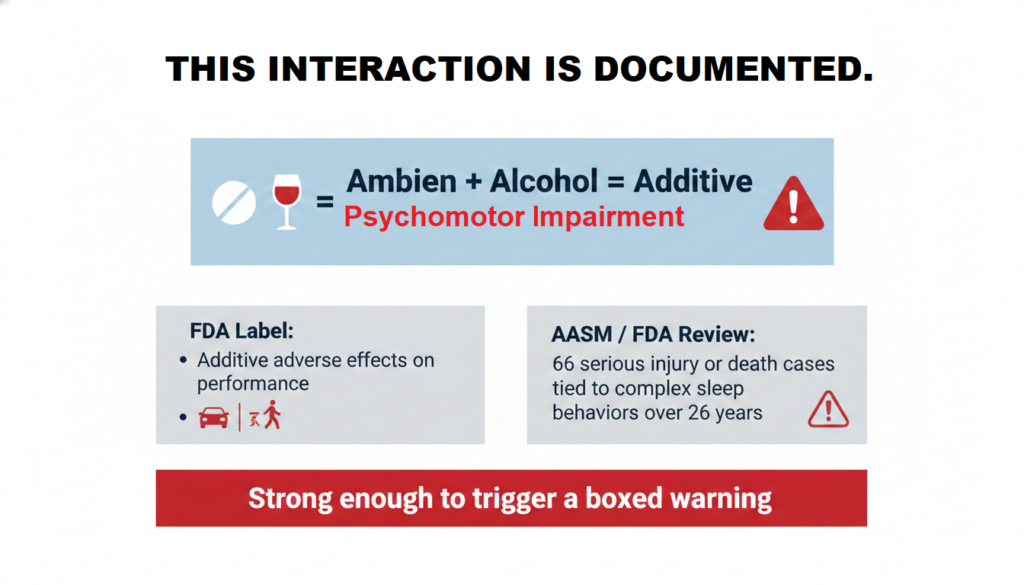
The FDA’s official prescribing label for zolpidem states directly that an additive adverse effect on psychomotor performance between alcohol and oral zolpidem has been demonstrated.
This article explains exactly what happens when you mix these two substances, what warning signs to watch for, and why there is no reliably safe amount of alcohol to pair with Ambien.
Ambien and Alcohol: Why the Combination is Dangerous?
Ambien’s active ingredient, zolpidem, is a sedative-hypnotic that works by enhancing inhibitory signaling in the brain through GABA-A receptors. Alcohol does the same thing through overlapping pathways.
When you take both on the same night, you are not simply adding one sleepy feeling on top of another. You are pushing your brain’s braking system much harder than either substance would alone.
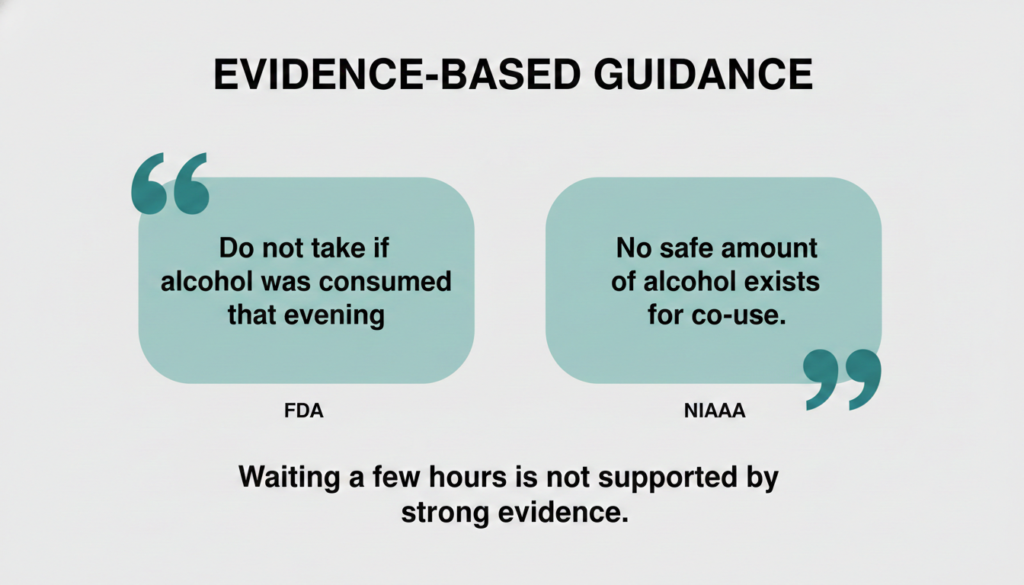
The FDA-approved prescribing label for zolpidem extended-release tablets is unambiguous on this point. It instructs clinicians to tell patients not to take zolpidem if they drank alcohol that evening. That is not a soft caution. It is a behavioral rule built into the official medication guide.
The NIAAA’s alcohol-medication guidance reinforces this, warning that zolpidem alone can impair motor coordination, increase fall risk, produce memory blackouts, and promote sleep-related behaviors performed without any recall. Alcohol, the NIAAA states, could increase all of those risks.
What Zolpidem Actually Does in the Brain?
Zolpidem is a Schedule IV controlled substance approved for short-term insomnia treatment. Although it is chemically different from benzodiazepines, it acts on the same GABA-A receptor complex and produces sedation, slowed reaction time, and impaired memory formation.
According to the StatPearls clinical review of zolpidem, the drug can also cause behavior changes, hallucinations, agitation, and strange behavior, especially when combined with alcohol or other CNS depressants.
Alcohol is not just a social beverage in this context. It is a pharmacologically active depressant that impairs judgment, coordination, and memory on its own.
When you layer it over zolpidem, the result is a brain that is more sedated, less coordinated, less able to form memories, and less capable of protecting itself from danger.
Short-Term Effects of Mixing Ambien and Alcohol
The short-term effects of this combination span several overlapping domains. They are not all dramatic at first, which is part of what makes the interaction so deceptive.
- Excessive sedation: You may become unusually drowsy, hard to wake, slowed in speech, dizzy, or confused. In serious cases, sedation can progress to unconsciousness or coma. Postmarketing overdose data in the Ambien prescribing label describe outcomes ranging from somnolence to coma when zolpidem is combined with CNS depressants.
- Impaired coordination and balance: Both substances worsen motor control. Falls, stair accidents, and nighttime injuries become significantly more likely.
- Memory blackouts: NIAAA specifically notes that zolpidem can produce memory blackouts and that alcohol increases that risk. You may act, speak, or move around with no memory of it afterward.
- Complex sleep behaviors: Zolpidem carries a boxed warning for sleepwalking, sleep-driving, preparing food, making phone calls, and other activities performed while not fully awake. Some of these events have caused serious injuries and deaths.
- Impaired judgment: Alcohol lowers inhibitions while zolpidem can produce abnormal thinking and behavior. Together, they can lead to decisions that would never be made while sober.
- Next-day impairment: Official counseling language states that impairment can be present the following morning even when a person feels fully awake. Adding alcohol to the mix makes that residual impairment worse and harder to detect.
- Respiratory depression: In higher doses or in vulnerable people, the combination can suppress breathing, reduce arousal, and impair the protective reflexes needed if vomiting occurs.
The Ambien and Alcohol Drug Interaction: What the Data Show?
The clearest regulatory statement on the ambien and alcohol drug interaction comes from the zolpidem prescribing label, which states that a study demonstrated additive adverse effects on psychomotor performance when alcohol and oral zolpidem were used together.
This is not a theoretical concern based on drug class alone. It is a documented finding.
The American Academy of Sleep Medicine reported that the FDA identified 66 cases over 26 years of complex sleep behaviors associated with Z-drugs that resulted in serious injuries or deaths.
That case count was serious enough to prompt a class-wide boxed warning and new contraindications in 2019. Alcohol is not required for these events to occur, but it increases the risk and severity.
Ambien and Alcohol Side Effects: A Closer Look at Each Risk
Memory Impairment and Blackouts
This is one of the most clinically distinctive features of the combination. Zolpidem can cause anterograde amnesia, meaning events happen but are not stored as retrievable memories. Alcohol independently causes blackouts through a similar mechanism.
Together, they create a state where a person may be mobile, partially interactive, and performing complex tasks with no ability to remember any of it later.
That amnesia is operationally dangerous. A person might take a second dose because they forgot taking the first. They might cook, drive, or leave the house and have no memory of it the next morning.
The NIAAA guidance specifically calls out this risk, noting that combining zolpidem with alcohol could increase the chance of behaviors during sleep for which patients have no recall, such as driving.
Complex Sleep Behaviors and Sleep-Driving
The boxed warning on Ambien is worth reading carefully. It covers sleepwalking, sleep-driving, preparing and eating food, making phone calls, and having sex while not fully awake.
Some of these events have resulted in death. The consumer labeling states that coadministration of zolpidem with alcohol and other CNS depressants increases the risk of these behaviors.
Sleep-driving is particularly alarming because it combines unconsciousness, amnesia, motor impairment, and public safety risk into a single event.
A clinical and legal case series on zolpidem ingestion and automatisms concluded that sleep-driving and daytime automatism are serious adverse effects with high potential for fatality, and recommended cautious prescribing and explicit patient education.
Respiratory Risk
Profound sedation reduces respiratory drive and blunts the arousal response needed to protect the airway. The Ambien label’s overdose section describes respiratory compromise as a documented outcome when zolpidem is combined with CNS depressants.
Alcohol is one of the most common depressants involved in real-world co-ingestion.
The risk is higher in people with sleep apnea, chronic lung disease, myasthenia gravis, or those also taking opioids. But even in otherwise healthy adults, stacking two depressants reduces the safety margin in ways that are hard to predict in advance.
Falls and Injury
NIAAA cites evidence that zolpidem independently increases inpatient fall risk. Alcohol amplifies coordination problems and slows reaction time. The combination raises the likelihood of nighttime falls, bathroom injuries, stair accidents, and fractures, especially in older adults.
The NIAAA public brochure on harmful alcohol-medication interactions lists Ambien under sleep medications that, when combined with alcohol, may cause impaired motor control, unusual behavior, and memory problems.
Warning Signs After Mixing Ambien and Alcohol
Knowing what to watch for can save a life. Some signs require immediate emergency response. Others are serious but less acute.
Emergency Signs Requiring Immediate Action
Call emergency services right away if you see any of the following:
- Slow, shallow, or stopped breathing
- Inability to wake the person or extreme difficulty arousing them
- Bluish lips or fingertips
- Gurgling, choking, or abnormal snoring in a heavily sedated person
- Collapse or repeated passing out
- Vomiting in an unconscious or semi-conscious person
- Severe confusion, delirium, or violent agitation
- Seizure activity
These align with the overdose descriptions in official labeling, which include impaired consciousness from somnolence to coma, cardiovascular compromise, respiratory compromise, and fatal outcomes.
Behavioral Warning Signs Linked to the Boxed Warning
These may not look like a medical emergency at first, but they signal that something dangerous has occurred:
- Reports that the person was walking, cooking, eating, driving, or calling people while apparently asleep
- Waking up to signs of nighttime activity with no memory of it
- Unexplained injuries, missing food, moved objects, or sent messages
- Evidence of car movement or driving with no recall surrounding the event
The prescribing label requires immediate discontinuation of zolpidem if any complex sleep behavior occurs.
High-Risk Signs That Are Easy to Overlook
- New or worsening blackouts
- Marked unsteadiness or repeated falls
- Hallucinations or strange behavior
- Morning confusion or impaired driving ability despite feeling awake
- Taking extra doses because the first one “did not seem to work”
Can You Mix Ambien and Alcohol Safely?
The short answer is no. The question of whether there is a safe interval after drinking before taking Ambien comes up often, and some informal sources suggest waiting one to three hours. That advice conflicts directly with the strongest available evidence.
The FDA-linked prescribing label says not to take zolpidem if alcohol was consumed that evening. It does not say “wait a few hours.” NIAAA warns against drinking before or while taking Z-drugs because of increased side-effect risk. Neither source provides a clock-based threshold that makes co-use acceptable.
There are good reasons why no safe interval exists. Alcohol clearance varies with body size, sex, age, food intake, liver function, and other medications. Zolpidem itself has unpredictable adverse effects in some individuals even at recommended doses.
Subjective intoxication is an unreliable guide to actual impairment. And memory impairment makes self-monitoring worse precisely when it matters most.
The evidence-based answer is categorical: if alcohol was consumed that evening, skip the Ambien.
Who is at Greatest Risk?
Some people face higher danger from ambien and alcohol use together:
- Older adults: The StatPearls review notes that the AGS Beers Criteria warn that nonbenzodiazepine hypnotics like zolpidem increase risks of delirium, fractures, emergency room visits, and motor vehicle accidents in older adults. Reduced clearance means higher drug levels and greater vulnerability.
- Women: FDA dose-lowering actions recognized that zolpidem clearance is lower in women, leading to higher morning blood levels and greater next-day impairment risk.
- People with respiratory conditions: Sleep apnea, COPD, and myasthenia gravis all reduce the safety margin when sedatives are added.
- People using opioids or other sedatives: Each added depressant increases the cumulative burden on breathing and consciousness.
- People with a history of alcohol or drug misuse: The prescribing label states explicitly that people with a history of addiction to or abuse of drugs or alcohol are at increased risk for misuse, abuse, and addiction of zolpidem and should be monitored carefully.
Dependence, Tolerance, and the Cycle of Co-Use
Repeated co-use of Ambien and alcohol is not just acutely dangerous. It can become a self-reinforcing pattern. Alcohol is used to wind down, zolpidem is added to finish the job, sleep quality worsens over time, and confidence in natural sleep declines. Tolerance builds, and the person may escalate doses or frequency without recognizing the risk.
Zolpidem is a Schedule IV controlled substance, and case literature documents that it can produce dependence, severe withdrawal symptoms, tremors, anxiety, hallucinations, and seizures in chronic or high-dose users.
A case report and review of severe chronic zolpidem abuse found serious withdrawal complications after long-term high-dose use. The prescribing label advises monitoring for tolerance, abuse, and dependence, and recommends slow tapering rather than abrupt discontinuation in chronic users.
Alcohol also fragments sleep and worsens sleep architecture over time, even if it initially promotes sleep onset. So the combination is doubly counterproductive: it raises acute danger while failing to improve restorative sleep.
What to Do If You Have Already Mixed Them?
If Ambien and alcohol have already been combined:
- Do not drive, cook, bathe alone, or use any machinery.
- Stay with a responsible, sober person if possible.
- Watch for slow breathing, inability to wake, bluish lips, repeated vomiting, collapse, or bizarre behavior.
- Call emergency services or poison control immediately if any of those signs appear.
If complex sleep behaviors have occurred, the prescribing label requires stopping zolpidem and speaking with a clinician before taking it again.
Thinking What To Do Now? Call Us Right Away!
If you find yourself regularly wanting to combine alcohol and Ambien to sleep, the underlying problem may be more than medication timing. It may involve an untreated sleep disorder, alcohol misuse, stress, or dependence risk.
Cognitive behavioral therapy for insomnia (CBT-I) is supported by major clinical organizations as a foundational, non-drug treatment for chronic insomnia. Addressing alcohol use directly, rather than layering sedatives on top of it, is both safer and more effective for sleep quality over time.
If you or someone you care about is struggling with prescription medication misuse, alcohol use, or both, speaking with a treatment professional is the right next step. You can reach out to our Ambien treatment team to learn about evidence-based options that address both substance use and sleep health together.