Mixing antidepressants and alcohol is often dismissed as merely “not recommended,” but the real clinical picture is far more serious.
Alcohol can worsen depression and anxiety, amplify medication side effects like drowsiness and dizziness, and in some cases, especially with older drug classes, trigger dangerous reactions including hypertensive crisis or severe sedation.
This article explains what happens when you combine these substances, why the risks differ across medication types, and what you should know to protect your health.
Why is Mixing Antidepressants and Alcohol Dangerous?
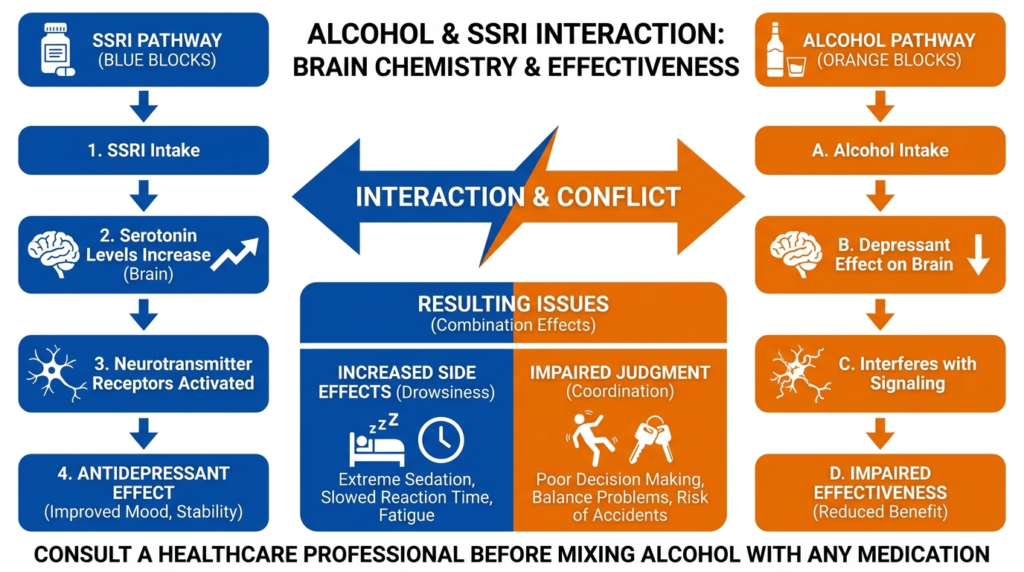
The core danger of combining alcohol and antidepressants lies in how both substances affect your brain and body. Alcohol is a central nervous system depressant that impairs judgment, slows thinking, disrupts coordination, and worsens mood. Antidepressants work to stabilize brain chemistry, but alcohol directly opposes those therapeutic goals.
When you drink while taking antidepressants, several harmful effects occur simultaneously. Alcohol can make depression and anxiety symptoms worse, even if you feel temporary relief. It increases common medication side effects such as drowsiness, dizziness, and impaired motor skills.
Perhaps most importantly, alcohol can reduce how well your antidepressant works, leaving you stuck in a cycle where symptoms persist despite treatment.
The National Institute on Alcohol Abuse and Alcoholism warns that alcohol can interfere with antidepressant effectiveness and worsen the very conditions these medications are meant to treat. This is not a minor inconvenience. It is a fundamental conflict between your treatment goals and your drinking behavior.
How Alcohol Affects Antidepressant Treatment?
Alcohol does more than just add side effects. It actively undermines psychiatric treatment in multiple ways.
First, alcohol worsens the symptoms you are trying to treat. While a drink might seem to ease anxiety or sadness in the moment, alcohol is depressogenic over time. It disrupts sleep, increases next-day anxiety, and can trigger mood swings.
In people with alcohol dependence, depressive and anxiety symptoms often improve substantially after just two to four weeks of abstinence, showing that many symptoms are alcohol-induced rather than evidence of a separate mood disorder.
Second, alcohol impairs your ability to function safely. The combination of alcohol and antidepressants commonly produces increased drowsiness, slowed reaction time, poor coordination, and impaired judgment. These effects make driving dangerous, increase fall risk, and can lead to poor decision-making during crisis moments.
Third, alcohol can create diagnostic confusion. If you continue drinking while taking antidepressants, your doctor cannot easily tell whether persistent symptoms reflect treatment resistance or ongoing alcohol effects.
This can lead to unnecessary medication changes, dose increases, or the mistaken belief that your antidepressant has failed when the real problem is continued alcohol use.
Antidepressants and Alcohol Effects by Drug Class
Not all antidepressants carry the same alcohol-related risks. The danger varies significantly by medication class, and understanding these differences is essential for informed decision-making.
SSRIs and Alcohol
Selective serotonin reuptake inhibitors like sertraline, fluoxetine, escitalopram, and paroxetine are the most commonly prescribed antidepressants. They are generally safer in overdose than older medications, but that does not make them safe to combine with alcohol.
When you mix SSRIs with alcohol, you can expect increased drowsiness, impaired judgment, and worse thinking or motor skills. More concerning, recent evidence suggests that in people with active alcohol use disorder, SSRIs may not help and can sometimes worsen drinking outcomes.
A large Canadian trial found that citalopram was associated with worse drinking outcomes than placebo, leading researchers to conclude that SSRI use early in recovery may be contraindicated.
Among SSRIs, sertraline has one of the least favorable diarrhea profiles, which matters because alcohol itself can aggravate gastrointestinal symptoms. Paroxetine, by contrast, is more constipating. These tolerability differences can influence which medication is most appropriate if you continue to drink despite medical advice.
SNRIs and Alcohol
Serotonin-norepinephrine reuptake inhibitors such as venlafaxine and duloxetine share many alcohol-related risks with SSRIs but introduce additional concerns. SNRIs can increase blood pressure, and venlafaxine has been associated with higher hypertension risk than SSRIs.
Duloxetine carries a specific liver toxicity warning, and the NIAAA explicitly cautions that combining duloxetine with alcohol may further raise the risk of liver damage.
SNRIs also tend to cause more nausea and constipation than many SSRIs. Duloxetine has the highest nausea risk among commonly used antidepressants, which can be especially problematic for people whose drinking already causes gastric distress.
One study found that moderate alcohol consumption increased the risk of clinical relapse in male depressed patients treated with SNRIs, reinforcing that even modest drinking may not be neutral during treatment.
Tricyclic Antidepressants and Alcohol
Tricyclic antidepressants such as amitriptyline and nortriptyline are older medications with a more dangerous side-effect profile. They cause stronger sedation, more anticholinergic effects, greater orthostatic hypotension, and higher cardiac toxicity than newer antidepressants.
Alcohol amplifies all of these risks. The combination produces additive sedation, confusion, dizziness on standing, and impaired coordination. In older adults, this combination significantly increases fall risk. TCAs are also far more dangerous in overdose than SSRIs or SNRIs, with relatively low doses capable of causing lethal heart rhythm disturbances.
Because of these compounded dangers, TCAs and alcohol represent a materially riskier combination than SSRIs or SNRIs with alcohol, even though TCAs do not carry the unique tyramine crisis risk of MAOIs.
MAOIs and Alcohol: The Most Dangerous Combination
Monoamine oxidase inhibitors such as phenelzine and tranylcypromine are the oldest class of antidepressants and carry the most serious alcohol-related danger. Unlike the mainly additive impairment seen with other antidepressants, MAOIs can trigger a hypertensive crisis when combined with tyramine-containing foods and beverages.
Tyramine is a naturally occurring compound found in certain beers and wines, especially draft or unpasteurized varieties. Normally, monoamine oxidase in your gut and liver breaks down tyramine before it reaches your bloodstream.
When MAO is inhibited, tyramine can enter circulation, displace norepinephrine in nerve terminals, and cause a sudden, dangerous spike in blood pressure.
This is not merely “feeling dizzy.” A tyramine reaction can cause severe headache, palpitations, chest pain, nausea, sweating, visual changes, and confusion. In severe cases, it can lead to stroke or cerebral hemorrhage.
The Texas Health and Human Services criteria for MAOI prescribing emphasize blood pressure monitoring and explicit patient education about avoiding high-tyramine foods and beverages.
MAOIs are now used less often because newer antidepressants have fewer side effects, but when they are prescribed, the alcohol warning is categorical and urgent. This is the clearest example in psychiatric pharmacology where alcohol is not merely unhelpful but directly and acutely dangerous.
Side Effects of Mixing Alcohol and Antidepressants
The side effects of combining alcohol and antidepressants extend beyond simple sedation. They form a layered pattern of harm that affects multiple body systems and treatment outcomes.
Immediate neurobehavioral effects include drowsiness, dizziness, slowed reflexes, impaired judgment, and poor coordination. These effects increase your risk of falls, motor vehicle accidents, workplace injuries, and dangerous decision-making. The FDA labeling for mirtazapine, a commonly prescribed sedating antidepressant, explicitly warns patients to avoid alcohol because it adds to impairment of cognitive and motor skills.
Psychiatric destabilization is equally important. Alcohol worsens depression and anxiety, disrupts sleep, and can trigger mood swings or impulsivity. In people with suicidal thoughts or self-harm risk, alcohol lowers inhibitions and impairs judgment at exactly the moments when clear thinking is most critical.
Treatment interference occurs because alcohol can mask whether symptoms are improving, create the appearance of treatment resistance, and reduce medication adherence. If you miss doses, take medications inconsistently, or drink heavily enough to require emergency care, your treatment plan becomes unstable.
Substance use worsening is a particularly concerning finding from recent research. The 2025 Therapeutics Initiative review found that in people with alcohol or other substance use disorders, serotonergic antidepressants usually do not help psychological symptoms and may sometimes worsen substance use.
This means that for people with active drinking problems, the priority should often be treating the alcohol use itself rather than assuming antidepressants will solve alcohol-related mood symptoms.
What Happens When You Mix Alcohol and Antidepressants?
The specific consequences depend on which antidepressant you take, how much you drink, your individual sensitivity, and other health factors.
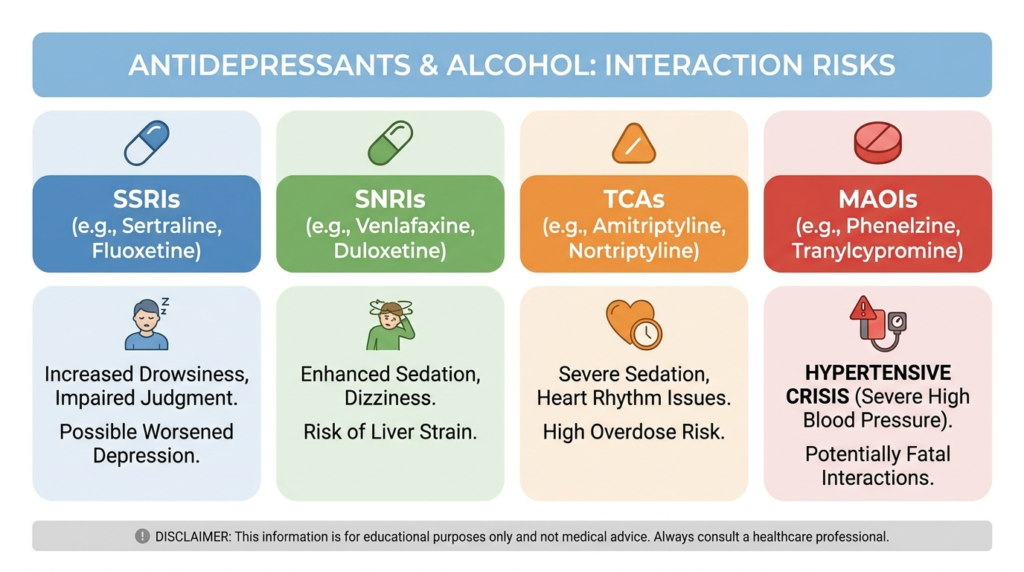
- With SSRIs or SNRIs: You will likely experience increased drowsiness, dizziness, and impaired thinking or motor skills. Your depression or anxiety may worsen. If you have an active alcohol problem, your antidepressant may not work as intended, and your drinking may increase.
- With tricyclic antidepressants: You face greater sedation, confusion, risk of falls, and dangerous cardiac effects, especially in overdose situations. The combination is particularly risky for older adults and people with heart conditions.
- With MAOIs: Certain beers and wines can trigger a hypertensive crisis, a medical emergency that can lead to stroke or death. This is the most dangerous antidepressant-alcohol interaction in clinical practice.
- In all cases: Alcohol undermines your treatment goals, worsens the symptoms you are trying to manage, and increases the risk of accidents, poor judgment, and relapse.
Alcohol and Antidepressants Interaction in Special Populations
Certain groups face higher risks when mixing alcohol and antidepressants.
Older adults are especially vulnerable to sedation, falls, and cognitive impairment. Age-related changes in metabolism and increased sensitivity to CNS depressants make even modest alcohol consumption more dangerous when combined with antidepressants.
People with liver disease face compounded risks because both alcohol and many antidepressants are metabolized by the liver. Duloxetine is particularly concerning in this population due to its hepatotoxicity warning. Alcohol-associated liver disease also increases the risk of drug-related harm through altered pharmacokinetics and pharmacodynamics.
People with co-occurring substance use disorders represent a critical population where standard antidepressant prescribing may be inappropriate. Evidence increasingly shows that reducing or stopping alcohol or drug use often improves anxiety and depression without antidepressants, and that serotonergic antidepressants may not help and can sometimes worsen substance use in this group.
People taking multiple CNS-active medications face stacked risks. If you take benzodiazepines, opioids, sedating antihistamines, or other psychotropic medications along with your antidepressant, adding alcohol creates a dangerous cumulative CNS depressant burden.
Can You Mix Antidepressants and Alcohol Safely?
The evidence does not support the idea that you can safely mix antidepressants and alcohol in any routine or predictable way. While a single drink may not always cause immediate catastrophe with SSRIs or SNRIs, the combination is clinically undesirable and often underestimated.
The safest answer is to avoid alcohol while taking antidepressants. This is not merely conservative advice. It reflects the reality that alcohol works against your treatment goals, increases side effects, impairs functioning, and in some cases can trigger serious medical emergencies.
If you are taking an MAOI, the answer is unequivocal: do not drink beer or wine, especially draft or unpasteurized varieties. The risk of hypertensive crisis is real and potentially fatal.
If you are taking a tricyclic antidepressant, alcohol significantly increases your risk of sedation, falls, confusion, and cardiac complications. The combination is particularly dangerous if you are older, have heart disease, or are at risk of overdose.
If you are taking an SSRI or SNRI, the interaction is less acutely catastrophic than with MAOIs but still clinically important. Alcohol will likely worsen your symptoms, increase side effects, and reduce treatment effectiveness.
If you have an active alcohol problem, your antidepressant may not work and could potentially worsen your drinking.
What to Do If You Drink While Taking Antidepressants?
If you have been drinking while taking antidepressants, the most important step is to be honest with your healthcare provider. Do not minimize your alcohol use or assume that because nothing dramatic has happened, the combination is safe.
Your doctor needs accurate information about your drinking pattern to make good treatment decisions. If you are drinking regularly or heavily, your persistent symptoms may be alcohol-induced rather than evidence of treatment-resistant depression.
In many cases, reducing or stopping alcohol produces substantial improvement in mood and anxiety symptoms within two to four weeks.
If you have an alcohol use disorder, the priority should shift to treating the alcohol problem directly. Evidence-based treatments for alcohol use disorder include medications such as naltrexone and acamprosate, behavioral therapies, and integrated dual-diagnosis care.
Research shows that combination treatment addressing both depression and alcohol use produces better outcomes than antidepressant monotherapy.
If you experience severe headache, chest pain, rapid heartbeat, confusion, or other concerning symptoms after drinking while on an MAOI, seek emergency medical care immediately. These may be signs of a hypertensive crisis.
Reach Out For Our Evidence-Based Treatment For Lasting Recovery!
The most effective approach to co-occurring depression and alcohol use is integrated care that addresses both conditions simultaneously. This means treating alcohol use as a primary target, not a background variable, and recognizing that abstinence or significant reduction in drinking often produces meaningful improvement in psychiatric symptoms.
If you are struggling with depression and alcohol use, you deserve treatment that acknowledges the complexity of your situation and provides evidence-based solutions for both problems. Relying on antidepressants alone while continuing to drink is unlikely to produce the recovery you are seeking.
If you or someone you care about is facing these challenges, reach out to The Summit Wellness Group for the treatment that integrates psychiatric care with addiction treatment. Remember, recovery is possible when both conditions are treated with the attention and expertise they deserve.