Yes, cocaine can cause a depressed mood, particularly as its effects wear off and during withdrawal. It can also worsen existing mental health symptoms, while some people experience depression that is not caused by cocaine at all. Understanding the difference matters for treatment, but you do not need a definite diagnosis before asking for help. This guide explains what a cocaine crash feels like, how long depression after cocaine may last, warning signs that need attention, and evidence-based treatment options.
How Are Cocaine and Depression Connected?
Cocaine use and depression can overlap in several ways. A person may feel intensely low after a binge, develop a more substantial substance-induced depressive disorder, or have an independent mood disorder that began before cocaine use. More than one process can be present at once.
- Withdrawal-related low mood: exhaustion, reduced pleasure, irritability, and cravings that appear after cocaine use decreases or stops.
- Cocaine-induced depressive disorder: a clinically significant depressive disturbance associated with cocaine exposure that warrants assessment beyond ordinary withdrawal symptoms.
- Independent depression: a depressive illness that predates cocaine use, recurs during substance-free periods, or is otherwise not adequately explained by cocaine.
These patterns can look similar from the outside. Clinicians consider when symptoms began, past episodes, other substances or medical conditions, how daily functioning has changed, and whether there are immediate safety concerns. The ASAM/AAAP clinical guideline recommends evaluating and treating co-occurring psychiatric symptoms while the relationship to stimulant use is clarified.
Can Cocaine Cause Depression or Make It Worse?
Yes. Cocaine affects brain systems involved in reward, alertness, and mood. When its effects fade, a person can experience the opposite of the brief stimulant high: fatigue, low mood, anxiety, and an inability to enjoy ordinary activities. This is one reason depression after cocaine may appear even in someone without a prior depression diagnosis.
Repeated use, disrupted sleep, stress, and the cycle of craving and crashing can also complicate an existing depressive illness. But the presence of cocaine use does not prove it caused every mood symptom. It would be equally misleading to assume that everyone who uses cocaine will develop depression or that a person’s depression can be explained by a simple claim about depleted dopamine.
What Does a Cocaine Crash Feel Like?
A cocaine crash may begin within hours after the last use, especially following repeated or heavy use. Common experiences include:
- Strong tiredness or sleeping much more than usual
- Low mood, emotional flatness, or loss of interest in enjoyable activities (anhedonia)
- Anxiety, irritability, agitation, or feeling unusually restless
- Increased appetite and changes in sleep, sometimes including unpleasant dreams
- Difficulty concentrating and powerful cravings to use cocaine again
The intensity varies with the pattern of use, sleep deprivation, other substances, and a person’s health and psychiatric history. MedlinePlus describes these common withdrawal symptoms, but the word “crash” should not be taken to mean symptoms are harmless or do not require treatment.
How Long Does Depression After Cocaine Last?
There is no reliable timeline that predicts when every person’s mood will recover. It is useful to separate the early crash from symptoms that continue afterward.
The First Several Days to a Week
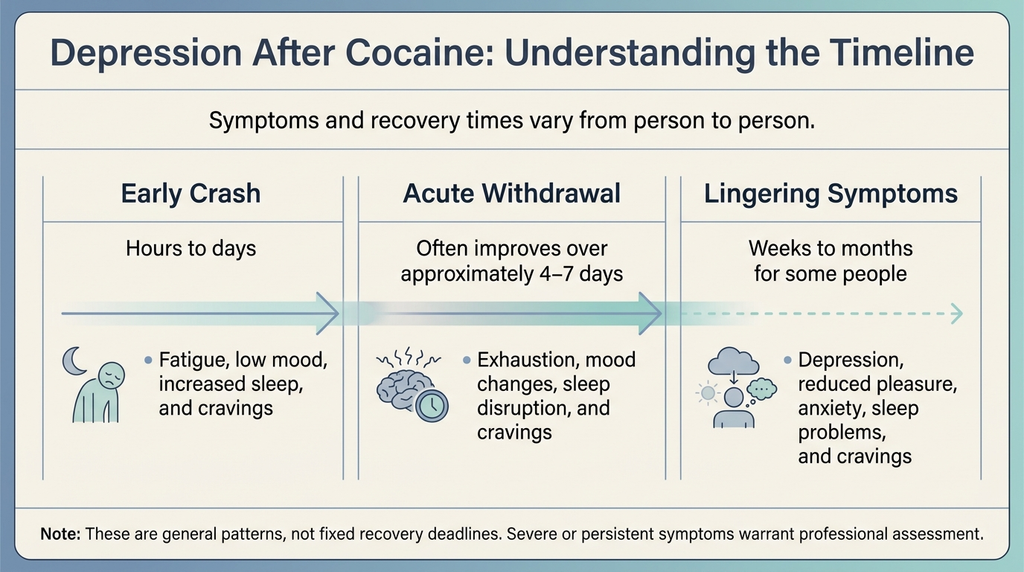
Symptoms often peak during the first two to three days after stopping, and much of the discomfort associated with acute psychostimulant withdrawal improves within about four to seven days. A clinical review of stimulant withdrawal describes this broad pattern across cocaine and other stimulants. It does not mean that sleep, motivation, or mood must return to normal by day seven.
Weeks Two to Four and Beyond
Some people continue to experience low mood, anxiety, insomnia, reduced pleasure, and cravings for weeks or months. These are sometimes called post-acute withdrawal symptoms. The ASAM/AAAP guideline recommends assessing and treating persistent symptoms rather than simply waiting for them to disappear.
A longer course is more likely to raise questions about another depressive disorder, especially when functioning remains impaired, but duration alone cannot establish the cause. After prolonged heavy cocaine use, MedlinePlus notes that depression and craving may persist for months. Neither source supports a universal recovery deadline.
When Could Depression Be More Than Withdrawal?
A clinician will look beyond the crash when depressive symptoms remain severe, are not improving, or interfere with work, relationships, eating, hygiene, or other daily activities. A history of depression before cocaine use or during previous periods without cocaine is another reason to investigate an independent depressive disorder.
Persistence for roughly a month after acute intoxication or withdrawal has ended is a commonly discussed clue for further diagnostic review. It is not a rule that depression automatically becomes major depressive disorder on day 30, and it is not a reason to delay care until then. A person experiencing disabling symptoms deserves assessment much earlier.
Research also suggests that the distinction matters for recovery. In a prospective study of 250 psychiatric inpatients with cocaine, alcohol, and/or heroin dependence, both substance-induced and independent depression were associated with aspects of later substance use or relapse. The results do not predict any one person’s outcome, but they support taking either presentation seriously.
Loss of pleasure deserves particular attention. Someone may no longer feel acutely sad but may still struggle to enjoy relationships, initiate activities, or stay engaged in treatment. Improvement in exhaustion is not necessarily the same as recovery of mood and motivation.
When Depression After Cocaine Requires Urgent Help
Suicidal thoughts can occur during stimulant withdrawal, and the ASAM/AAAP guideline warns that suicide risk may increase as intoxication wears off and acute withdrawal begins. Do not assume the danger has passed because the cocaine high has ended.
Seek emergency evaluation when there is immediate danger, including:
- Current intent or a plan to end one’s life, or preparation to act on it
- A recent suicide attempt or inability to stay safe
- Severe confusion, psychosis, or agitation that makes the situation unsafe
If immediate danger is present, call emergency services or go to the nearest emergency department. Do not leave a person at immediate risk alone while arranging help. In the United States, you can call or text 988 for crisis support. Even suicidal thoughts without a specific plan warrant prompt professional assessment; they should not be dismissed as “just withdrawal.”
How Are Cocaine Use and Depression Treated Together?
The most useful plan addresses cocaine use and clinically significant mood symptoms together. Care can begin before a clinician is fully certain whether depression is substance-induced or independent. Treatment choices depend on safety, diagnosis, the severity of cocaine use, access to support, and the person’s goals.

Contingency Management and Cognitive Behavioral Therapy
Contingency management (CM) uses structured, tangible reinforcement for measurable recovery-related goals, such as attending treatment or providing cocaine-negative tests. In a systematic review of 157 trials involving 15,842 participants, CM was the treatment category consistently associated with improved cocaine-negative urine testing across the study comparisons. That finding relates to reduced cocaine use, not a guaranteed cure for depression.
Cognitive behavioral therapy (CBT) can complement CM by helping people identify triggers, build coping skills, respond differently to cravings, and develop routines that support recovery. Both approaches are supported within the ASAM/AAAP treatment recommendations. Treatment can also include support for sleep, stress, relationships, and the practical barriers that make ongoing care difficult.
Treatment for Depression and Other Symptoms
Mental health care may involve psychotherapy, a structured plan to reconnect with manageable daily activities, and medication when clinically appropriate. Antidepressants have not consistently reduced cocaine use when studied as treatment for cocaine use disorder itself. That does not mean they cannot help a person with an independently diagnosed depressive disorder. A prescriber should evaluate the mood diagnosis, symptoms, other substances, and medication safety before choosing treatment.
For people with both a substance use disorder and a mental health disorder, SAMHSA recommends integrated care rather than disconnected treatment plans. Clinicians may also need to reassess the diagnosis as withdrawal symptoms change.
Choosing the Right Level of Care
Not everyone stopping cocaine needs residential treatment. Outpatient counseling, structured outpatient programs, or more intensive care may be appropriate depending on symptoms and available support. Severe suicidality, psychosis, medical instability, or an unsafe home environment can require urgent assessment or a higher level of care. The decision should follow an individualized evaluation, not a fixed rule based solely on cocaine use.
What Does Recovery From Cocaine and Depression Look Like?
Progress can be uneven. Fatigue may improve before interest and motivation return; sleep may stabilize while cravings still come and go. A useful recovery plan tracks more than days without cocaine: mood, enjoyment, safety, sleep, functioning, treatment participation, and any return to use all matter.
Persistent depression is not proof that recovery has failed, but it should not be ignored. If low mood remains intense, functioning deteriorates, or cocaine use continues despite treatment, the plan may need adjustment. There is no evidence-based date by which everyone must feel fully recovered.
Getting Help for Cocaine and Depression
If cocaine use and depression are affecting you or someone you care about, ask for an assessment that covers both substance use and mental health. Explain when the symptoms began, whether depression was present before cocaine use, and any concerns about safety. You can explore evidence-based treatment options with The Summit Wellness Group to discuss what level of support may fit your needs.