Mixing MDMA and alcohol is dangerous because both substances stress your heart, liver, and brain in overlapping ways.
When combined, MDMA masks alcohol’s sedative effects while alcohol reduces MDMA’s euphoria, often leading people to consume more of both and increasing the risk of dehydration, overheating, liver damage, and potentially fatal cardiovascular strain.
This article explains the specific physiological risks, why the combination is especially harmful, and what current evidence says about safer approaches to substance use and recovery.
Why Do People Mix MDMA and Alcohol?
MDMA, commonly known as molly or ecstasy, and alcohol are frequently used together in social settings like clubs, concerts, and parties. The combination is appealing to some users because they believe alcohol will ease the comedown from MDMA or enhance the overall experience. Others simply drink alcohol habitually in social environments where MDMA is also present.
However, this mixing pattern is not harmless experimentation. The pharmacological interaction between MDMA and alcohol creates a dangerous feedback loop.
Alcohol is a central nervous system depressant that slows brain activity and impairs judgment. MDMA is a stimulant and entactogen that increases energy, emotional openness, and sensory perception. When taken together, each drug masks some effects of the other, making it harder to recognize intoxication levels and easier to overconsume both substances.
Research on co-occurring PTSD and alcohol use disorder has shown that substance misuse often serves as self-medication for underlying distress. In dual-diagnosis populations, trauma-focused behavioral therapies combined with alcohol-targeted medications produce the strongest outcomes.
This principle applies broadly: addressing the reasons behind substance use, rather than simply mixing substances to manage discomfort, leads to better health and safety.
How MDMA and Alcohol Affect the Body Differently?
Understanding the risks of mixing MDMA and alcohol requires knowing how each substance works on its own.
MDMA’s Effects
MDMA primarily affects the brain by increasing the release and blocking the reuptake of serotonin, dopamine, and norepinephrine. This flood of neurotransmitters produces the characteristic effects: euphoria, increased energy, emotional warmth, enhanced sensory perception, and feelings of closeness to others.
MDMA also raises body temperature, heart rate, and blood pressure. It suppresses appetite and the sensation of thirst, which contributes to dehydration risk.
In controlled clinical settings, MDMA-assisted therapy has shown large reductions in PTSD symptoms when combined with structured psychotherapy. These therapeutic applications use pharmaceutical-grade MDMA in carefully monitored medical environments, which is fundamentally different from recreational use.
Alcohol’s Effects
Alcohol is a depressant that slows neural activity by enhancing GABA, an inhibitory neurotransmitter, and blocking glutamate, an excitatory one. This produces relaxation, lowered inhibitions, impaired coordination, slowed reaction time, and sedation.
Alcohol also causes dehydration, disrupts temperature regulation, stresses the liver, and impairs judgment. At high doses, it can cause respiratory depression, unconsciousness, and death.
The Dangerous Interaction
When you mix molly and alcohol, the stimulant effects of MDMA counteract some of alcohol’s sedative effects. This means you may not feel as drunk as you actually are, leading to continued drinking past safe limits.
Meanwhile, alcohol reduces the euphoric effects of MDMA, prompting users to take more MDMA to achieve the desired high. This escalation increases the risk of both acute toxicity and long-term harm.
Both substances also dehydrate the body and impair temperature regulation. MDMA alone can cause dangerous overheating, especially in hot, crowded environments with physical activity like dancing. Alcohol worsens dehydration and further disrupts the body’s ability to cool itself.
The combination significantly raises the risk of heatstroke, a medical emergency that can cause organ failure and death.
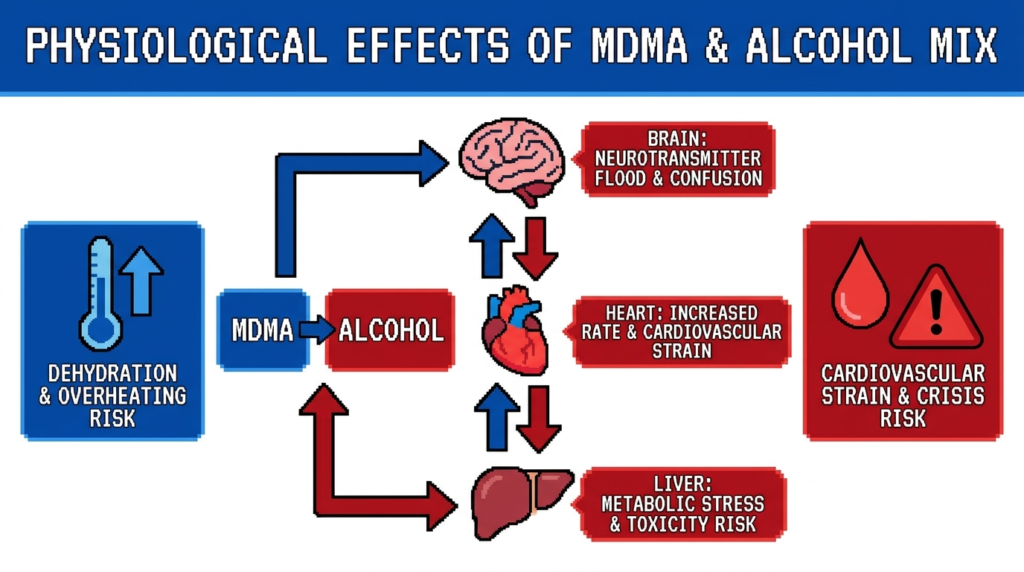
Cardiovascular Risks of Mixing MDMA and Alcohol
One of the most serious dangers of combining MDMA and alcohol is the strain on the cardiovascular system. MDMA increases heart rate and blood pressure by stimulating the sympathetic nervous system. Alcohol also affects heart function, though its effects are more complex and dose-dependent. When combined, the cardiovascular stress is compounded.
Studies have documented cases of severe hypertension, arrhythmias, and even heart attacks in people who mixed these substances. The risk is especially high for individuals with underlying heart conditions, but even healthy young adults have experienced cardiac events after combining MDMA and alcohol.
The interaction also increases the likelihood of stroke. MDMA can cause blood vessels in the brain to constrict, and alcohol’s effects on blood pressure and clotting further elevate stroke risk. These cardiovascular dangers are not theoretical.
Emergency departments regularly treat patients experiencing chest pain, rapid heartbeat, and other cardiac symptoms after mixing stimulants and alcohol.
Liver Damage and Metabolic Stress
Both MDMA and alcohol are metabolized primarily by the liver, and their combination creates significant hepatic stress. Alcohol is well known for causing liver damage through fatty liver disease, alcoholic hepatitis, and cirrhosis with chronic use. MDMA metabolism produces toxic byproducts that can damage liver cells, especially when the liver is already stressed by alcohol processing.
When you take MDMA and drink alcohol simultaneously, your liver must work to break down both substances at once. This competition for metabolic pathways can slow the elimination of both drugs, prolonging their effects and increasing toxicity. The result is a higher risk of acute liver injury and, with repeated use, chronic liver disease.
Research on alcohol use disorder treatment has shown that medications like naltrexone can improve drinking outcomes when combined with behavioral therapy.
In one randomized trial of adults with PTSD and alcohol dependence, naltrexone produced faster reductions in drinking, while trauma-focused therapy improved PTSD symptoms. This evidence underscores that effective treatment targets the specific mechanisms of each problem rather than relying on one intervention to solve everything.
Dehydration, Overheating, and Electrolyte Imbalance
Dehydration is one of the most immediate and dangerous consequences of mixing MDMA and alcohol. MDMA suppresses the sensation of thirst and causes excessive sweating, especially during physical activity. Alcohol is a diuretic that increases urine production and fluid loss. Together, they create a perfect storm for severe dehydration.
Dehydration alone can cause dizziness, confusion, rapid heartbeat, and fainting. When combined with MDMA’s tendency to raise body temperature, the risk of heatstroke becomes very real.
Heatstroke occurs when the body’s core temperature rises above 104°F and the cooling mechanisms fail. Symptoms include confusion, seizures, loss of consciousness, and organ failure. Without immediate medical treatment, heatstroke can be fatal.
Electrolyte imbalances are another serious concern. MDMA can cause the body to retain water inappropriately, leading to a dangerous condition called hyponatremia, where sodium levels in the blood become dangerously low. Alcohol worsens this by affecting kidney function and electrolyte balance. Hyponatremia can cause brain swelling, seizures, coma, and death.
The combination of dehydration and hyponatremia creates a confusing clinical picture. Some people who mix MDMA and alcohol drink excessive amounts of water to combat dehydration, which can paradoxically worsen hyponatremia. Others become so dehydrated that their kidneys fail. Both extremes are medical emergencies.
Cognitive and Psychological Risks
Beyond the immediate physical dangers, mixing MDMA and alcohol carries significant cognitive and psychological risks. Both substances impair judgment, decision-making, and impulse control. This combination increases the likelihood of risky behaviors such as unsafe sex, driving under the influence, physical altercations, and other dangerous activities.
MDMA’s effects on serotonin can lead to a severe emotional crash in the days following use, often called a “comedown.” Symptoms include depression, anxiety, irritability, fatigue, and difficulty concentrating.
Alcohol worsens this comedown by further depleting neurotransmitters and disrupting sleep. People who regularly mix these substances often experience persistent mood disturbances, memory problems, and cognitive impairment.
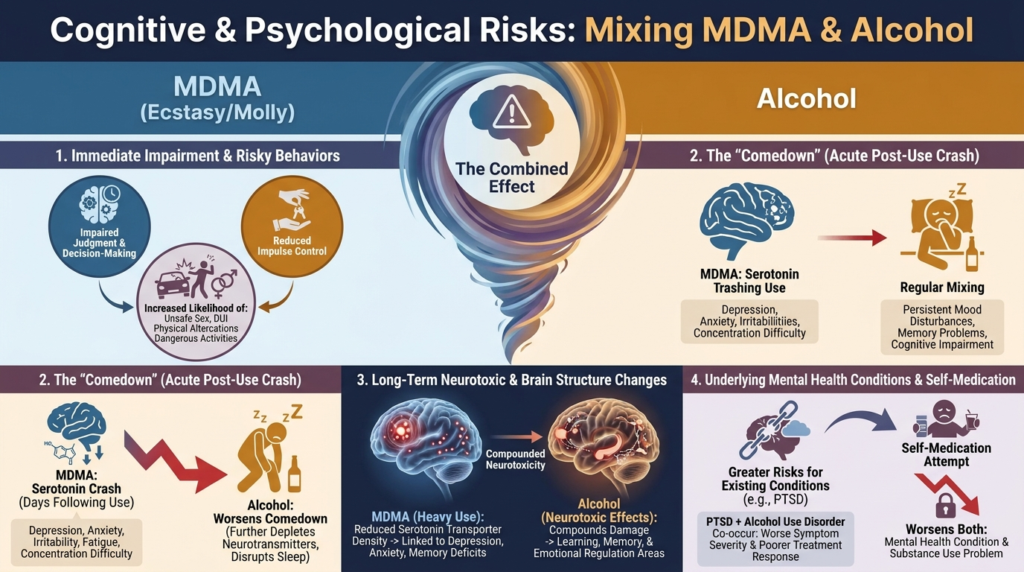
Long-term use of MDMA, especially when combined with alcohol, has been associated with lasting changes in brain structure and function. Studies have found reduced serotonin transporter density in the brains of heavy MDMA users, which may contribute to depression, anxiety, and memory deficits.
Alcohol’s neurotoxic effects compound this damage, particularly in areas of the brain responsible for learning, memory, and emotional regulation.
For individuals with underlying mental health conditions, the risks are even greater. Research has shown that PTSD and alcohol use disorder commonly co-occur and are associated with worse symptom severity and poorer treatment response than either condition alone.
Mixing substances to self-medicate trauma symptoms or other psychological distress typically worsens both the mental health condition and the substance use problem.
Increased Risk of Overdose and Medical Emergencies
Can you mix molly and alcohol without serious consequences? The short answer is no. The combination significantly increases the risk of overdose and medical emergencies. Because each substance masks some effects of the other, users often consume dangerous amounts of both without realizing it.
MDMA overdose can cause seizures, extremely high body temperature, irregular heartbeat, and loss of consciousness. Alcohol overdose, or alcohol poisoning, can cause vomiting, seizures, slow or irregular breathing, hypothermia, and unconsciousness. When both substances are present, the symptoms can be unpredictable and harder to treat.
Emergency medical personnel face challenges when treating patients who have mixed MDMA and alcohol because the appropriate interventions for one substance may complicate treatment of the other.
For example, cooling measures for MDMA-induced hyperthermia must be balanced against alcohol’s tendency to cause hypothermia. Medications used to manage agitation or seizures must be chosen carefully to avoid dangerous interactions.
The unpredictability of street drugs adds another layer of risk. MDMA sold recreationally is often adulterated with other substances such as methamphetamine, synthetic cathinones, or fentanyl. These adulterants can have their own dangerous interactions with alcohol and make overdose even more likely.
What the Research Says About MDMA and Alcohol Risks?
Scientific research consistently demonstrates that mixing MDMA and alcohol is more dangerous than using either substance alone. Studies have documented increased toxicity, more severe adverse effects, and higher rates of emergency department visits among people who combine these substances.
One important area of research involves MDMA’s potential therapeutic applications. Phase 3 trials have shown that MDMA-assisted therapy can significantly reduce PTSD symptoms when delivered in controlled clinical settings with pharmaceutical-grade MDMA and structured psychotherapy.
However, these therapeutic contexts are fundamentally different from recreational use, especially when combined with alcohol.
Exploratory analyses from PTSD trials found that MDMA-assisted therapy was associated with reduced hazardous alcohol use compared to placebo plus therapy, with no evidence of increased illicit drug use. These findings are preliminary and come from a population with severe PTSD, not active alcohol use disorder.
The results suggest that effective trauma treatment may reduce self-medicating behaviors, but they do not support recreational mixing of MDMA and alcohol.
Current evidence indicates that the best outcomes for co-occurring PTSD and alcohol problems come from integrated treatment that addresses both conditions simultaneously. This typically involves trauma-focused psychotherapy combined with medications that target alcohol use, such as naltrexone.
The principle is clear: effective treatment requires targeting each problem with appropriate interventions, not hoping that one substance or therapy will solve everything.
Harm Reduction: What to Know If You or Someone You Know Mixes These Substances?
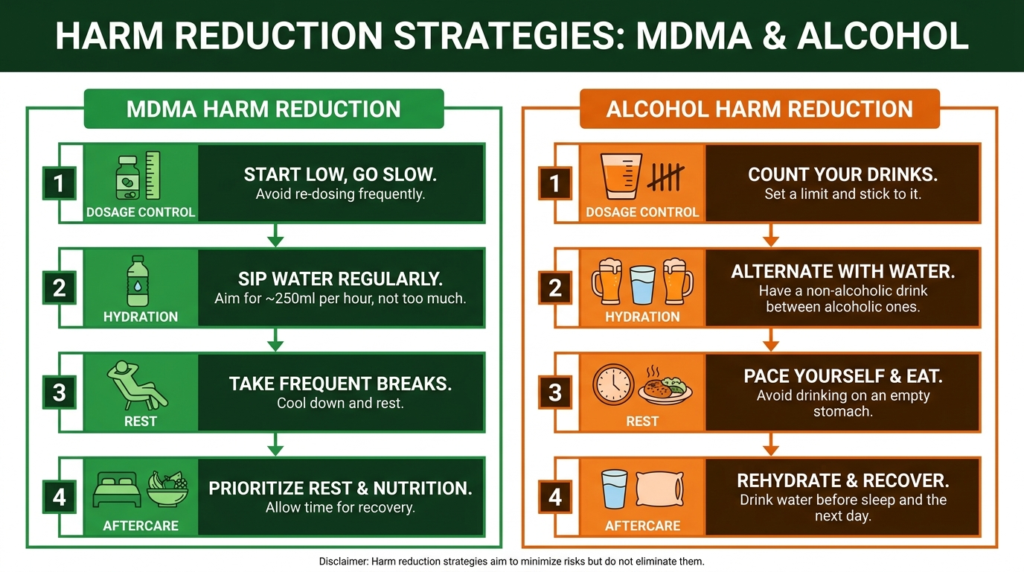
While the safest choice is to avoid mixing MDMA and alcohol entirely, harm reduction strategies can reduce risk for people who choose to use these substances.
Key Harm Reduction Principles
- Stay hydrated, but not excessively. Sip water or electrolyte drinks regularly, but avoid drinking more than about one pint per hour. Excessive water intake can cause dangerous hyponatremia.
- Take breaks from physical activity. If you’re dancing or in a hot environment, rest regularly in a cool area to prevent overheating.
- Use less of both substances. If you choose to mix MDMA and alcohol, use smaller amounts of each than you would use separately. Remember that each substance masks the effects of the other.
- Don’t drive or operate machinery. Both substances severely impair coordination, reaction time, and judgment.
- Stay with trusted friends. Never use substances alone. Make sure someone sober knows where you are and can get help if needed.
- Know the signs of medical emergency. Seek immediate medical help if you or someone else experiences chest pain, difficulty breathing, seizures, loss of consciousness, extreme confusion, or inability to cool down despite rest and fluids.
- Test your substances. If you choose to use MDMA, consider using drug checking services or test kits to identify adulterants. However, testing does not eliminate the risks of mixing with alcohol.
When to Seek Help?
If you find yourself regularly mixing MDMA and alcohol, or if substance use is causing problems in your life, professional help is available. Signs that you may benefit from treatment include:
- Using substances more often or in larger amounts than intended
- Unsuccessful attempts to cut down or stop
- Spending significant time obtaining, using, or recovering from substances
- Cravings or strong urges to use
- Substance use interfering with work, school, or relationships
- Continued use despite physical or psychological problems
- Needing more of the substance to achieve the same effect
- Experiencing withdrawal symptoms when not using
Treatment Options for Substance Use and Co-Occurring Conditions
Effective treatment for substance use disorders, especially when complicated by mental health conditions, requires comprehensive, individualized care. Evidence-based approaches combine behavioral therapies with medical support and holistic interventions.
Evidence-Based Therapies
Cognitive Behavioral Therapy helps identify and change thought patterns and behaviors related to substance use. Dialectical Behavior Therapy teaches skills for managing emotions, tolerating distress, and improving relationships.
Motivational Enhancement Therapy helps build internal motivation for change. These approaches have strong research support for treating substance use disorders.
For individuals with trauma histories, specialized therapies like EMDR and trauma-focused cognitive processing can address the underlying issues that often drive substance use.
Research shows that integrated treatment addressing both trauma and substance use produces better outcomes than treating either condition alone.
Medical Support
Medication-assisted treatment can be an important component of recovery, particularly for alcohol use disorder. Medications like naltrexone, acamprosate, and disulfiram have proven efficacy in reducing drinking and supporting abstinence.
For individuals with co-occurring mental health conditions, psychiatric medications may also be appropriate.
Medical detoxification provides safe management of withdrawal symptoms under professional supervision. This is especially important for alcohol withdrawal, which can be dangerous or even fatal without proper medical care.
Levels of Care
Treatment intensity should match the severity of the problem. Options include:
- Partial Hospitalization Programs provide full-day treatment while allowing clients to return home in the evenings
- Intensive Outpatient Programs offer flexible scheduling with multiple sessions per week
- Standard Outpatient Treatment provides ongoing support with less frequent sessions
- Residential Treatment offers 24-hour care in a structured environment for those needing more intensive support
Holistic Approaches
Comprehensive treatment addresses the whole person, not just the substance use. Holistic interventions like yoga, meditation, exercise, nutrition counseling, and art therapy support physical and emotional healing.
These approaches complement evidence-based therapies and help build a sustainable recovery lifestyle.
The Importance of Integrated Treatment
The research on MDMA and alcohol risks points to a broader principle: complex problems require comprehensive solutions. Just as mixing substances creates compounding dangers, addressing multiple issues simultaneously through integrated treatment produces the best outcomes.
Studies consistently show that people with co-occurring substance use and mental health disorders benefit most from treatment that addresses both conditions at the same time, rather than treating one and then the other. This integrated approach recognizes that substance use and mental health are deeply interconnected and that lasting recovery requires addressing the whole person.
The strongest evidence for treating PTSD and alcohol use disorder together comes from combining trauma-focused behavioral therapy with alcohol-targeted medications. This model of parallel, coordinated treatment for multiple conditions represents the current standard of care and offers the best chance for sustained recovery.
Moving Forward: From Risk to Recovery
Understanding the risks of mixing MDMA and alcohol is an important first step, but knowledge alone is not always enough to change behavior. If you or someone you care about is struggling with substance use, remember that effective help is available and recovery is possible.
The path forward involves honest self-assessment, willingness to seek help, and commitment to evidence-based treatment. It means addressing not just the substance use itself, but the underlying factors that contribute to it, whether those are trauma, mental health conditions, social pressures, or other life challenges.
Recovery is not a linear process, and setbacks are common. What matters most is continuing to move forward, learning from difficulties, and building a support system that can help you through challenging times. Professional treatment provides the structure, expertise, and resources needed to navigate this journey successfully.
The dangers of mixing MDMA and alcohol are real and serious, but they are also preventable. By making informed choices, seeking help when needed, and committing to comprehensive treatment, you can protect your health and build a life free from the risks and consequences of harmful substance use.
If you’re ready to take the next step toward recovery, reach out to Summit’s addiction treatment professionals who can provide the individualized, evidence-based care you need.