Mixing oxycodone and cocaine creates serious health risks that go far beyond using either drug alone.
Recent research shows that opioid withdrawal is associated with increased cocaine self-administration, and people who use both substances face higher mortality rates than those who use opioids only.
This article explains why combining these drugs is dangerous, what happens in your body when you mix them, and how to find help if you or someone you care about is struggling with polysubstance use.
Why People Mix Oxycodone and Cocaine?
People combine opioids and cocaine for several reasons, though none of them make the practice safe. Some users seek a more intense euphoric rush by pairing the sedating effects of oxycodone with the stimulating effects of cocaine.
Others mistakenly believe that cocaine can counteract opioid-induced respiratory depression, a dangerous misconception that can lead to fatal overdoses.
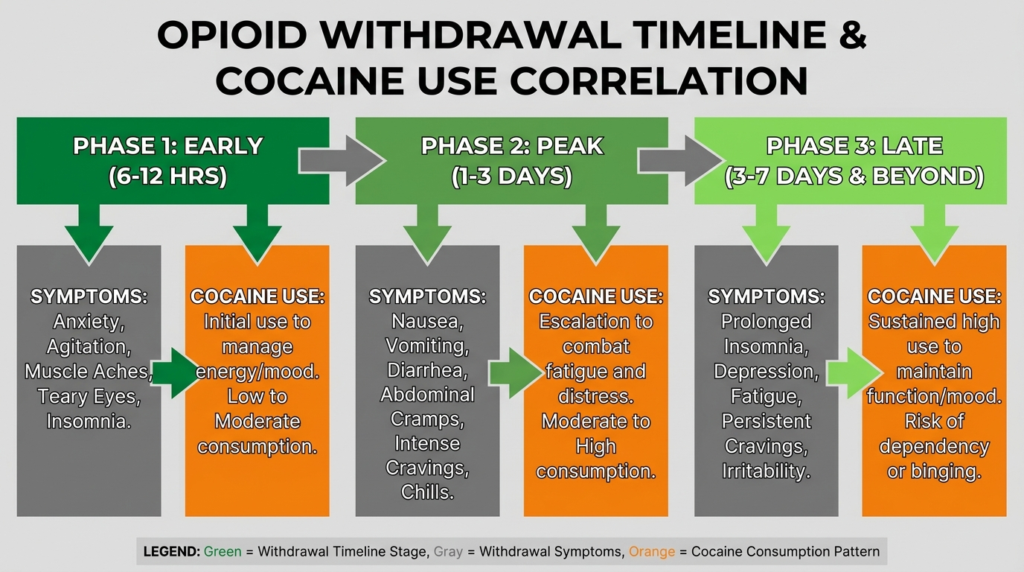
Around 30% of people who use both opioids and cocaine take them sequentially rather than at the same time. This pattern matters because sequential use creates unique risks. When someone uses cocaine during opioid withdrawal, they may be trying to relieve the distress of withdrawal symptoms like fatigue, dysphoria, and anxiety.
Research shows that cocaine consumption during acute oxycodone cessation positively correlates with somatic withdrawal severity, meaning the worse the withdrawal, the more cocaine people tend to use.
The motivation often shifts from seeking pleasure to escaping discomfort. This negative reinforcement pattern makes polysubstance use especially hard to break.
The Fentanyl Factor Makes Everything Worse
The modern overdose crisis is dominated by illicit fentanyl, a synthetic opioid far more potent than prescription oxycodone. Fentanyl was involved in most opioid overdose deaths in 2024, and the share of overdose deaths involving both fentanyl and stimulants rose from 0.6% in 2010 to 32.3% in 2021.
Cocaine is increasingly contaminated with fentanyl, whether intentionally or through cross-contamination in drug markets.
People who think they are using cocaine alone may unknowingly consume fentanyl, especially in the Northeast where cocaine-fentanyl co-involvement has become the dominant pattern.
This contamination means that mixing cocaine and oxycodone now often means mixing cocaine, oxycodone, and fentanyl. The result is a three-drug overdose risk that is extremely difficult to predict or survive.
Why Opioid-Cocaine Co-Users Face Higher Mortality?
People who use both opioids and cocaine die at higher rates than those who use opioids alone. A systematic review found that this excess mortality is not mainly due to unique drug interactions or accidental poisoning.
Instead, the most likely explanation is careless overdosing facilitated by preexisting impulsivity and acute increases in impulsivity following cocaine use.
Several factors converge to raise mortality risk among co-users:
- Behavioral impulsivity: Cocaine increases impulsive redosing and reduces risk perception, leading to larger or more frequent opioid doses.
- Fentanyl exposure: Co-users face higher odds of encountering fentanyl-contaminated supplies or intentionally combined drugs.
- Delayed overdose response: Mixed overdoses may be less likely to receive naloxone promptly, and survival rates are lower than in opioid-only overdoses.
- Treatment mismatch: Current addiction treatment is designed primarily for opioid use disorder, leaving stimulant use undertreated and retention rates poor.
During January 2021 through June 2024, 59% of overdose deaths involved stimulants, and 43% co-involved stimulants and opioids. This is not a niche problem. It is a core feature of the current overdose crisis.
Opioid Withdrawal Drives Cocaine Use
One of the most important recent findings is that opioid withdrawal itself may drive cocaine use. When someone stops using oxycodone, they experience acute withdrawal symptoms including muscle aches, sweating, nausea, anxiety, and severe dysphoria. These symptoms peak within the first 24 to 72 hours.
Research using a sequential self-administration model in rats found that acute oxycodone withdrawal severity at 22 hours positively correlated with subsequent cocaine consumption. The worse the withdrawal, the more cocaine the animals took.
This relationship makes sense when you understand what happens in the brain during opioid withdrawal. Withdrawal creates a hypodopaminergic state, meaning dopamine activity drops sharply.
This produces fatigue, anhedonia, and loss of motivation. Cocaine, which blocks dopamine reuptake, can temporarily reverse these feelings, making it highly reinforcing during the withdrawal window.
Stress Systems and Negative Affect
Opioid withdrawal also activates brain stress systems, including corticotropin-releasing factor and norepinephrine pathways in the extended amygdala.
These systems generate the negative emotional states that drive continued drug use. Cocaine may be used not for pleasure, but to escape the distress of withdrawal.
A prospective study of 653 people undergoing buprenorphine taper found that craving and withdrawal trajectories together predict early relapse, with most returns to opioid use occurring within the first month. This early window is also when stimulant substitution risk is highest.
Signs of Oxycodone and Cocaine Overdose
Recognizing overdose quickly can save a life. Mixed opioid-stimulant overdoses can be harder to identify than opioid-only overdoses because symptoms may seem contradictory.
Opioid Overdose Signs
- Slow or stopped breathing
- Blue lips or fingernails
- Unresponsive or unconscious
- Pinpoint pupils
- Limp body
- Choking or gurgling sounds
Stimulant Overdose Signs
- Chest pain
- Seizures
- Severe agitation or paranoia
- Dangerously high body temperature
- Irregular or rapid heartbeat
- Stroke symptoms
Mixed Overdose Complexity
In a mixed overdose, you may see both sets of symptoms or a confusing combination. Someone might be agitated but also have slowed breathing. Naloxone does not reverse stimulant effects, but it is still essential for the opioid component.
Always administer naloxone if opioids are suspected, call 911 immediately, and provide rescue breathing if the person is not breathing adequately.
Naloxone Works, But It Is Not Enough
Naloxone rapidly reverses opioid overdose by blocking opioid receptors. It is lifesaving and should be carried by anyone who uses opioids or knows someone who does.
However, naloxone does not address stimulant toxicity, and mixed overdoses may require additional medical care such as cooling, seizure management, or cardiovascular support.
Research shows that opioid overdoses with stimulant co-involvement have lower probabilities of naloxone receipt and higher probabilities of death than opioid-only overdoses.
This gap may occur because bystanders do not recognize the event as an opioid overdose, or because people who use cocaine are less likely to carry naloxone.
If you use cocaine, you need naloxone. Cocaine can contain fentanyl, and even intentional opioid-cocaine co-use creates overdose risk. More than one dose of naloxone may be needed, especially with fentanyl.
Treatment for Opioid and Cocaine Co-Use
Effective treatment for polysubstance use must address both opioids and stimulants. Unfortunately, most addiction treatment systems are designed around opioid use disorder alone, leaving stimulant use undertreated.
Medications for Opioid Use Disorder
The three FDA-approved medications for opioid use disorder are buprenorphine, methadone, and naltrexone. These medications reduce opioid cravings, prevent withdrawal, and lower mortality risk significantly. Starting medication quickly after a nonfatal overdose is especially important.
However, cocaine use during opioid treatment is common. Around one-third of people entering opioid treatment test positive for cocaine, and cocaine use is associated with decreased retention and return to opioid use.
Behavioral Treatment for Stimulant Use
There are no FDA-approved medications for cocaine use disorder, but behavioral treatments work. Contingency management is the most effective treatment for stimulant use disorder, using tangible rewards to reinforce abstinence.
A 2026 meta-analysis confirmed that contingency management significantly improves abstinence outcomes in people with stimulant-opioid co-use.
Other evidence-based therapies include cognitive behavioral therapy, motivational enhancement, and dialectical behavior therapy. Integrated treatment that addresses both substances together produces better outcomes than treating them separately.
Why Does Retention Matter?
High dropout rates limit the effectiveness of opioid medications. People who leave treatment early face sharply elevated overdose risk.
Cocaine use is one of the strongest predictors of early dropout, creating a dangerous cycle: withdrawal increases cocaine use, cocaine use disrupts treatment, and treatment dropout increases overdose risk.
Successful programs combine medication, behavioral therapy for stimulant use, and support for staying engaged in care.
Harm Reduction Strategies
If you or someone you know uses opioids and cocaine, harm reduction strategies can lower immediate risk while working toward treatment.
- Never use alone: Most overdose deaths happen when people are by themselves. Use with someone who can call 911 and administer naloxone.
- Carry naloxone: Keep multiple doses available and make sure people around you know how to use it.
- Use fentanyl test strips: Test drugs before using them. Fentanyl test strips are inexpensive and can detect fentanyl in cocaine or other substances.
- Start with a small amount: Drug potency varies widely. Test a small dose first, especially if your supply is new.
- Avoid mixing substances: Using multiple drugs at once multiplies risk. If you do mix, use smaller amounts of each.
- Know the signs of overdose: Learn to recognize both opioid and stimulant overdose symptoms.
- Access syringe services: Syringe service programs provide clean supplies, naloxone, testing strips, and connections to treatment.
Long-Term Health Consequences
Beyond acute overdose risk, chronic oxycodone and cocaine co-use damages nearly every organ system.
Cardiovascular Damage
Repeated cocaine use causes scarring and stiffening of heart muscle, increasing heart attack and heart failure risk. Opioids contribute to infectious endocarditis, especially when injected. Together, they accelerate cardiovascular aging.
Infectious Disease Risk
Injection drug use raises risk for HIV, hepatitis C, and bacterial infections. Sharing needles or other drug equipment spreads bloodborne infections rapidly.
Cognitive and Mental Health Effects
Both drugs alter brain structure and function. Chronic use is linked to memory problems, impaired decision-making, depression, anxiety, and increased suicide risk.
The glutamate dysregulation caused by sequential opioid-cocaine use may worsen cognitive and emotional regulation long after stopping.
Social and Legal Consequences
Polysubstance use often leads to job loss, relationship breakdown, housing instability, and legal problems. These consequences create additional stress that can drive continued use.
What Happens When You Combine Cocaine and Oxycodone?
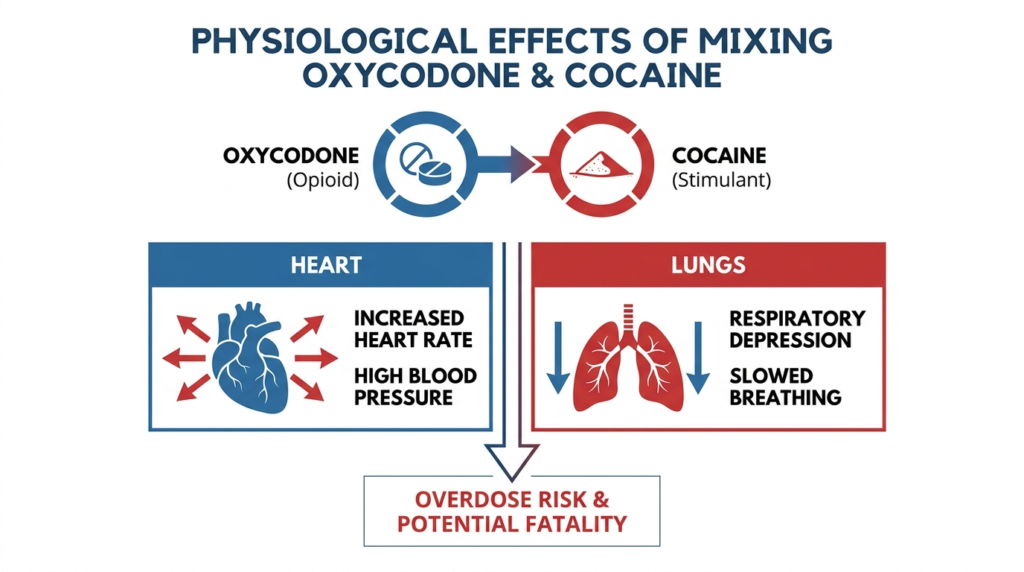
Oxycodone is a prescription opioid that slows breathing, heart rate, and central nervous system activity. Cocaine is a powerful stimulant that speeds up these same systems. When you mix them, your body experiences conflicting signals that strain your cardiovascular and respiratory systems.
The combination does not create balance. Instead, it creates unpredictability. Cocaine may temporarily mask some opioid effects, leading users to take more oxycodone than they can safely handle. When the cocaine wears off first, the full opioid dose hits suddenly, sharply increasing overdose risk.
Cardiovascular Strain
Both drugs stress the heart, but in different ways. Cocaine raises blood pressure, heart rate, and body temperature. Oxycodone depresses respiration and can cause irregular heartbeat.
Together, they force the cardiovascular system into a dangerous tug-of-war that can trigger heart attack, stroke, or sudden cardiac arrest.
Respiratory Depression
Opioids like oxycodone slow breathing, sometimes to dangerous or fatal levels. Cocaine does not reverse this effect despite what some users believe.
When stimulant effects fade, respiratory depression can develop rapidly, and bystanders may not recognize the emergency in time.
Brain Chemistry Disruption
Sequential cocaine and oxycodone use causes aberrant glutamate plasticity in the nucleus accumbens, a brain region central to reward and motivation. This neuroplastic change can worsen addiction severity and increase relapse vulnerability even after treatment.
Who is Most at Risk?
Certain groups face higher risk from opioid-cocaine co-use.
People in Early Recovery
The first weeks after stopping opioids are the highest-risk period. Withdrawal symptoms peak early, craving remains intense, and many people return to use within the first month. This is also when stimulant substitution is most likely.
People Without Opioid Tolerance
If you use cocaine occasionally but not opioids, fentanyl contamination is extremely dangerous. Without opioid tolerance, even a small amount of fentanyl can be fatal.
Black and Native American Communities
Increases in stimulant-involved death rates from 2018 to 2023 were largest among non-Hispanic Black and American Indian or Alaska Native persons.
These disparities reflect structural inequities in access to treatment, harm reduction services, and naloxone distribution.
People Experiencing Homelessness
Housing instability increases overdose risk through social isolation, limited access to medical care, and higher exposure to contaminated drug supplies.
Research in Baltimore found that marginalized people who inject drugs had high rates of opioid-cocaine co-use and low rates of regular naloxone carrying.
What to Do If You Are Struggling?
If you are using oxycodone and cocaine, you are not alone, and help is available. Polysubstance use is common, and effective treatment exists.
Start With a Conversation
Talk to a doctor, counselor, or addiction specialist. You do not need to have all the answers or be ready to stop immediately. Many people start by reducing harm, then move toward treatment when they are ready.
Consider Medication-Assisted Treatment
Medications for opioid use disorder work even if you are still using cocaine. Starting medication can stabilize your opioid use, reduce overdose risk, and create space to address stimulant use.
Look for Integrated Programs
The best programs treat both opioid and stimulant use together. Look for programs that offer medication for opioid use disorder plus evidence-based behavioral treatment for cocaine use, such as contingency management or cognitive behavioral therapy.
Build a Support Network
Recovery is easier with support. Peer support groups, family therapy, and sober social networks all improve outcomes. Many people benefit from a combination of professional treatment and mutual-aid groups.
Prioritize Safety First
Even if you are not ready to stop using, you can take steps to stay safer. Carry naloxone, avoid using alone, test your drugs, and connect with harm reduction services.
Start Your Healing Journey with Summit!
Mixing oxycodone and cocaine is dangerous, and the risks have grown sharply in the fentanyl era.
Opioid withdrawal increases cocaine use, cocaine use worsens opioid treatment outcomes, and the combination raises overdose mortality far above opioid use alone. But these risks are not inevitable. Effective treatment, harm reduction, and early intervention can save lives.
If you or someone you care about is struggling with opioid and cocaine use, reaching out for help is the most important step. Treatment works, recovery is possible, and you deserve support that addresses the full picture of your substance use.
Contact The Summit Wellness Group for addiction counseling today and speak with our specialist who understands polysubstance use and can help you find a path forward.