Mixing Ritalin and alcohol is more dangerous than most people realize, and the reason is not obvious. Research shows that stimulants like Ritalin can make you feel far less drunk than you actually are, which leads many people to keep drinking well past a safe limit. This article explains exactly how that masking effect works, what the evidence says about the real risks, and what you can do to stay safe.
Ritalin and Alcohol Interactions: Why “I Feel Fine” Is a Warning Sign
When you take Ritalin and drink alcohol at the same time, the stimulant does not cancel out the alcohol. It changes how drunk you feel while leaving the actual impairment fully in place. Researchers describe this as a mismatch between your subjective sense of sobriety and your real blood alcohol level, and that gap is where the danger lives.
Alcohol has two phases. Early in a drinking session, as your blood alcohol concentration rises, alcohol can feel stimulating and social. Later, sedation kicks in: you feel tired, uncoordinated, and ready to stop. Prescription stimulants like methylphenidate, the active ingredient in Ritalin, can extend that early stimulating phase and delay the sedative cues that would normally tell you to slow down. A peer-reviewed study of more than 4,000 undergraduates found that stimulants co-administered with alcohol may exacerbate and lengthen stimulatory effects during the ascending blood alcohol curve while delaying the sedative effects that usually lead to drinking cessation.
The result is a false sobriety loop. You drink, the stimulant keeps you alert, you interpret that alertness as safety, and you keep drinking. Meanwhile, alcohol continues to impair your judgment, coordination, and memory. By the time severe sedation appears, your blood alcohol level may already be at a dangerous or life-threatening level.
How the Ritalin and Alcohol Interaction Works in the Body
The interaction operates on two separate levels: what happens in the brain and liver at the chemical level, and what happens to the heart and blood vessels. Neither is fully apparent to the person experiencing it, which is part of what makes the combination dangerous.
Methylphenidate and Ethanol Are Not Simply Opposites
A common misconception is that a stimulant and a depressant cancel each other out. They do not. Ritalin primarily blocks the reuptake of dopamine and norepinephrine, increasing alertness and central nervous system activation. Alcohol depresses the central nervous system, but it does so unevenly across different brain functions. You can feel wide awake while your reaction time, risk assessment, and memory encoding are all significantly impaired.
There is also a specific metabolic concern with Ritalin in particular. When methylphenidate and ethanol are present in the body at the same time, they can interact to form a compound called ethylphenidate. Animal research examining methylphenidate-ethanol interactions measured this metabolite in brain tissue alongside behavioral effects including motor coordination changes. This metabolic interaction does not occur with amphetamine-based stimulants like Adderall, making Ritalin’s alcohol interaction somewhat distinct.
Clinical guidance from Drugs.com warns that for some long-acting methylphenidate formulations, alcohol can cause too much of the drug to be released at one time, increasing the risk of side effects. The same source notes that alcohol may increase nervous system side effects such as anxiety, drowsiness, and in some cases seizures.
The Cardiovascular Strain You Cannot Feel
Ritalin raises your heart rate and blood pressure. Alcohol also affects cardiovascular function. Together, they place significant stress on your heart and circulatory system. Clinical guidance notes that central nervous system stimulants increase blood pressure and heart rate and that stroke, myocardial infarction, chest pain, and arrhythmias have been reported in adults taking these medications. That risk rises further when you add alcohol, dehydration, sleep deprivation, and caffeine, which is exactly the combination common in college party settings.
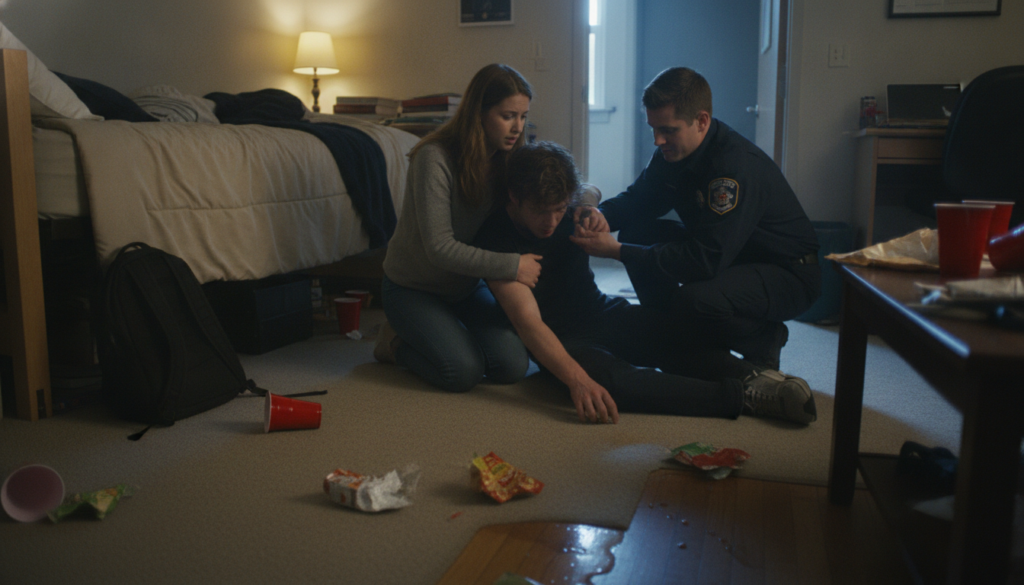
Mixing Ritalin and Alcohol: Who Is Most at Risk
Risk is not evenly distributed. The pattern concentrates in specific groups and specific drinking contexts, and the research points to three in particular.
College Students and Young Adults
The ritalin and alcohol interaction is not a theoretical concern. It is most visible among college students and young adults aged 18 to 25, who show the highest rates of nonmedical prescription stimulant use of any age group. College students in that range are about twice as likely as non-college peers to report nonmedical stimulant use.
One longitudinal study found that nearly two-thirds of a college cohort were offered prescription stimulants for nonmedical use, and 31% reported using them nonmedically during college. In a separate study of students from seven Georgia colleges, 45.7% of those reporting prescription stimulant use had no prescription or ADHD diagnosis. Those students were significantly more likely to report using stimulants to stay awake longer, have a more enjoyable time, and party longer, motives that map directly onto extended drinking sessions.
High School Seniors
The pattern starts before college. A national study of U.S. high school seniors found that more than six in ten past-year nonmedical stimulant users reported simultaneous co-ingestion of prescription stimulants with alcohol or other drugs in the previous year. Among young adults aged 18 to 25 who ended up in emergency departments for stimulant-related reasons, alcohol was the most common co-ingested substance.
Students Using Stimulants to Drink Longer
The most direct risk group is students who intentionally combine stimulants and alcohol to extend a drinking event. Research consistently shows that recreational motives, including partying longer and feeling more euphoric, are linked to polysubstance use and higher rates of alcohol-related consequences. This is not accidental overlap. The stimulant is being used as a tool to override the body’s natural stopping signals.
Ritalin and Alcohol Effects: What Can Actually Happen
These outcomes appear consistently across clinical and epidemiological research, and they range from behavioral to acutely medical.
- Binge drinking: Stimulant co-use can extend drinking sessions and reduce perceived intoxication, making it easier to consume enough alcohol to reach binge-level blood alcohol concentrations. Students who simultaneously used nonmedical stimulants and alcohol reported more substance use and more adverse consequences than drinkers who did not use stimulants.
- Alcohol poisoning: When the body’s sedation signals are blunted, a person may keep drinking until blood alcohol reaches levels that suppress breathing, the gag reflex, and consciousness. The stimulant can keep someone awake and active right up until a dangerous crash.
- Blackouts: A stimulant may preserve wakefulness but cannot protect memory formation under high alcohol exposure. This creates a state where a person remains mobile and socially engaged while later having no memory of events.
- Cardiovascular events: Stimulants raise heart rate and blood pressure. Alcohol adds further cardiovascular strain. The combination has been linked to chest pain, arrhythmias, and in serious cases, stroke or cardiac events.
- Injury and risky decisions: Stimulant activation can increase the likelihood of acting on alcohol-impaired judgment. Research on alcohol mixed with energy drinks, a useful behavioral analogue, found that stimulant-alcohol combinations were associated with high-risk drinking, risky sexual behavior, drug use, and driving-related risks.
- Academic and mental health consequences: Students who simultaneously used nonmedical stimulants and alcohol had lower grade point averages and more adverse consequences than drinkers who did not use stimulants. Long-term misuse has been linked to cognitive problems with attention, memory, and complex problem-solving, as well as depression and apathy.

Can You Mix Ritalin and Alcohol Safely?
The short answer is no. There is no established safe level of simultaneous Ritalin and alcohol use, and the risks are not theoretical. The core problem is that the combination undermines your ability to judge your own impairment. Feeling awake and in control is not evidence of safety when a stimulant is involved. It may be the opposite.
If you have a legitimate Ritalin prescription, your prescribing clinician should be your first point of contact for questions about alcohol. Clinical guidance recommends that patients prescribed stimulants be counseled specifically about alcohol timing and risk, not just given a general warning. Extended-release formulations carry particular concern because alcohol can alter how much medication is released at once.
If you are using Ritalin without a prescription, the risks are compounded. You have no clinical monitoring, no known baseline cardiovascular health assessment, and no guidance on dose. Nonmedical stimulant use is also associated with broader polysubstance patterns, including cannabis, tobacco, and opioid use, each of which adds its own layer of risk.
Ritalin and Drinking Alcohol: What the Numbers Show
A large study of matriculating U.S. college students found that those with recent stimulant misuse had odds ratios of 3.47 for alcohol use and 2.97 for alcohol-related consequences compared with students who did not misuse stimulants. Their mean past-14-day drink count was 7.1, compared with 4.71 in the no-misuse group.
The energy drink analogy adds useful context. A web-based survey of more than 4,000 college students found that those who mixed alcohol with energy drinks, a weaker stimulant combination, drank more per session, had about twice as many weekly drunkenness episodes, and reported a maximum single-episode drink count of 8.3 compared with 6.1 for alcohol-only drinkers. Researchers described the combination as behaviorally analogous to stepping on the gas and the brake at the same time. Prescription stimulants are considerably stronger than caffeine, which makes the concern more serious, not less.
What to Do If Someone Has Mixed Ritalin and Alcohol
If you or someone around you has combined Ritalin and alcohol and shows any of the following signs, seek emergency help immediately:
- Confusion or inability to stay awake
- Repeated vomiting
- Slow, shallow, or irregular breathing
- Chest pain or racing heart
- Seizures
- Severe agitation or paranoia
- Cannot be awakened
Do not assume that because the person seems alert they are safe. The stimulant may be masking how much alcohol has accumulated. Deterioration can be sudden.
If you are prescribed Ritalin and want to reduce risk, talk to your prescriber honestly about your drinking. Ask about timing, formulation, and whether a non-stimulant ADHD treatment might be appropriate given your situation. Clinicians can also use risk-reduction strategies including substance-use screening, prescription monitoring, and structured treatment agreements to help manage these risks safely.
If you are a student concerned about a friend’s stimulant or alcohol use, campus health services and counseling centers are a good starting point. Prevention research supports social-norms approaches that correct the widespread belief that “everyone” misuses stimulants. Most students do not. Knowing that can make it easier to push back on pressure to combine substances.
If you are worried about your own use of alcohol, stimulants, or both, speaking with a specialist can make a real difference. The Summit Wellness Group offers evidence-based addiction treatment programs for adults dealing with alcohol, stimulant, and polysubstance use, including dual-diagnosis support for co-occurring ADHD and mental health concerns.