Mixing Valium and alcohol is genuinely dangerous, and the risk is greater than most people expect. Both substances slow down your central nervous system, and when you combine them, the effects multiply rather than simply add up. A national study of benzodiazepine overdose deaths found that alcohol was among the most common co-involved substances across more than 118,000 deaths from 2000 to 2019. This article explains exactly what happens in your body when you mix Valium and alcohol, what warning signs to watch for, and why this combination can turn fatal faster than you might think.
Valium and Alcohol: Why the Combination Is So Risky
Valium is the brand name for diazepam, a benzodiazepine prescribed for anxiety, muscle spasms, and seizure disorders. Alcohol is a central nervous system depressant too. Both work partly by enhancing the same inhibitory brain signaling system, known as GABA, which slows neural activity. When you take Valium and drink alcohol at the same time, you are essentially pressing the brake pedal twice at once.
The result is not just stronger sedation. The two substances are cross-tolerant, meaning tolerance to one partially transfers to the other. This cross-tolerance is why doctors use benzodiazepines like Valium to treat alcohol withdrawal. But it also means that when both are present together, the brain’s inhibitory load is far heavier than either substance alone would create. Reaction time slows, coordination breaks down, judgment fades, and breathing can become dangerously shallow.
What makes this especially unpredictable is that the drug mixture in any given situation may be more complex than it appears. CDC data on specific drugs in overdose deaths show that fentanyl ranked first among all drugs involved in overdose deaths from 2017 to 2023 and was the most common co-occurring drug found alongside many other substances. A person who believes they have only taken a Valium and had a few drinks may unknowingly have been exposed to a counterfeit pill containing fentanyl or another sedative adulterant.
How Valium and Alcohol Effects Escalate Step by Step
The danger of mixing alcohol and Valium does not arrive all at once. It builds through a recognizable progression, and each stage narrows the window for safe intervention.
Stage One: Drowsiness and Sedation
Early on, the combination looks a lot like being very drunk. The person may seem unusually sleepy, speak with slurred words, lose their balance, or repeat themselves. Benzodiazepines can also cause anterograde amnesia, so the person may not remember how much they took or drank. This stage is where bystanders most often make the mistake of letting someone “sleep it off.” That decision can be fatal.
Stage Two: Confusion and Impaired Judgment
Deeper CNS depression produces confusion, disorientation, and an inability to answer simple questions. The person may swing between agitation and heavy sedation. At this point, they can no longer reliably protect themselves from falls, aspiration, or further substance use. This stage also matters because intent is not always clear. CDC emergency department surveillance data found that about 212,770 emergency department visits per year involved benzodiazepine adverse events, with roughly 30 percent classified as self-harm. Confusion does not tell you whether the situation is accidental or intentional, so it should always be treated as urgent.
Stage Three: Respiratory Depression
This is the critical turning point. Slow, shallow, or irregular breathing, long pauses between breaths, gurgling sounds, blue or gray lips, and clammy skin all signal that the body is losing its ability to breathe adequately. Vomiting while semi-conscious adds aspiration risk on top of that.
The population-level data make the stakes clear. A national study of opioid overdose deaths found that alcohol co-involvement in opioid deaths rose from 12.4 percent in 1999 to 14.7 percent in 2017, while benzodiazepine co-involvement peaked at 26.2 percent in 2010. Mortality rates for opioid overdoses involving benzodiazepines increased more than tenfold over that period. Respiratory depression in a polysubstance setting is not a “wait and see” symptom. It is a medical emergency.
Stage Four: Unresponsiveness
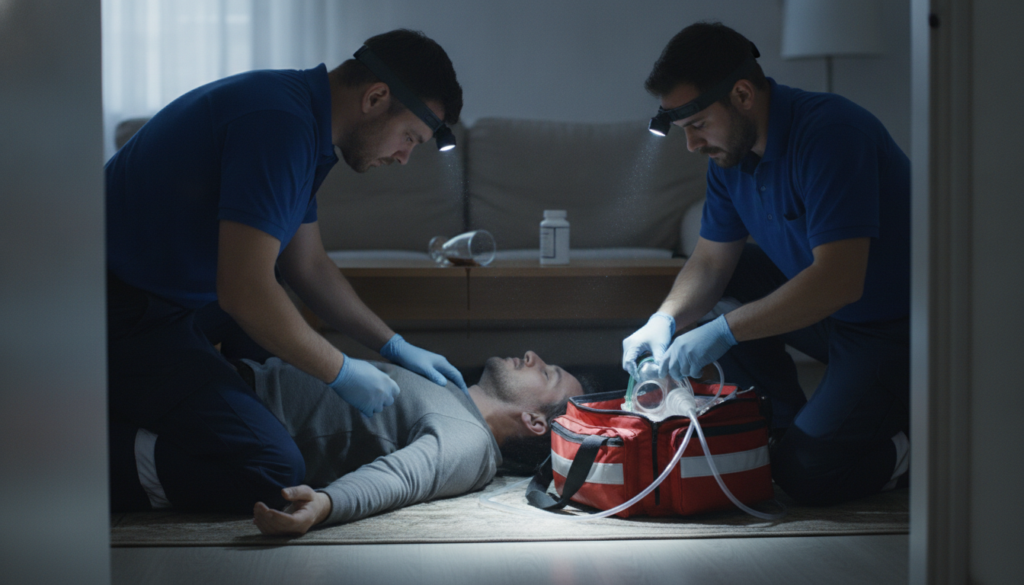
A person who cannot be woken up, cannot speak, or does not respond to a loud voice or pain is in immediate danger of airway obstruction, aspiration, hypoxia, cardiac arrest, and death. At this stage, every second matters.
Valium and Alcohol Side Effects at a Glance
The following list covers the most important signs that a Valium and alcohol interaction has become dangerous.
- Unusual sleepiness that deepens rather than levels off
- Slurred speech and loss of coordination beyond normal intoxication
- Repeated questions or inability to form new memories
- Confusion, disorientation, or alternating agitation and sedation
- Slow, shallow, or irregular breathing
- Long pauses between breaths or gurgling sounds
- Blue or gray lips, pale or clammy skin
- Vomiting while drowsy or unconscious
- Inability to stay awake or respond to voice
Any of these signs after mixing alcohol and Valium should be treated as a potential emergency, not a reason to wait.
What the Numbers Say About Valium and Alcohol Interactions
The scale of harm from combined CNS depressant use is not a theoretical concern. It shows up clearly in national mortality data.
From 2000 to 2019, there were 118,208 benzodiazepine-involved overdose deaths in the United States. The benzodiazepine overdose death rate rose from 0.46 per 100,000 in 2000 to a peak of 3.55 in 2017, then declined slightly to 2.96 in 2019. Opioids were co-involved in 83.5 percent of those deaths, but alcohol was also a recurring co-factor. Only 9 percent of benzodiazepine-involved deaths did not involve opioids, cocaine, other stimulants, barbiturates, or alcohol, which tells you how rarely these deaths involve a single substance.
The broader overdose picture has shifted recently. CDC data on overdose trends show that the age-adjusted drug overdose death rate fell 26.2 percent from 2023 to 2024, dropping from 31.3 to 23.1 per 100,000. That decline is real and meaningful. But the 2024 rate is still nearly three times the 2002 rate of 8.2 per 100,000, and the overdose environment remains shaped by fentanyl, stimulants, and complex polysubstance combinations. A lower national death count does not make an individual Valium and alcohol overdose any less dangerous.
Can You Mix Valium and Alcohol Safely?
No. There is no safe level of mixing Valium and alcohol. The prescribing information for diazepam explicitly warns against combining it with alcohol because of the risk of enhanced CNS depression. Even small amounts of alcohol can intensify Valium’s sedative effects in ways that are hard to predict, especially because individual tolerance, body weight, liver function, age, and other medications all affect how the combination behaves.
The risk is also not limited to people misusing Valium. CDC surveillance data on benzodiazepine emergency visits show that adverse events occurred across nonmedical use, self-harm, and therapeutic use categories. Someone taking Valium exactly as prescribed can still experience dangerous respiratory depression if they drink alcohol, particularly if they are older, have liver disease, take other sedating medications, or have sleep apnea.
Why Mixing Alcohol and Valium Is Especially Dangerous With Other Substances
One of the most important things to understand about Valium and alcohol interactions is that the real-world risk is rarely limited to just those two substances. Research comparing detailed medical examiner records with national surveillance data found that the average number of drugs reported per drug-involved death in Los Angeles County increased from 1.72 in 2012 to 2.29 in 2023, and the share of deaths involving three or more substances rose from 51 percent to 74 percent over the same period.
This matters because a bystander may see someone who appears drunk and sleepy. A clinician may initially assess sedative-hypnotic intoxication. But the actual toxicology may include fentanyl, gabapentin, a sedating antihistamine, or another depressant the person did not know was present. The safest approach is always to respond based on symptoms rather than waiting for certainty about what substances are involved.
What to Do in an Emergency
If someone shows signs of respiratory depression or cannot be woken after mixing Valium and alcohol, call emergency services immediately. Do not leave the person alone. Do not give them coffee, cold water, or try to walk them around. These methods do not reverse CNS depression.
If the person is breathing but unresponsive, place them in the recovery position on their side to reduce aspiration risk while waiting for help. If breathing stops or becomes ineffective, begin rescue breathing or CPR if you are trained.
Naloxone does not reverse Valium or alcohol, but it can reverse opioid-induced respiratory depression. Because fentanyl is so commonly present in the current drug supply, naloxone should be used if there is any chance opioids were also involved. The risk of giving naloxone when it is not needed is very low. The risk of not giving it when it is needed can be fatal.

Valium and Alcohol Withdrawal: A Separate but Related Danger
There is another side to the Valium and alcohol relationship that is less discussed but equally serious. People who are dependent on both substances face a particularly dangerous withdrawal process. Both alcohol and Valium work through overlapping brain pathways, and stopping both at once can produce amplified CNS hyperexcitability, seizures, delirium, and severe autonomic instability.
The 2025 Joint Clinical Practice Guideline on benzodiazepine tapering states clearly that patients who have taken benzodiazepines regularly should not stop abruptly because withdrawal can be serious and potentially life-threatening. The guideline recommends gradual dose reductions, typically starting at 5 to 10 percent, and generally not exceeding 25 percent every two weeks. For someone also withdrawing from alcohol, the process is even more complex and almost always requires medically supervised detox rather than an attempt to stop at home.
The safest approach for combined Valium and alcohol dependence is sequential: stabilize alcohol withdrawal first while maintaining appropriate benzodiazepine coverage, then begin a slow, individualized Valium taper once the acute alcohol withdrawal phase has resolved. This is not a process that can be safely managed without medical support.
Why This Matters Beyond the Individual
The harm from mixing alcohol and Valium extends beyond any single person. It affects families, emergency responders, and healthcare systems. It also reflects a broader pattern in the overdose crisis where CNS depressant combinations are consistently underestimated because each substance seems manageable on its own.
Public health messaging that focuses only on opioids without addressing alcohol and benzodiazepine co-use misses a significant part of the problem. State-level surveillance systems, like those used in Connecticut’s overdose reporting, track benzodiazepine-related overdose patterns specifically because the combination with other depressants is so clinically significant. Better data, clearer public warnings, and lower thresholds for emergency response all save lives.
The bottom line is straightforward. Mixing Valium and alcohol is not a gray area. The combination suppresses breathing, impairs judgment, and can kill. If you or someone you care about is using both, the time to act is before a crisis, not during one.
If you are concerned about your own use of Valium, alcohol, or both, speaking with a treatment professional is the most important step you can take. The Summit Wellness Group offers medically supervised detox and individualized programs designed to help you stop safely and build a lasting recovery.