If you take Zoloft and wonder whether smoking weed alongside it is safe, you are not alone!
Mixing Zoloft and marijuana is generally not safe enough to recommend because cannabinoids can raise sertraline blood levels by inhibiting the CYP2C19 enzyme, increasing side effects and potentially worsening the very symptoms the medication treats.
This article breaks down the pharmacology, the psychiatric evidence, and the real risks so you can make an informed choice.
How Zoloft and Marijuana Interact in Your Body?
Zoloft (sertraline) is one of the most widely prescribed SSRIs. It treats major depression, generalized anxiety, panic disorder, OCD, and PTSD by boosting serotonin signaling in the brain. Doctors often choose it because it is effective and comparatively well tolerated among antidepressants.
Marijuana is not a single substance. It contains THC, CBD, and dozens of other compounds. The product you smoke, vape, or eat today is also far more potent than what was available decades ago.
A 2025 systematic review of high concentration THC products found they were linked to unfavorable mental health outcomes overall, especially psychosis and cannabis use disorder.
When these two substances meet inside your body, the trouble starts at the liver.
The CYP2C19 Problem
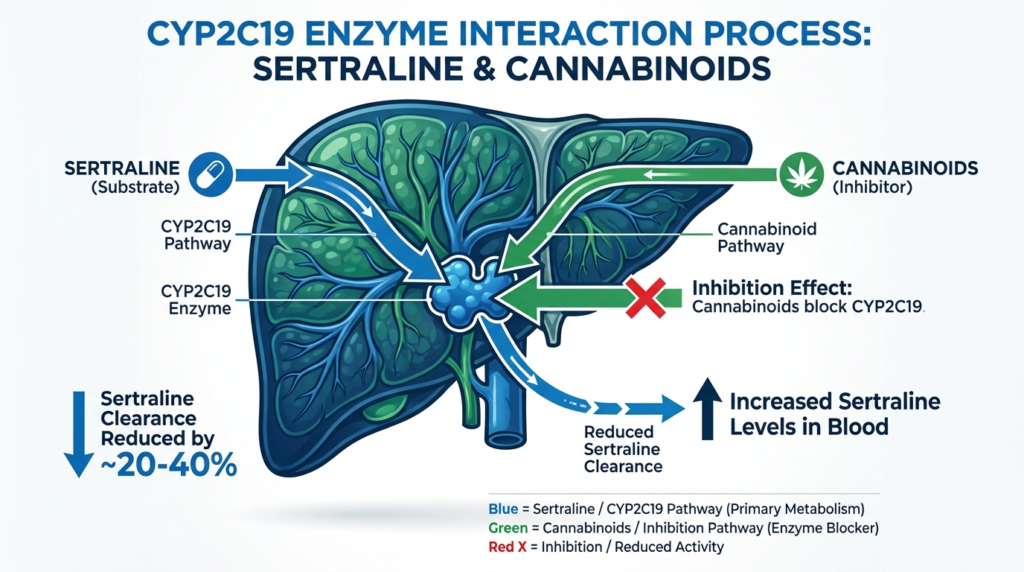
Sertraline is broken down partly through a liver enzyme called CYP2C19. Both THC and CBD can slow this enzyme down. When CYP2C19 works less efficiently, sertraline clearance drops and blood levels climb.
Pharmacokinetic modeling in adolescents found that concurrent THC or low dose CBD use reduced total sertraline clearance by about 25%, pushing plasma concentrations noticeably higher.
In one modeled scenario, THC co use increased total sertraline exposure by roughly 33% and peak concentration by about 26% in adolescents. A 25 to 33 percent jump is not trivial. In psychopharmacology, that kind of shift can move a patient from tolerable side effects to miserable ones.
A published case report drove the point home even further. A patient on stable, long term sertraline developed hyponatremia and cognitive dysfunction after adding CBD.
The proposed cause was CBD inhibiting CYP2C19 in someone who was already a genetically intermediate metabolizer, effectively creating a drug interaction serious enough to need medical attention.
The Interaction May Go Both Ways
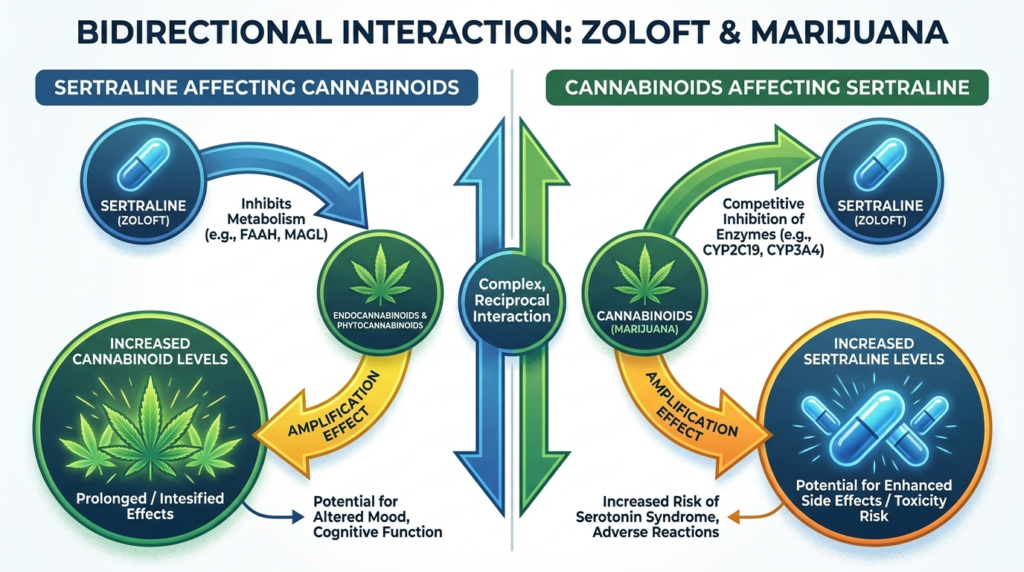
A 2024 review in Frontiers in Pharmacology proposed a bidirectional effect. Sertraline may inhibit CYP3A4 and CYP2C9, potentially increasing cannabinoid exposure at the same time cannabinoids increase sertraline exposure.
That means each substance could amplify the other, making the combined effect harder to predict than either one alone.
Can You Smoke Weed on Zoloft Safely?
The short answer is that smoking weed on Zoloft is not considered safe, and smoking is one of the more concerning routes. Inhaled THC hits the bloodstream fast, producing sharp peaks in psychoactive effect.
That rapid onset can trigger tachycardia, chest tightness, panic, and paranoia, symptoms that overlap heavily with the anxiety disorders sertraline is prescribed to treat.
According to CDC data from 2022, about 80% of current cannabis users smoked it, and vaping and dabbing were most common among adults aged 18 to 24. That same age group is also a heavy user of antidepressant prescriptions. The overlap is large and growing.
Side Effects Stack Up
Sertraline already carries potential side effects like dizziness, nausea, fatigue, sleep disruption, and anxiety. Cannabis can cause many of the same things. When you layer one on top of the other, the result can feel much worse than either substance alone.
A clinically reviewed interaction guide warns that combining cannabis with sertraline can increase extreme drowsiness, dizziness, and confusion, and that cannabis can sometimes worsen the anxiety or depression sertraline treats.
In a 2024 retrospective chart review of cannabinoid related psychotropic adverse events, sertraline was the single most commonly implicated psychotropic drug, appearing in 7 of 20 identified cases. That does not prove sertraline is uniquely dangerous, but it is a signal worth taking seriously.
Zoloft and Weed: What Happens to Your Mental Health?
Many people mix Zoloft and weed because they believe marijuana helps their anxiety or depression. The strongest psychiatric evidence does not support that belief, at least not reliably.
The Systematic Review Picture
A 2024 systematic review in Frontiers in Public Health concluded that cannabis use may be detrimental in major depressive disorder and bipolar disorder, with no compelling evidence supporting cannabinoids as mood disorder treatments.
Prospective data cited in the same review linked cannabis use with worse long term clinical symptoms in anxiety and mood disorders.
Even larger reviews have since reinforced this finding. Coverage in NPR and ScienceDaily described a 2026 meta analysis as the largest to date, concluding there is no reliable support for medicinal cannabis in anxiety, depression, or PTSD.
The evidence base turned out to be surprisingly thin: roughly 2,500 patients across close to 50 clinical trials, and for depression specifically, there was reportedly not a single trial available in the reviewed data.
Short Term Relief is Not the Same as Long Term Benefit
Some people do feel calmer right after using cannabis. A prospective cohort of adults starting medicinal cannabis for anxiety or depression found symptom score reductions over six months.
But that study was observational and could not separate cannabis effects from expectancy, placebo response, or life changes. The authors themselves called for controlled clinical trials.
The pattern that emerges across the evidence is a familiar one: acute subjective relief can coexist with worsening baseline stability over time.
A patient may feel better for an hour after smoking yet develop more fogginess the next day, more panic episodes, and more difficulty telling whether sertraline is actually helping.
Zoloft and Marijuana Interactions: Who Faces the Most Risk?
Not everyone faces the same level of danger. The evidence points to several groups that should be especially cautious.
- Daily or heavy users. More frequent exposure means a longer window for metabolic interaction and greater chance of psychiatric destabilization.
- CBD product users. CBD appears to be a potent CYP2C19 inhibitor. The strongest documented sertraline adverse event in the evidence involved CBD, not THC.
- Adolescents and young adults. The clearest pharmacokinetic modeling data comes from youth, and younger adults are more likely to use high potency vaping and dabbing routes.
- People with panic disorder or health anxiety. THC induced tachycardia and chest tightness can mimic or trigger full blown panic attacks.
- People with psychosis risk. High concentration THC products are linked to unfavorable psychosis outcomes, and clinically reviewed sources advise against cannabis use in anyone with a personal or family history of psychotic disorders.
- Genetically slower CYP2C19 metabolizers. These individuals already clear sertraline more slowly. Adding a CYP2C19 inhibitor like CBD can push exposure into a toxic range.
Does Weed Cancel Out Zoloft?
This is one of the most common ways people frame the question, and the framing itself is misleading.
The best evidence does not show that marijuana lowers sertraline levels or blocks its mechanism. The stronger concern runs in the opposite direction: cannabinoids may raise sertraline exposure, not lower it.
Still, cannabis can make sertraline treatment less effective in practice. It does this by worsening the symptoms being treated, increasing side effects that lead to missed doses or discontinuation, masking whether the current dose is right, and creating mood swings that confuse clinical assessment.
If your clinician does not know you use cannabis, they might interpret residual symptoms as an inadequate sertraline dose and increase it, when the real issue is an interaction problem. That kind of miscommunication can spiral.
Serotonin Syndrome: Rare but Real
Several sources mention serotonin syndrome as a possible risk when marijuana and Zoloft are combined. The evidence here is weaker than the CYP2C19 evidence, but it is not zero.
A 2023 case report described recurrent serotonin syndrome requiring hospitalization in a patient using high concentrate cannabis alongside antidepressants.
Cannabis products were present on every occasion the syndrome appeared. The authors recommended screening for cannabis use before prescribing serotonergic medications.
Warning signs that call for urgent medical evaluation include rapid heartbeat, severe agitation, heavy sweating, high fever, confusion, tremor, and marked muscle stiffness. These symptoms deserve immediate attention whether or not you think they are “just” from weed.
Why This Matters for Your Treatment?
Sertraline works gradually. Its benefits depend on consistent blood levels, honest symptom tracking, and a clinician who can accurately read your response. Cannabis use, especially when it fluctuates, disrupts all three of those pillars.
| Factor | How Cannabis Disrupts It |
|---|---|
| Consistent blood levels | THC and CBD can raise sertraline exposure unpredictably |
| Honest symptom tracking | Acute relief masks worsening baseline anxiety or depression |
| Accurate clinical assessment | Undisclosed use leads to wrong dose adjustments |
| Side effect tolerance | Overlapping dizziness, fatigue, and nausea lower adherence |
| Long term mood stability | High THC products may worsen anxiety and depression over time |
A treatment does not have to be pharmacologically “canceled” to become less effective. If cannabis makes you feel worse, skip doses, or hide your use from your doctor, the practical result is the same: your recovery stalls.
What to Do if You Currently Mix Zoloft and Weed?
If you are already using both, the most important step is honesty with your prescriber. Tell them what you use, how often, and in what form. They cannot adjust your care properly without that information.
Beyond that, pay attention to your body. Track whether your anxiety or depression is actually improving over weeks, not just in the hour after you smoke.
Notice whether side effects like dizziness, fatigue, or nausea have gotten worse since you started using cannabis. And take any chest pain, severe confusion, or rapid heartbeat seriously enough to seek medical help right away.
The evidence does not say every person who mixes Zoloft and weed will end up in the emergency room. Many will not. But “not always disastrous” is a long way from “safe.”
The best supported position is that this combination can raise sertraline levels, amplify side effects, worsen the conditions you are trying to treat, and make it harder for you and your doctor to know what is actually working.
If you or someone you care about is struggling with substance use alongside a mental health condition, The Summit Wellness Group’s professional support can make a real difference. Reach out to explore our dual diagnosis treatment and take the next step toward stability.