Most people pay about $800 to $1,800 a month for a standard shared or semi-private room in sober living in 2026. Basic peer-run homes run closer to $450 to $1,000, private rooms typically land between $1,000 and $2,500, and you should plan on roughly two months’ rent in cash just to move in. This guide breaks down what actually drives the price, what insurance does and does not pay, and how to build a budget you can sustain long enough for recovery housing to work.
How Much Does Sober Living Cost in 2026?
Sober living cost is not one number, because sober living is not one product. You are paying for two things stacked together: ordinary housing costs, and the recovery support layered on top of them. A $500 peer-run shared home and a $6,000 clinically integrated residence can both carry the same label.
Here is a practical way to read the 2026 market:
- Peer-run or basic shared housing: about $450 to $1,000 per month
- Standard monitored shared home: about $700 to $1,500 per month
- Private or semi-private room, standard structure: about $1,000 to $2,500 per month
- High-cost metro or enhanced-support homes: about $1,500 to $3,500 per month
- Premium, luxury, or clinically integrated programs: $4,000 to $15,000 or more per month
Treat these as planning ranges, not regulated prices. Recovery residences are not a standardized product, and most states do not publish rate surveys. National averages get pulled upward by expensive coastal markets and private rooms, so a range matched to your city and room type is far more useful than one national number.
What Determines the Cost of Sober Living
Location and local housing costs
Geography is usually the first price driver. A home in a high-rent city has to collect more per bed than a comparable house in a lower-cost area, before it adds a single hour of staff time. The same program structure can cost thousands more per year simply because of where it sits.
Lower rent does not always mean a lower total cost. A rural home at $900 can carry heavy transportation expenses if you cannot easily reach work, treatment, or meetings. A $1,400 home near transit can end up costing about the same once you add rides and missed shifts.
Level of support: the biggest non-location factor
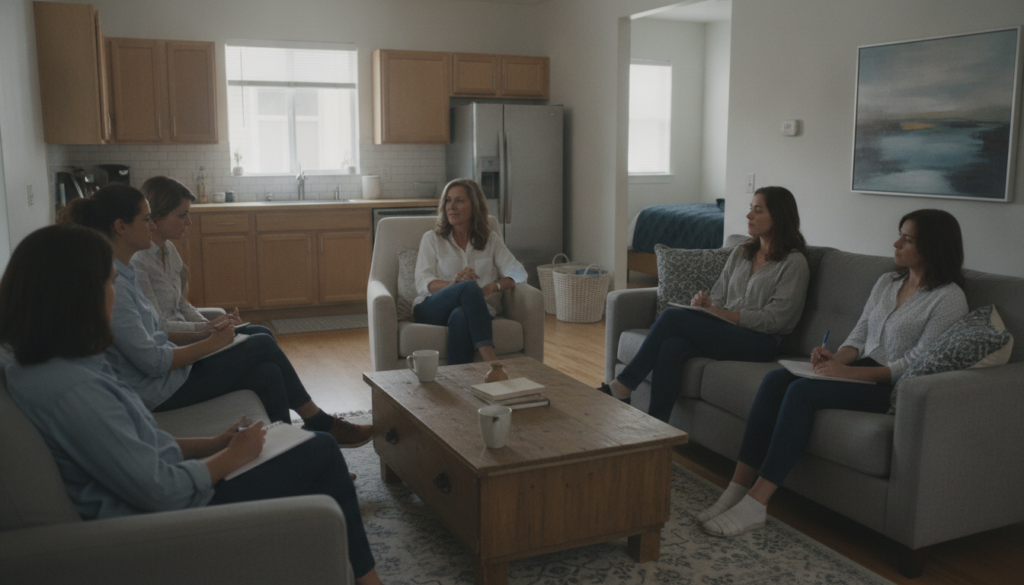
After location, the amount of paid support does the most to move the price. The National Alliance for Recovery Residences (NARR) sorts recovery housing into four levels of support, differentiated by staffing, governance, and services:
- Level I (peer-run) homes are democratically governed with no paid staff. Oxford Houses are the best-known example, and members share expenses directly, commonly around $100 to $200 per week.
- Level II (monitored) homes are what most people mean by sober living. A house manager or senior resident enforces rules, testing, and meetings.
- Level III (supervised) homes use paid, credentialed staff and organized programming, so they cost more.
- Level IV (service provider) settings function closer to residential treatment and should not be compared to ordinary sober living on price.
Labor is the largest recurring expense in recovery housing, which is why a $900 peer-run house and an $1,800 staffed house are genuinely different products. The higher fee is not automatically excessive if the staffing is real. The NARR National Standard spells out what each level is expected to provide, and it is a useful checklist when a home describes itself vaguely.
Low cost does not mean low value, either. A peer-reviewed analysis of the Oxford House model published in Evaluation and Program Planning found meaningful benefits relative to its costs, according to the study abstract. The right level depends on your relapse risk, co-occurring conditions, and existing support, not on what you can be talked into.
Private versus shared rooms
Room type is the most visible price difference. Shared rooms spread fixed housing costs across more residents. Private rooms remove bed revenue, so they almost always carry a premium of several hundred dollars to more than $1,000 per month.
A private room is not automatically better for recovery. The value of a residence usually comes from safety, accountability, and consistency, not solitude. Privacy is worth paying for when you have medical needs, a disability accommodation, trauma history, or a work schedule that a shared room cannot absorb. Staying six months in a well-run shared home usually beats leaving a private-room facility after one month because the money ran out.
What Amenities Actually Add to the Cost
Sort amenities into three groups before you compare homes.
Essentials like utilities, furnishings, kitchen access, laundry, and Wi-Fi should generally be inside the monthly fee. Recovery-supportive features like transportation, case management, and regular testing can justify a higher price when you need them and they are delivered consistently. Luxury features like pools, gyms, and chef-prepared meals are weak indicators of recovery quality. A pool does not reduce relapse risk.
Three line items deserve direct questions:
- Food. Many homes do not include groceries. Budget roughly $100 to $400 per month.
- Transportation. “Available” does not mean unlimited. Ask what is included and what extra trips cost.
- Drug testing. Comprehensive panels can run $10 to $50 each, so frequent testing adds up fast.
A $900 home plus $200 for food, $100 for testing, and $100 for transportation is really a $1,300 arrangement. The all-in number matters more than the headline rent.
The First Month Costs More Than Later Months
Monthly rent is not your entry cost. Most homes ask for the first month plus a security deposit that often equals one month’s rent, and many add application, background-check, or intake testing fees.
| Home type | Monthly fee | First month + deposit | Intake fees | Cash needed to move in |
| Peer-run shared | $700 | $1,400 | $50 to $150 | $1,450 to $1,550 |
| Standard monitored shared | $1,200 | $2,400 | $75 to $250 | $2,475 to $2,650 |
| Private room or enhanced support | $2,200 | $4,400 | $100 to $300 | $4,500 to $4,700 |
| Premium residence | $4,500 | $9,000 | $150 to $500 | $9,150 to $9,500 |
Someone with enough money for one advertised month may still be unable to move in. Always ask for the exact move-in total in writing, not just the monthly rate.
Is Sober Living Covered by Insurance?
Here is the honest answer many people do not want to hear: standard health insurance usually does not pay sober living rent. Sober living is primarily a housing setting with recovery supports, not licensed clinical treatment, and insurers separate reimbursable clinical services from room and board.

What insurance may cover, depending on your plan and medical necessity, is the care you receive while living in recovery housing:
- Detox and withdrawal management
- Inpatient or residential treatment
- Partial hospitalization and intensive outpatient care
- Outpatient counseling and psychiatric care
- Medication for opioid use disorder, including buprenorphine and methadone through eligible providers
The practical move is to unbundle housing from treatment. A licensed provider bills your insurer for clinical care while the residence charges separately for the room. You can verify which nearby programs are licensed and what they accept through SAMHSA’s FindTreatment.gov locator.
When a home says it “accepts insurance,” split the question into four parts: Does the plan cover substance use treatment? Does it cover services delivered while I live here? Does it cover rent, food, utilities, or the deposit? Is there a separate state or settlement-funded housing benefit? Get the answers in writing. A verbal assurance from a call center is not a guarantee of payment.
Does Medicaid Pay for Sober Living?
Medicaid is essential for services and usually insufficient for rent. It can cover treatment, medication, care coordination, and in many states peer support, but it generally does not pay room and board in a recovery residence.
Medicaid is state-designed, so coverage varies widely. Home and community-based services waivers let states fund a broad array of community supports, but room and board is specifically excluded from what those waivers pay for. So use Medicaid for clinical care and find a separate source for housing.
Start with this assumption: rent is out of pocket unless a specific scholarship, grant, voucher, or contract-funded bed says otherwise in writing. A person can have full Medicaid coverage and still be unable to pay the first month.
How to Pay for Sober Living When Insurance Does Not
The most durable approach layers several funding sources rather than hunting for one payer that covers everything.
Direct housing assistance is often the strongest option. Wisconsin’s Recovery Voucher Program, funded by opioid settlement dollars, provides housing assistance and supportive services to people with opioid use disorder who are experiencing homelessness. Federal money exists too, but it flows through states rather than to residents directly. HUD’s Recovery Housing Program funds states to provide stable transitional housing for people in recovery, for up to two years or until permanent housing is secured.
Other pathways worth combining:
- Sliding-scale rent tied to your verified income
- Scholarships or resident-assistance funds offered by the home
- Payment plans, which you have to ask about directly
- State Opioid Response funds and local opioid settlement allocations
- Public benefits such as SSI, disability, or veterans’ supports applied toward rent
- Peer-run models where residents share household costs
Certification also affects access. Homes on a state registry are far more likely to receive scholarships, subawards, and referrals. In Ohio, certified behavioral health providers are prohibited from referring clients to any home not on the state recovery housing registry. Wisconsin runs a similar recovery residence registry that voucher-funded beds are tied to. Ask whether a home is certified before you ask about price.
If you do not know where to start, the SAMHSA National Helpline at 1-800-662-HELP (4357) is free, confidential, available 24 hours a day, 365 days a year, in English and Spanish, and can route you to local treatment and recovery supports.
How to Know If a Sober Living Price Is Fair
The lowest price is not automatically the best value, and the highest is not automatically the safest. A fair price is transparent, matched to the housing and support you actually receive, and sustainable for the length of stay you need.
Watch for these red flags:
- No written resident agreement or itemized fee schedule
- Pressure to pay immediately without a tour
- Claims that insurance covers everything, without written proof
- Overcrowded rooms without adequate beds or bathrooms
- No written relapse, discharge, or grievance policy
Before you pay a deposit, ask three questions in particular. Does the home accept residents using prescribed medication for opioid use disorder? Is it certified or on the state registry? What happens if you lose income mid-stay? If a home costs under $500 a month, ask why. If it costs over $5,000, ask exactly what justifies it and whether treatment is included or billed separately.
Why Getting the Cost Right Protects Your Recovery
Financial strain is one of the most common reasons people leave recovery housing early, and an early discharge is the outcome you are trying to avoid. A room that leaves you isolated or unable to reach treatment is not truly affordable, no matter how low the rent looks.
Plan for at least 90 days, budget two months of rent up front, add a monthly line for food, transportation, and copays, and try to build a one-month emergency buffer by your third month. Assume insurance and Medicaid will pay for clinical treatment, not the housing bill. Then compare homes on all-in cost per unit of real support, not on appearances.
For most people, $800 to $1,800 monthly is the credible working range in 2026. Match the home to your needs and your income, and get every fee in writing before you commit.
If you are weighing your next step and want help matching care to your needs and budget, our team can walk you through our programs and connect you with the right level of support.