DBT therapy cost can feel confusing because DBT is often sold as a group, but true DBT usually includes more than one weekly service. In one published Louisiana plan example, the billable outpatient DBT pieces add up to $377.68 per week, or about $9,064 for 24 weeks. This guide explains what that price covers, what insurance may pay, and when IOP or PHP changes the math.
DBT Therapy Cost: The Direct Answer
How much does DBT therapy cost? A fair planning range is about $4,500 to $14,000 for six months in many self pay settings, while one published payer example reaches about $9,064 for 24 weeks using separate individual and group DBT rates.
That is a wide range because people use the word DBT in different ways.
A weekly skills class costs less than a full DBT program. A full DBT plan usually includes individual therapy, skills group, between session coaching, and a therapist consultation team. In one Louisiana managed care example, Louisiana plan rates list $200 for a 60 minute individual DBT session and $177.68 for a 120 to 150 minute group DBT session.
That makes the directly billable weekly amount $377.68 before deductibles, copays, coinsurance, denied claims, missed visits, or out of network charges.
What You Pay For In DBT
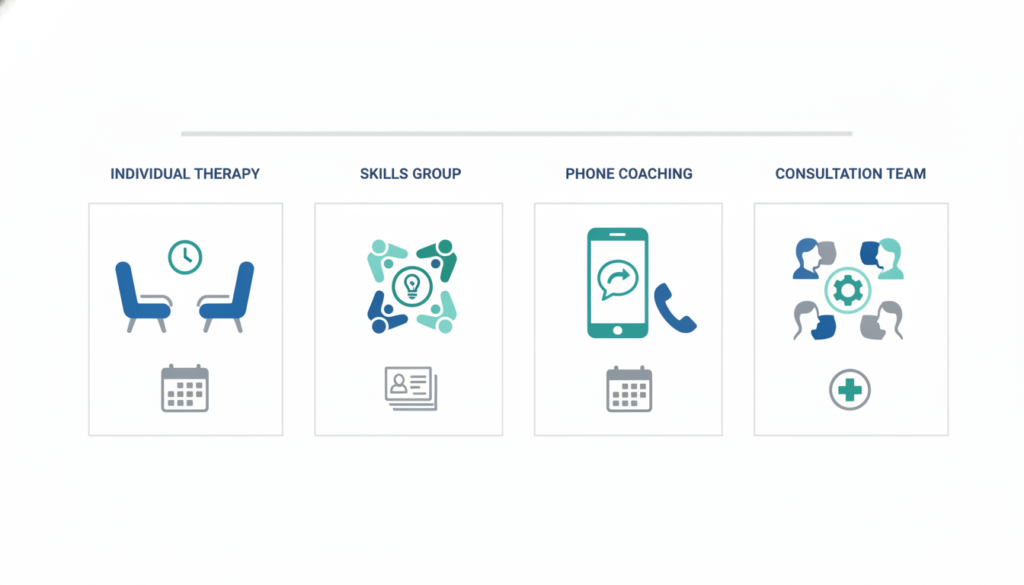
DBT is not just a workbook or a support group. Standard DBT has several parts that work together.
Magellan describes the DBT model as including individual therapy, skills group, phone coaching or support, and a clinician consultation team. Research describing the core modes also names individual therapy, skills training group, phone coaching, and therapist consultation team as the main structure.
The cost of DBT therapy depends on which of those parts are included.
Individual DBT is usually the easiest part to bill. It is a direct therapy session with one clinician and one client. In many commercial plans, individual psychotherapy may be billed with CPT codes such as 90834 or 90837, depending on time and payer rules. In the Louisiana example, the DBT specific pathway used H2021.
Skills group is the second visible cost. This is where you learn and practice skills like mindfulness, distress tolerance, emotion regulation, and interpersonal effectiveness. In many plans, group psychotherapy may be billed with CPT 90853. In the Louisiana example, group DBT used H2021 with the HQ modifier.
Phone coaching is different. It can be a key part of DBT, especially when someone needs help using skills during a crisis, craving, conflict, or urge to self harm. But it is often not paid as a separate DBT claim.
The therapist consultation team is also usually not billed to the patient as its own service. It supports the clinicians and helps them stay aligned with DBT methods. It has a real cost for the program, but it is usually built into fees, salaries, grants, or program overhead.
Typical DBT Price Planning Numbers
| DBT cost item | Common planning number | What it means |
|---|---|---|
| Individual DBT session | $200 in one Louisiana plan example | 60 minute weekly individual DBT |
| DBT skills group | $177.68 in one Louisiana plan example | 120 to 150 minute weekly group |
| Weekly billable total | $377.68 | Individual session plus group |
| 24 week total | $9,064.32 | One individual session and one group each week |
| 52 week total | $19,639.36 | One individual session and one group each week |
| Self pay DBT range | $185 to $300 weekly | Broad market estimate, not a fee schedule |
These numbers are useful, but they are not a national price promise. A cash pay practice, Medicaid plan, private insurer, hospital program, or out of network clinician may use a very different rate.
Why Six Months And One Year Matter
DBT is often planned in cycles. Some DBT programs describe one skills cycle as about 24 weeks, so six months is a common way to estimate the first full round of skills work.
Many people stay longer. A year of DBT may include two skills cycles, more practice, and more time to apply skills to real life problems.
For a six month estimate, the simple math is 24 individual sessions plus 24 group sessions. Using the Louisiana rates, that comes to about $9,064.
For a one year estimate, the math is 52 individual sessions plus 52 group sessions. Using the same rates, that comes to about $19,639.
Those totals do not include every possible cost. Psychiatric visits, medication management, substance use counseling, drug testing, case management, higher levels of care, missed appointment fees, and out of network balances may change the final bill.
They also do not mean you personally pay the full amount. If your insurance covers DBT, your actual cost may be a copay, coinsurance, or deductible amount. If the provider is out of network, your bill may be higher.
How Much Is DBT Therapy With Self Pay?
Self pay DBT prices vary a lot. Published practice estimates put full DBT style care at roughly $185 to $300 per week, about $4,500 to $14,000 for six months, and about $9,000 to $15,000 for a year in community settings. These are market observations rather than a published fee schedule, so verify directly with any program you are considering.
That can look lower than the Louisiana payer example. The difference does not always mean one price is wrong.
A self pay program may bundle services. It may charge less for group, use a sliding fee scale, or offer a DBT informed option rather than the full standard model. A payer rate may reflect a contracted allowed amount, not the cash price.
This is why it helps to ask a provider a very plain question: what is included in the weekly price?
If the fee only covers group, the total may look low, but you may still need to pay separately for individual therapy. If the fee includes individual therapy, group, coaching access, and team support, the weekly number may be higher, but it may reflect more of the real DBT model.
How Insurance Changes The Bill
Insurance can make DBT more affordable, but it can also make the pricing harder to understand.
Your plan may cover individual therapy but deny the group. It may cover group therapy only when the group is documented as psychotherapy, not as a general class. It may require prior authorization. It may pay an in network provider but deny an out of network DBT program.
Medicaid payment is especially state dependent. California’s Medi Cal rates show how public schedules may pay county plans, while local plans may set their own network provider rates. That means a posted rate does not always tell you what a specific clinician is paid.
Commercial insurance is contract dependent too. Two people can have the same insurance brand and very different DBT coverage because their employer plans, behavioral health networks, deductibles, and authorization rules differ.
When checking coverage, ask whether your plan covers individual psychotherapy, group psychotherapy, DBT skills group, telehealth, and out of network care. Ask whether prior authorization is needed before starting. Also ask whether the provider is billing as a clinician, group practice, facility, IOP, or PHP.
DBT Therapy Cost In IOP And PHP
DBT in an intensive outpatient program or partial hospitalization program is priced differently from weekly outpatient DBT.
A standard weekly DBT plan might involve one individual session and one skills group each week. That is often about 3 hours of scheduled care, plus phone coaching as needed.
IOP is a higher level of care. Medicare contractor IOP guidance describes IOP as 9 to 19 hours of behavioral health services per week. That is much more time than standard weekly DBT.
PHP is usually more intensive than IOP. It often involves daily programming and a much larger weekly time commitment. Blue Cross North Carolina says a PHP per diem includes facility, professional, ancillary, and other services provided to the member.
That bundled payment matters. If DBT is part of IOP or PHP, the DBT group and individual counseling are usually part of the program day. They are not usually billed on top of the daily program rate unless the payer contract clearly allows it.
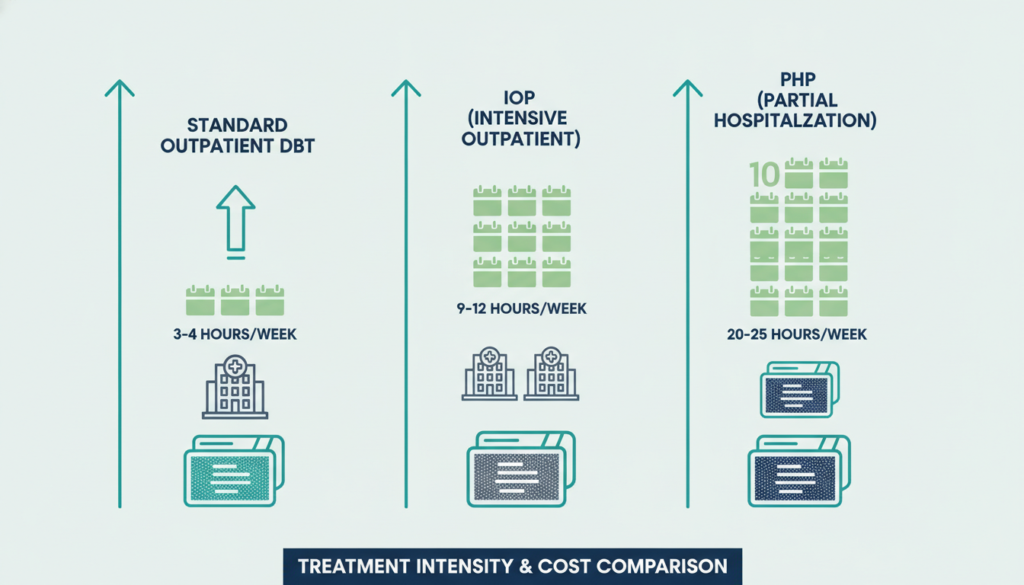
This is why IOP and PHP may cost much more than outpatient DBT. They are not just more expensive versions of the same thing. They are higher levels of care for people who need more structure, more treatment hours, and more clinical monitoring.
For someone with co occurring substance use and mental health symptoms, IOP or PHP may be the right fit if weekly therapy is not enough. But it should be chosen because the person needs that level of care, not because it is a different way to bill DBT.
What To Ask Before You Start
Before you begin DBT, try to get the cost in writing. Ask the provider what parts of DBT are included, how often you attend, how long the program usually lasts, and what happens if you miss sessions.
Ask whether the program is standard outpatient therapy, IOP, or PHP. That one answer changes the whole billing model.
Ask your insurance plan whether individual therapy and group therapy are both covered. If the group is denied, ask whether the plan classified it as education, support, or group psychotherapy. That detail can decide whether an appeal makes sense.
For many plans, federal appeal rules give you 180 days after an adverse benefit decision to file an internal appeal. Do not wait if the denial affects care you need now.
It is also worth asking about missed session rules. DBT programs often take attendance seriously because skills build over time. A missed visit may not be paid by insurance, and a private practice may charge a late cancellation fee.
Why The Price Matters For Recovery
The cost of DBT therapy is not just a budget question. It shapes whether you can stay long enough to learn the skills, practice them, and use them when life gets hard.
A low price may not help if it only covers a weekly class and you also need individual therapy. A high price may not be realistic if insurance will not cover the group. IOP or PHP may be worth the cost when safety, relapse risk, or daily function calls for that level of care, but it is not the same as standard outpatient DBT.
The best answer is the one that matches your clinical need, your coverage, and your ability to keep showing up. DBT takes work. The money side should be clear enough that you can focus on treatment.
If you are comparing DBT, IOP, PHP, and insurance options for substance use or co occurring mental health care, our team can help you think through next steps with evidence based treatment.