Wondering what a partial hospitalization program cost will actually be once insurance gets involved? Most PHP claims are paid as a daily rate rather than one flat program price, and Medicare’s 2026 national rate for a full day of hospital based PHP runs $418.45, with a typical 20% coinsurance applying after your deductible. This guide breaks down what drives php cost, how much php costs with insurance, and what to check before your first day of treatment.
What Drives Partial Hospitalization Program Cost
Treatment centers often describe PHP as a six week program or a set weekly price. That number is useful for planning, but it rarely matches what an insurer actually pays. Most payers treat PHP as a daily episode of care rather than a lump sum, so your real bill depends on the allowed amount for each authorized day, not the marketing total.
Three separate systems decide your final number. First, a payer applies its own medical necessity rules to decide whether PHP is the right level of care rather than intensive outpatient treatment. Second, the payer’s contract sets the allowed amount for your provider, often through one bundled daily rate rather than separate charges for every group, session, or check in. Third, your plan design, meaning your deductible, coinsurance or copay, and remaining out of pocket cap, decides what part of that daily rate actually lands on your bill.
Published rate examples help show the range without acting as a quote. Hospitals are required to publish payer-specific negotiated charges in machine-readable files, and examples drawn from those filings include $424 per day for revenue code 0913 at a Massachusetts provider and $545 per day for revenue code 0912 at a California psychiatric hospital. Both sit far below the kind of total a six or eight week program might advertise. Those figures show the order of magnitude for two specific contracts. They are not a prediction for your plan, your provider, or your state.
Those two examples also carry a lesson worth noticing. The $424 rate was attached to revenue code 0913 and the $545 rate to revenue code 0912, even though 0912 and 0913 describe different intensity tiers of the same service family. If billing codes set prices, the more intensive code would reliably cost more. It does not, because the two examples came from different providers, different states, and different contracts. The code on your claim describes what service was delivered. The contract between your provider and your payer decides what it costs.
How Insurance Changes Your Php Bill
Before your first day, most commercial and managed care plans require prior authorization. Insurers commonly grant an initial approval in short blocks, often described as five days, and then require the treatment team to submit updated clinical notes to justify each additional block. This structure follows directly from how plans define PHP as a level of care that sits between routine outpatient therapy and inpatient hospitalization.
That short cycle has a direct financial effect. Approval for PHP does not mean approval for an entire advertised program. A patient could start with five authorized days, receive a second five day extension, then step down to a lower level of care, or the payer could decline to extend coverage even when the clinical team recommends more time. Programs that fail to submit a continued stay request before the current approval expires risk treating unauthorized days that the plan may never pay for.
So how much does partial hospitalization cost with insurance, in practice? It depends on three things happening correctly at once: the facility is in your network, the payer approved PHP rather than a lower level of care, and the number of approved days matches the days you actually attend. When any one of those pieces is missing, your bill can look very different from the estimate you received on day one.
Partial Hospitalization Program Cost By Payer Type
Medicare pays PHP through a bundled daily rate under its outpatient payment system, with separate categories based on the setting and the number of services furnished that day. The 2026 national rates and the Part B coinsurance that typically follows look like this once the deductible has been met.
| Setting and service level | Daily payment rate | Estimated 20% coinsurance |
|---|---|---|
| Hospital PHP, three services | $319.38 | $63.88 |
| Hospital PHP, four or more services | $418.45 | $83.69 |
| Community mental health center, three services | $127.74 | $25.55 |
| Community mental health center, four or more services | $167.38 | $33.48 |
These national figures exclude geographic adjustments and secondary coverage, so an individual beneficiary’s actual daily cost share can move up or down from these examples.
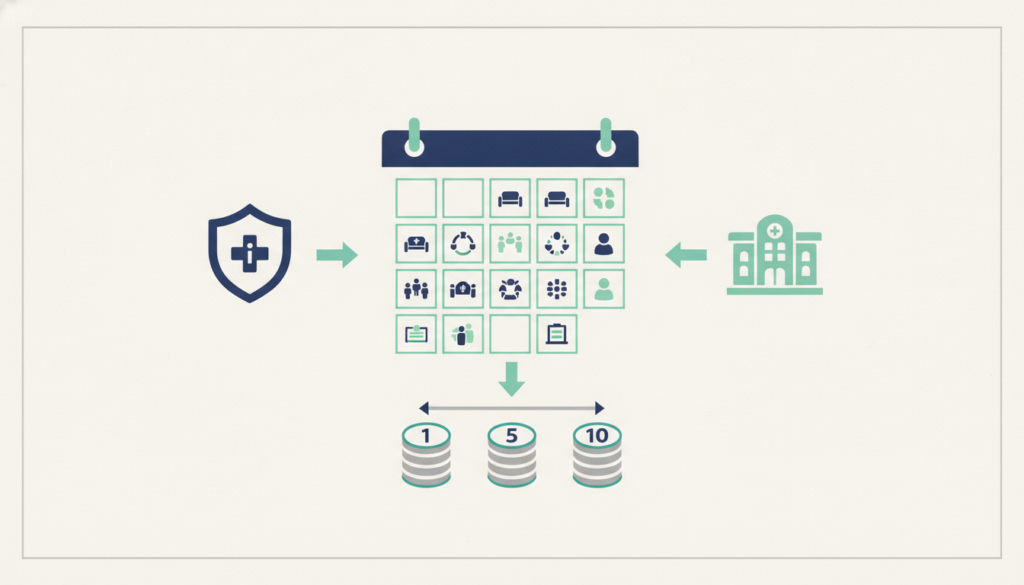
Commercial insurance works differently in one important way: there is no single national rate. Each payer negotiates its own daily amount with each provider, so the same PHP day can cost a patient a very different amount depending on the plan, the state, and the facility’s contract. Medicaid adds another layer of variation, since coverage rules, prior authorization requirements, and payment rates differ by state and by managed care plan. There is no shortcut around checking your own plan documents before treatment starts.
Deductibles Coinsurance And Your Out Of Pocket Cap
Coinsurance percentages sound simple until you factor in an unmet deductible. A plan that states 20% coinsurance for PHP is not describing your full cost. It is describing your cost only after your deductible has already been satisfied.
A real world Marketplace example makes this clear. A 2026 Ohio plan lists a $1,000 individual deductible, a $3,350 individual out of pocket maximum, and 20% coinsurance for PHP after that deductible is met. Assume a $500 allowed amount per PHP day. A patient starting treatment with the full deductible still owed would pay the entire $500 on day one and day two, since that $1,000 goes straight toward the deductible. From day three onward, the same patient owes only $100 per day, which is 20% of the allowed amount. Over five days, that patient’s total runs about $1,300. A second patient on the identical plan who already met the deductible earlier in the year would owe just $100 per day for the same five days, for a total near $500. Same treatment, same facility, same negotiated rate, and an $800 difference driven entirely by deductible timing.
The out of pocket maximum works as a ceiling, not a cure. Once a member reaches that annual cap, the plan generally pays 100% of covered, authorized, in network services for the rest of the year. It does not automatically fix a missing authorization, an out of network bill, or a service the plan excludes. Network status and approval still have to be correct for that protection to mean anything.
Steps To Estimate Your Php Cost Before Admission
The cost of php for any one person depends less on a program’s brochure and more on a short list of facts you can confirm in advance. Start with network status. Confirm that the facility, and any psychiatrist, therapist, or nurse practitioner billing separately, are in network for your specific plan rather than loosely affiliated with your insurer.
Next, confirm authorization. Ask whether prior authorization is required for PHP specifically, not intensive outpatient treatment, and get the approved dates, number of days, and authorization number in writing. Ask who is responsible for submitting the next review before that approval expires.
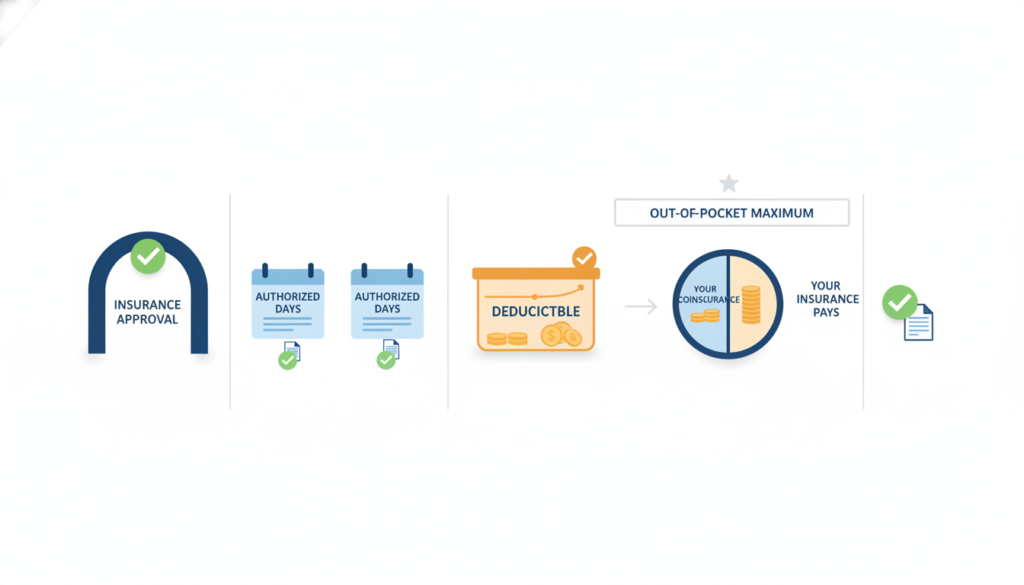
Then get the numbers behind your benefit. Ask your plan for your remaining deductible, your coinsurance or copay for PHP, and your remaining in network out of pocket maximum. Ask your provider what daily allowed amount they expect to bill and what services are bundled into that daily rate versus billed separately. Combine those figures using the same math shown above, and you will have a realistic answer to how much does php cost for your situation rather than a generic percentage that leaves out the deductible.
Finally, ask what happens if your authorized days run out before your treatment team recommends stepping down. A responsible program will tell you before day one whether it plans to seek an extension, how it will notify you of a denial, and what your self pay exposure would look like if treatment continues without approval.
Partial Hospitalization Program Cost And Your Recovery
None of this changes what PHP is clinically for. It exists to give people who need more than weekly therapy, but not round the clock supervision, a structured place to stabilize. The financial side matters because unexpected bills can pull people out of care at exactly the point where consistency counts most.
Getting a written, plan specific answer before admission does two things at once. It protects your budget, and it protects your treatment, because a family that understands its authorized days and its deductible timeline is far less likely to face a surprise interruption mid program. Ask the specific questions above rather than accepting a general statement that treatment is covered, and you will walk into day one with a number you can actually trust.
If cost concerns have been holding you or someone you love back from starting care, talk with a team that will walk through your coverage and options honestly before you commit to anything. Reach out to The Summit Wellness Group to talk through our PHP program in Atlanta, GA, and what it would actually cost for your situation.