Finding out you’re pregnant while taking Adderall can feel like an emergency, but stopping suddenly isn’t automatically the safer choice. Research on prescribed amphetamines like lisdexamfetamine hasn’t shown a strong link to major birth defects, though a recent Australian study found that stopping raised the odds of threatened miscarriage by more than double compared with continuing treatment. This article breaks down what the evidence on adderall and pregnancy actually shows, so you can decide with your doctor, not alone.
Adderall and Pregnancy: What the Research Shows
Most of the research on prescribed amphetamines in pregnancy centers on lisdexamfetamine, the active ingredient in Vyvanse, and mixed amphetamine salts, which is what’s in Adderall. The reassuring part is that current evidence does not show a strong, repeated link between therapeutic amphetamine use and major birth defects.
The UK teratology service states plainly that therapeutic amphetamine use is not known to cause structural birth defects. A 2025 systematic review of high quality cohort studies came to a similar place. It looked at studies that directly compared people who kept taking ADHD medication through pregnancy with people who stopped, and found no significant negative outcomes tied to continuing.
Later in pregnancy, the picture gets more nuanced. A large Medicaid cohort study found early stimulant use was linked to a roughly 29 percent higher relative risk of preeclampsia, while links to preterm birth and small for gestational age babies were weaker and less certain. A more recent claims based analysis found that stimulant exposure limited only to the first trimester wasn’t tied to most complications, but continuing use into the second and third trimesters showed higher rates of preeclampsia, placental abruption, and preterm birth. These are associations, not proof of cause, since ADHD severity, smoking, and other health factors can muddy the picture.
Put together, this means neither “always stop” nor “always continue” fits everyone. It’s a decision that depends on your health, your ADHD severity, and how you function without treatment.
Can I Take Adderall While Pregnant? The Real Answer
The direct answer is that there’s no universal yes or no. Whether adderall while pregnant is safe for you depends on how severe your ADHD is, how you’ve handled missed doses or breaks before, and what your prescriber and obstetrician decide together after looking at your full history.
Why First Trimester Timing Feels So Urgent
Early pregnancy creates real pressure because a lot of organ development happens before most people even know they’re pregnant. That timing fuels the fear that any exposure has already caused harm, or that quitting today will undo it. Neither is quite right. Any medication decision you make now only affects exposure going forward, not what already happened. That’s worth sitting with before you make a snap decision out of fear.
Adderall and Pregnancy First Trimester Symptoms
Here’s where things get genuinely confusing. Early pregnancy causes fatigue, nausea, disrupted sleep, and mood swings on its own. Stopping a stimulant can cause similar symptoms. Trying to tell the two apart just from how you feel is hard, and that overlap is part of why people misread normal pregnancy fatigue as severe withdrawal, or vice versa.
A rough timeline can help you make sense of what you’re feeling and when to call your doctor.
| Timing After Last Dose | What You Might Notice | Likely Explanation |
| Same day | Lower focus, less energy, more hunger | Medication wearing off |
| 1 to 3 days | Fatigue, sleeping more, low mood, foggy thinking | Discontinuation effects, early pregnancy, or both |
| 1 to 2 weeks | Trouble organizing, forgetfulness, disorganization returning | Untreated ADHD symptoms coming back |
| Beyond 4 weeks | Ongoing mood or concentration problems | Worth a fresh checkup rather than assuming it’s just withdrawal |
That middle row matters most. Clinical trial data give a useful reference point here. In a randomized withdrawal trial of adults who had responded well to lisdexamfetamine, 75 percent relapsed within six weeks after being switched to placebo, compared with under 9 percent who stayed on their medication. Most of that relapse happened in the first two weeks. That’s not proof every pregnant person will react the same way, since the study wasn’t done in pregnancy and only included people who’d previously responded well to treatment. But it does show that pulling an effective medication can bring ADHD symptoms back fast, and that timeline is worth knowing before you decide to go it alone.
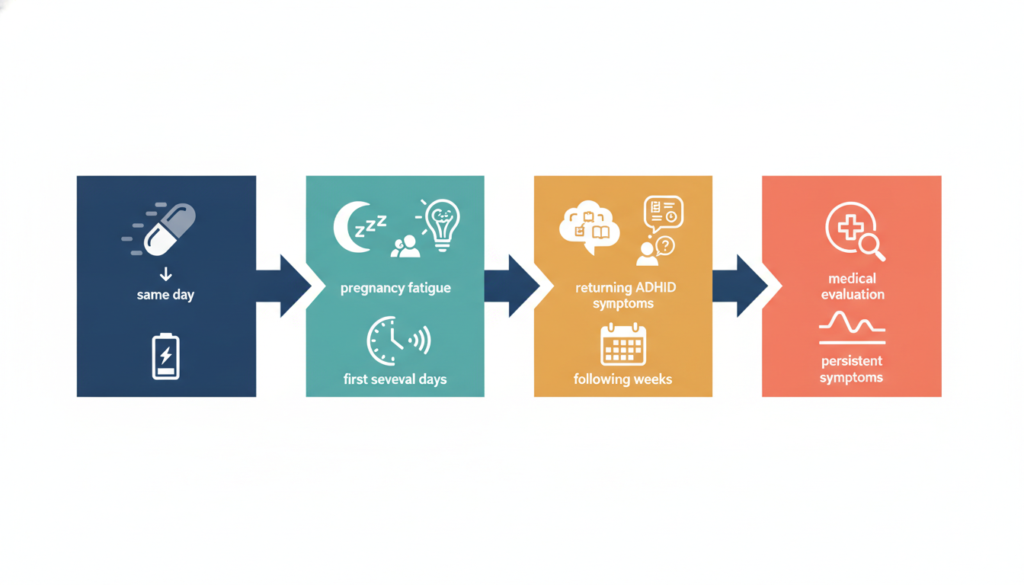
Meanwhile, according to a practical discontinuation guide, symptoms in the first few days can reflect medication rebound, actual withdrawal, or the return of ADHD itself, and they’re genuinely hard to sort out without tracking your symptoms over time. First trimester exhaustion, described in detail in this pregnancy fatigue overview, can look nearly identical to stimulant withdrawal on a bad day.
What Happens If You Stop Adderall Suddenly
Stopping cold does not guarantee a rough few weeks. In a clinical study looking at abrupt lisdexamfetamine cessation, described in a binge eating disorder trial, participants who’d been on the medication for up to 38 weeks did not show clinically meaningful withdrawal symptoms over a week of follow up. That’s a small, short study, and it wasn’t done in pregnant people with ADHD, but it pushes back on the idea that quitting a therapeutic dose always triggers a severe crash.
What’s far more consistent across the research is loss of ADHD symptom control. Inattention, forgetfulness, trouble starting tasks, and emotional reactivity can return quickly once medication stops working. That’s not addiction and it’s not necessarily dangerous withdrawal. It’s simply the condition you were treating showing back up.
The honest picture is a mix: some people feel little beyond fatigue and appetite change, others feel their ADHD symptoms return within days, and pregnancy itself adds fog on top of all of it.
Tapering Adderall During Pregnancy vs Quitting Cold
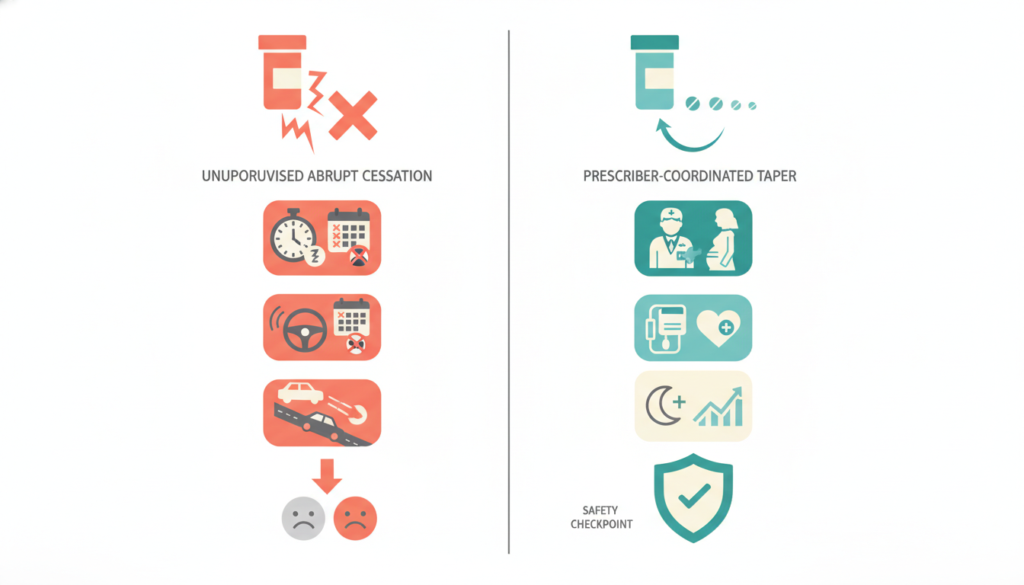
Stopping without a plan means you lose the ability to catch problems early. You might chalk up missed prenatal appointments, unsafe driving moments, or a sudden mood crash to “just being pregnant” when they’re actually signs your ADHD needs support.
A prescriber guided taper is different because it turns a fear based decision into a monitored process. That typically includes checking your baseline functioning, reducing dose gradually where appropriate, watching sleep, mood, and blood pressure, and setting clear rules for when to pause or reverse the plan. No major guideline hands over one universal schedule for tapering lisdexamfetamine in pregnancy, so this really is a conversation with your prescriber rather than something to figure out from an internet search.
A taper tends to fit best when your ADHD is mild to moderate, you have practical support in place, and you haven’t had serious problems the last time you cut back or paused treatment.
When Continuing Adderall May Be the Safer Choice
Continuing medication, sometimes at the lowest dose that still works, can be the better call when untreated ADHD creates real safety risks. Think unsafe driving, an inability to eat regularly or make prenatal appointments, or a history of serious decline whenever medication is reduced.
The UK teratology service specifically notes that untreated ADHD is tied to riskier behaviors, including smoking and alcohol or drug use, and that continuing treatment can genuinely help some patients manage pregnancy more safely. That’s an important point that gets lost when the conversation only focuses on medication exposure and skips over what happens when ADHD goes untreated.
Adderall Dependence vs Normal Medication Withdrawal
Feeling tired or unfocused after stopping a stimulant does not mean you’re addicted. According to diagnostic guidance summarized by a substance use knowledgebase, tolerance and withdrawal alone should never be counted toward a substance use disorder diagnosis when medication is taken exactly as prescribed under medical care.
What actually raises concern is a pattern: taking more than prescribed, running out early again and again, getting pills from someone other than your own pharmacy, using the medication to stay awake or chase a high rather than manage ADHD, or continuing use despite it causing real harm to your health or relationships. A pregnant person who feels foggy and tired for a week after stopping medication looks nothing like someone showing those patterns, and it’s worth being clear about that difference so nobody gets mislabeled or shamed for having a normal reaction to a medication change.
Why It Matters: Deciding With Your Care Team
The question of pregnancy and Adderall isn’t really about finding one right answer that applies to everyone. It’s about weighing what happens to you and your pregnancy if ADHD goes untreated against what the current evidence says about medication exposure, and making that call with people who know your full history.
If you’re pregnant and currently taking Adderall or a related stimulant, the most useful next step is a quick, honest conversation with your prescriber and your obstetric provider, ideally before you change anything on your own. Bring your symptom history, your concerns, and any past experience with stopping or reducing your dose. That conversation, not a solo decision made out of fear, is what actually protects both you and your pregnancy.
If stopping or cutting back on Adderall has left you wondering whether your relationship with the medication has become something bigger than ADHD treatment, you don’t have to sort that out by yourself. Clinicians at The Summit Wellness Group can help you separate withdrawal from returning symptoms, a distinction our treatment model is built around.