If a couple of drinks that used to feel easy now leave you foggy, unsteady, or wide awake at 3 a.m., you are not imagining it. Alcohol and aging are linked because your body carries less water and muscle after 50, so the same drink concentrates faster in your blood, and CAMH notes older adults feel stronger effects from that same amount. This guide covers why alcohol tolerance with age drops, which signs matter, and when to get checked.
Why Alcohol and Aging Change How You Feel a Drink
Your body is not the same machine it was at 30. As you get older, you lose lean muscle and total body water, and alcohol mixes mostly with water once it enters your system. Less water in the tank means the same two drinks land as a stronger dose. Your liver may also break alcohol down more slowly, so it lingers in your bloodstream longer than it used to.
None of this happens overnight. It builds up quietly, often becoming noticeable sometime in your fifties or sixties. The Cleveland Clinic Journal of Medicine points out that retirement, grief, chronic pain, and reduced alcohol metabolism often combine to raise risk later in life, even when the number of drinks has stayed exactly the same for years. I think that last part is the piece people miss most. A stable habit is not automatically a safe one.
What Changes Inside Your Body After 50
A few overlapping shifts explain most of what people notice. Here is how they line up.
| Age related change | What it does | What you might notice |
| Less body water | Alcohol concentrates more in the blood | Feeling drunk faster on the same drinks |
| Less muscle mass | Less buffering for alcohol in the body | More sedation, unsteady walking |
| Slower liver processing | Alcohol stays active longer | Feeling foggy well into the next day |
| More sensitive brain and balance system | Bigger impact on coordination and memory | Stumbling, forgetfulness, slower reactions |
| More common health conditions | Alcohol can strain blood pressure or liver function | New or harder to control health issues |
Does Alcohol Affect You More As You Age?
Yes. The same drink can hit harder, last longer, and cost you more the next day once you pass 50. This is not a matter of willpower or getting soft. CAMH lists reduced coordination among the reasons older adults face a higher risk of falls and injuries tied to alcohol, even when a person’s drinking habits have not shifted in decades.
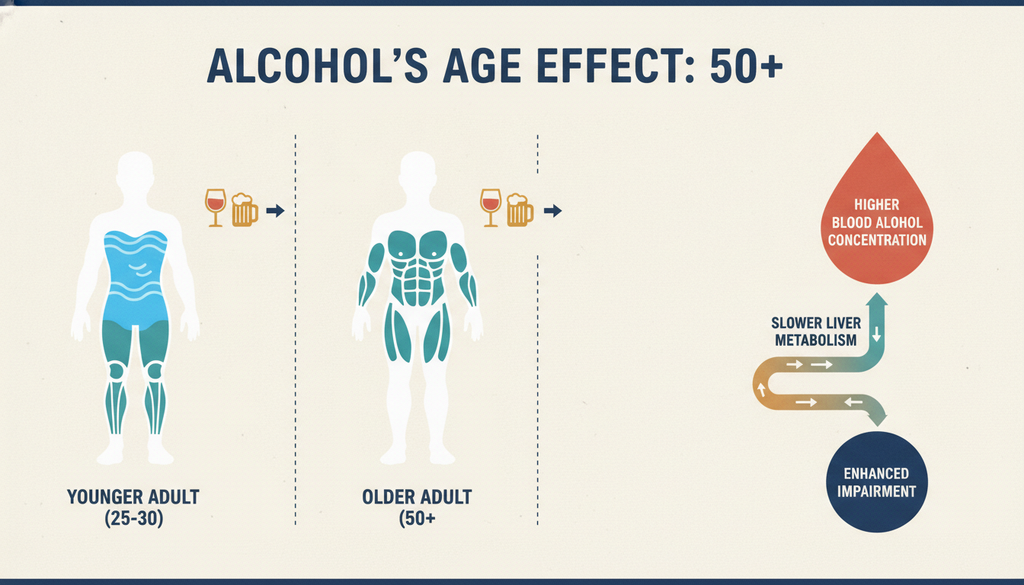
Here is a simple way to picture it. At 35, two glasses of wine might mean a slightly relaxed evening and a normal morning. At 60, those same two glasses might mean a rough night’s sleep, a wobbly trip to the bathroom, and a slower start the next day. The drinks did not change. Your body did.
Why Alcohol Tolerance With Age Drops
Sleep is often where this shows up first. Alcohol can make it easier to fall asleep, but sleep later in the night tends to become lighter and choppier as the alcohol wears off. If you find yourself waking around 2 or 3 a.m. most nights you drink, followed by a tired, slow next day, that pattern deserves attention even if your evening intake never changed.
Recovery time is another practical clue. If two drinks used to leave you feeling normal by breakfast and now leave you needing until noon to feel steady, that is a real, measurable shift in how your body handles alcohol. It is worth tracking rather than shrugging off as just getting older.
Liver health matters here too. If you already have any liver concerns, there is no truly safe amount of drinking. The American Association for the Study of Liver Diseases advises people with liver disease to aim for full abstinence rather than simply cutting back.
Warning Signs Your Alcohol Tolerance Has Dropped
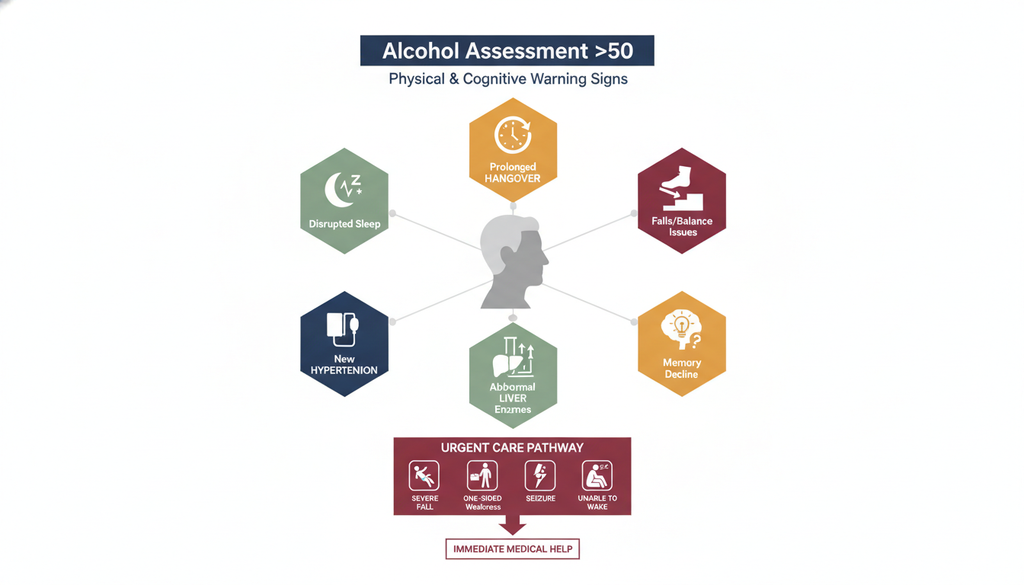
A single rough night rarely means much on its own. A repeating pattern is what counts. Watch for recurring unsteadiness or near falls, memory lapses that friends or family point out, new high blood pressure readings, or liver test results that come back abnormal without an obvious explanation. None of these prove alcohol is the sole cause, but together they are a good reason to bring it up with a doctor.
One important caution here. Never assume a fall, sudden confusion, or slurred speech is just alcohol talking. The Merck Manual Professional Edition warns that clinicians should not assume a high blood alcohol level fully explains reduced consciousness after a head injury, since trauma, stroke, and other causes can be happening at the same time. If someone becomes hard to wake, shows new weakness on one side, or has a seizure, treat it as an emergency, not a hangover.
Alcohol and Older Adults: When to Get Checked
Checking in on your drinking does not need to be a big dramatic step. The U.S. Preventive Services Task Force recommends that all adults, including older adults, get screened for unhealthy alcohol use during routine primary care visits, with brief counseling offered when it helps.
For people over 50 specifically, a tool built for this age group can catch things a general screen might miss. The Hartford Institute for Geriatric Nursing notes that its geriatric screening tool is designed around how alcohol shows up differently later in life, including falls, mood shifts, and health complications, not just the raw number of drinks.
A good rule of thumb: ask for a check in whenever your health, medications, or life circumstances change in a big way, such as a new diagnosis, a fall, retirement, or the loss of a spouse. Waiting until things feel severe is not necessary and is not the safer path.
Alcohol and Aging: Why This Matters Long Term
Left unaddressed, these changes can add up to more than a rough morning. Dementia Australia explains that regular heavy drinking can lead to thiamine deficiency and alcohol related brain injury, which can affect memory, mood, and movement over time. The encouraging part is that catching this early, alongside better nutrition and reduced drinking, can allow some recovery, though full healing may take time and is not guaranteed for everyone.
This is why alcohol and aging deserve real attention rather than a shrug. A pattern that felt perfectly fine for twenty years can quietly become riskier without a single extra glass being poured. Your body is the thing that changed, and it is worth listening to what it is telling you.
What You Can Do Starting Tonight
You do not need to give up alcohol forever to protect your health, though for some people that ends up being the right call. A few smaller steps help most people right away: drink with food, space drinks out over the evening, and pay attention to how you feel the next morning, not just that night.
If sleep, balance, mood, or memory have noticeably shifted, talk with a doctor rather than guessing. And if you already drink daily and are thinking about stopping suddenly, please talk with a clinician first. Cutting off alcohol abruptly after long term daily use can carry its own health risks, especially for older adults, so a supervised plan is the safer route.
Your tolerance changing is not a personal failing. It is biology doing what biology does after 50. Paying attention now, rather than pushing through, is the simplest way to stay steady, sharp, and safe for the years ahead.
If your drinking pattern feels different than it used to and you want support figuring out what comes next, contact us at The Summit Wellness Group to explore treatment options built around your health and your life.