Wondering what rules you’ll face before moving into a sober living home? Most homes require abstinence, some form of curfew, and clear guest policies, though exact hours and consequences vary by house level, as described in the NARR standards framework for recovery residences. This guide covers common sober living rules, from curfews and visitors to testing, rent, and relapse policies, so you know what to expect before you sign a lease.
What Sober Living Rules Cover in Most Homes
Sober living rules exist to keep a shared house safe, calm, and focused on recovery. But here’s something people often get wrong: not every sober living home runs on the same playbook. A peer run house might set its own curfew through a house vote. A staffed, monitored home might post a fixed schedule and enforce it strictly. Neither approach is automatically better. What matters is whether the rules actually protect residents.
Still, a small set of expectations shows up almost everywhere. Every credible sober living home bans alcohol and illicit drugs on the property. Every one expects residents to treat roommates with respect and to share basic household duties. Beyond that core, the details, like exact curfew times, guest hours, and meeting requirements, are house specific. They depend on the level of structure, the state the home operates in, and the population it serves.
Here is a quick look at how common each rule tends to be and why it exists.
| Rule | How Common | Why It Exists |
| No drugs or alcohol on site | Near universal | Protects the substance free living space |
| Curfew | Very common, timing varies | Builds routine and limits late night risk |
| Drug or alcohol testing | Common, not universal | Adds accountability and catches problems early |
| Chores and house meetings | Very common | Builds shared ownership and life skills |
| Guest and visitor limits | Common, policies vary widely | Protects the household from outside risk |
| Meeting or treatment attendance | Common, house specific | Supports ongoing recovery engagement |
| Automatic discharge after relapse | House specific, not required | Some homes use it, others use a graduated response |
Sober Living Curfew: What to Expect at Night
A sober living curfew is one of the most talked about house rules, and for good reason. It touches daily life directly. Yet there is no single national standard. A weekday curfew might sit around 10 p.m. in a monitored home, while a peer run house may set a later time by group agreement, and weekends often come with a bit more room to breathe.
The reasoning behind a curfew usually comes down to routine and safety. Early recovery can be disrupted by irregular sleep, late night socializing, and unplanned exposure to old habits or people. A predictable curfew gives residents a reason to plan their evenings, get enough rest, and check in with the house before something goes wrong. It also gives staff or peers a simple way to know everyone made it home safely.
Good curfew policies build in flexibility too. Night shift work, school schedules, medical appointments, and family emergencies are normal parts of adult life, and a rigid curfew that ignores them can do more harm than good. Many homes use a phase system instead, where residents earn later curfews and overnight passes as they show consistency over weeks or months. Others simply require a phone call or text when plans change.
If you are evaluating a home, ask what happens after one late arrival. A fair house treats a single missed curfew differently than a repeated pattern of no shows, and it should say so in writing before you move in.
Can You Have Visitors in Sober Living Homes?
Yes, most sober living homes allow visitors, but almost all of them set limits on when, how, and who can come by. Visitor policies protect the shared living space from substances, conflict, and disruption, while still letting residents keep up family ties and outside support that matter for long term recovery.
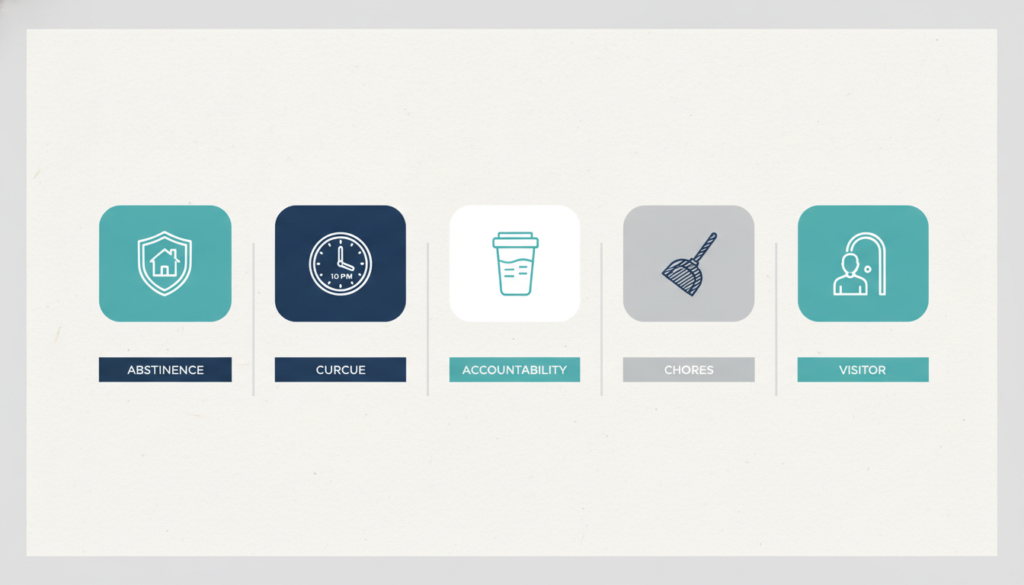
Common visitor rules include set visiting hours, a sign in process, and a ban on guests who show up intoxicated or carrying drugs or alcohol. Many homes also restrict overnight guests, especially in the early weeks of a stay, since unplanned overnight company can unsettle roommates and stretch house resources thin. Some homes loosen these limits once a resident has shown steady progress, allowing more overnight passes or later visiting hours as trust builds. A structure like this shows up often in house rules templates used across many residences.
Family visits deserve particular attention. A home that supports parents or people rebuilding relationships with their kids should have a workable plan for that contact, not a blanket no guest policy that makes recovery harder rather than easier. If a resident needs a specific adjustment to a visitor policy because of a disability or caregiving role, federal housing guidance recognizes that reasonable accommodations should be weighed case by case rather than denied outright.
Sober Living Home Requirements for Rent and Chores
Paying rent and doing your share of the housework sit near the top of nearly every list of sober living home requirements. Oxford House, one of the most studied peer run models, is built around this idea directly. Its houses are meant to be self run and self supporting, with residents sharing both the bills and the daily upkeep, following the Oxford House approach to peer led recovery housing.
Chores are not just about a clean kitchen. Sharing household duties gives residents a sense of ownership over the place they live, and it builds practical skills that matter after they move out, like budgeting, planning, and basic home upkeep. House meetings, held weekly in many homes, give residents a place to sort out chore schedules, raise concerns, and settle small conflicts before they grow into bigger ones.
Rent expectations vary by funding source. Some residents pay market rate, others use scholarships, grants, or sliding scale arrangements tied to a treatment provider. What should stay consistent, no matter the price, is clarity. A resident should know the rent amount, due date, deposit terms, and what happens after a late payment before they move in, not after.
Sober Living Requirements for Meetings and Treatment
Many homes list mutual help meetings, such as AA, NA, or SMART Recovery, among their core sober living requirements. Some ask for three to five meetings a week, a sponsor, or proof of attendance. This is common, but it is not a fixed national rule. What matters more is whether a resident stays actively engaged with some form of recovery support, whether that is a twelve step group, an outpatient program, or ongoing counseling.
Homes connected to a treatment provider, often described as higher support residences, are more likely to require outpatient counseling or coordinated care as part of daily life. A peer run house without paid staff usually cannot monitor clinical treatment closely, so its focus tends to stay on abstinence, meetings, and shared responsibility instead.
A rigid meeting mandate can backfire for someone who works during meeting hours, has childcare duties, or gets more out of a different recovery pathway. The strongest homes offer options rather than a single required program, while still expecting residents to show real, ongoing recovery engagement.
Rules for Sober Living Homes on Medication and Relapse
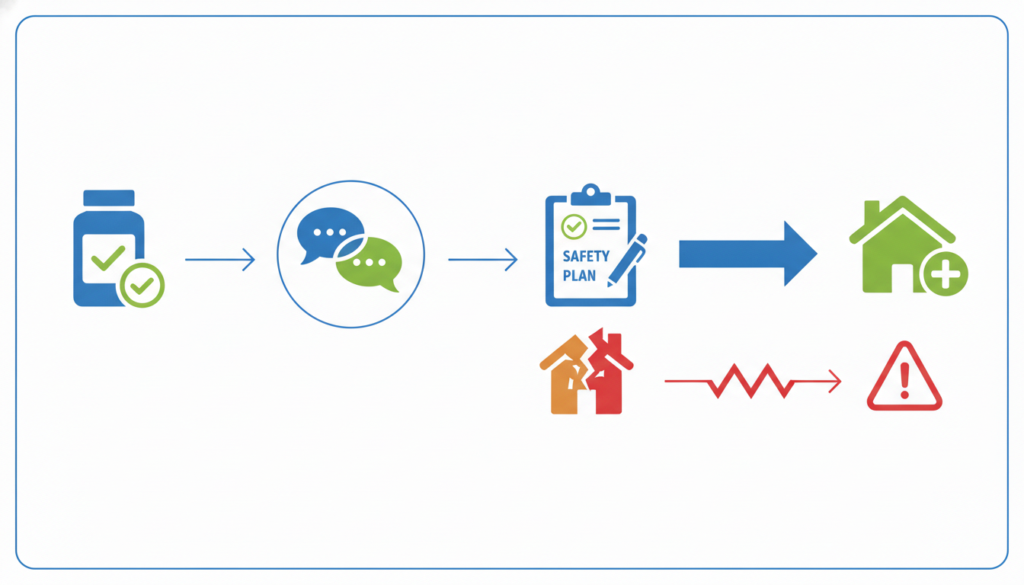
Medication should not be treated as a violation
This is where rules for sober living homes carry the most weight, both medically and legally. A resident taking prescribed medication for opioid use disorder, such as buprenorphine or methadone, is not breaking a sobriety rule by taking it as directed. Treating prescribed medication as a relapse is out of step with current medical guidance and can put a home at real legal risk. The Legal Action Center has flagged blanket refusals to admit residents on this kind of medication as a warning sign of unlawful discrimination.
Florida law puts this principle into writing. Starting January 1, 2025, a certified recovery residence in the state cannot deny someone housing solely because a licensed provider prescribed them medication to treat a substance use disorder, a protection built into Florida recovery housing law that took effect that year.
Relapse response looks different from house to house
Relapse itself is trickier. Some homes, again following the Oxford House approach, use immediate removal after any drinking or drug use. Others use a graduated response that includes a safety check, a revised recovery plan, and possibly a temporary move to a higher support setting. Research on relapse after residential opioid treatment, summarized in a 2025 relapse review, found reported rates ranging widely, from near zero to as high as 95 percent depending on how studies defined and measured it. That range is a reminder that a return to use is common enough to plan for rather than treat as a rare failure.
A fair policy separates a single, disclosed lapse from active drug dealing, violence, or repeated refusal to accept help. The first usually calls for support and a written plan. The second usually calls for removal to protect everyone else in the house.
Why Sober Living Rules Matter for Recovery
None of these rules exist for their own sake. The goal behind every curfew, guest limit, chore chart, and testing policy is the same: protect a stable, substance free space where people can rebuild daily routines without added chaos.
The research backs this up in a general sense. A 2025 review of recovery housing studies found that residents in these programs generally did better than those receiving usual care on measures like abstinence, employment, and income, based on a systematic review of available trials. That same review noted the evidence base is still moderate in strength, not proof that any single exact rule beats another. So the value sits less in strict enforcement and more in whether the rules add up to a safe, predictable, supportive place to live.
If you are choosing a sober living home for yourself or someone you love, ask for the written rules before you commit. Look for clear policies on curfew, visitors, testing, rent, and relapse. Ask how the home handles medication for opioid use disorder. A home that can answer these questions plainly is usually a home that takes both structure and its residents seriously.
If you or someone you care about needs help figuring out the right next step in recovery, our team can walk through the options with you and help you find a plan that fits. Contact our team at The Summit Wellness Group to get started.