Wondering what happens after you leave treatment but before you go back to living on your own? Sober living homes, also called recovery residences, offer a substance free place to live with peer support while you rebuild routines, work, and relationships, and research shows residents in these settings report substantially lower substance use than those in usual aftercare, with one study finding 31.3% versus 64.8% after two years. This article walks through what a sober living house actually looks like, how it works day to day, and who tends to benefit most.
What Is Sober Living and Why It Matters
A sober living home is a residence where people in recovery from substance use live together in a substance free environment while working on jobs, relationships, and daily routines. It is not a hospital and it is not usually a treatment program on its own. Its main job is simpler and, in some ways, harder to measure: give people a stable place to practice recovery while life gets rebuilt around them.
The clearer term researchers and standards groups use is recovery residence. The National Alliance for Recovery Residences, known as NARR, operates through affiliates in more than 30 states and reports that its certified homes serve about 250,000 people a year. That scale tells you this is not a niche service. It is a real part of how recovery works for a huge number of people.
Recovery itself is bigger than just not using substances. The Substance Abuse and Mental Health Services Administration describes recovery as a process through which people improve health, live self directed lives, and work toward their potential. That framing matters because a sober living home is not trying to replace therapy or medical care. It is trying to make everyday recovery possible.
How Does Sober Living Work Day to Day
So how does sober living work in practice? It depends heavily on which type of home you enter, but most share a few common threads.
Residents typically pay rent or program fees, agree to stay substance free, attend house meetings, do chores, and work toward goals like employment or outpatient treatment. Some homes test for drugs and alcohol regularly. Others rely more on peer accountability and trust. Nearly all expect residents to contribute to the functioning of the household in some way, whether through decision making, financial responsibility, or simply showing up.
Housing plays a specific role inside a bigger system of care. SAMHSA’s guidance frames housing as recovery support rather than a standalone fix, and researchers describe recovery oriented systems of care as networks that include treatment, peer support, employment help, and ongoing recovery management. A sober living home fits into that network. It rarely stands alone.
The Four Levels of Sober Living Homes
NARR organizes recovery residences into four levels, and knowing which level you are looking at answers most practical questions before you even ask them.
- Level I, Peer Run: Residents govern the house themselves. No paid staff. The Oxford House model is the best known example, and it has no fixed length of stay.
- Level II, Monitored: A house manager oversees rules and daily operations, adding structure while residents keep much of their independence.
- Level III, Supervised: Trained staff run structured programming, coordinate with outside treatment, and help with life skills.
- Level IV, Service Provider: Licensed clinical staff deliver actual treatment alongside housing, generally matching what’s called low intensity residential treatment.
These levels are not a ladder where higher is automatically better. They represent different mixes of independence, structure, and clinical support. Someone freshly out of detox with unstable psychiatric symptoms needs something very different from someone who is medically stable and just wants long term peer community.
What Is a Sober Living House Like for a New Resident
If you’re picturing what walking into a sober living house actually feels like, it helps to separate expectation from reality by level.
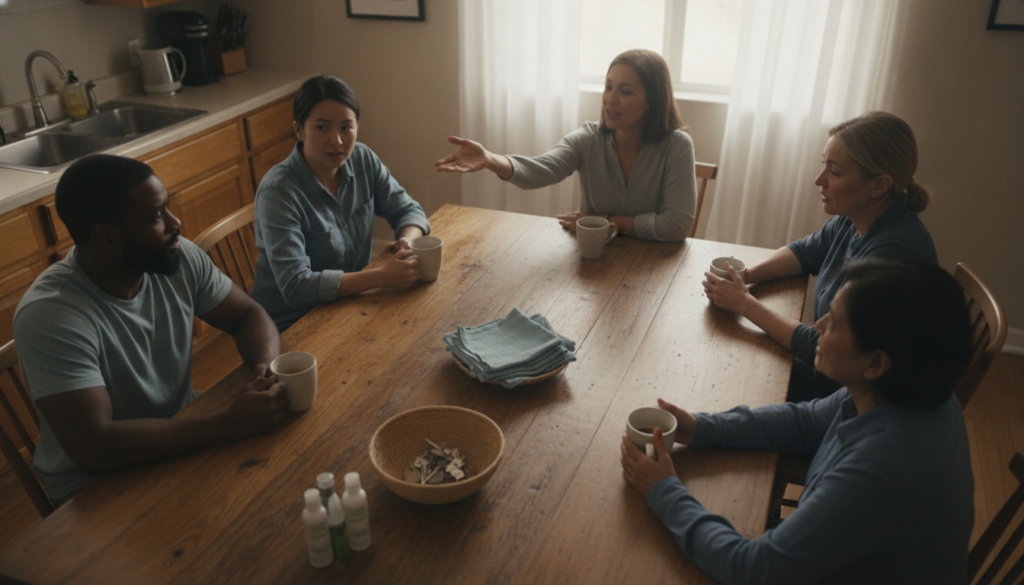
In a peer run home, you’ll likely share chores, attend house meetings, and have a real voice in decisions. There’s no manager telling you what to do. You elect your own leadership and handle conflicts as a group. Oxford House research describes residents gaining practical skills like budgeting and leadership by handling these responsibilities themselves, and the self governance mechanism is treated as part of the recovery process, not just a housekeeping detail.
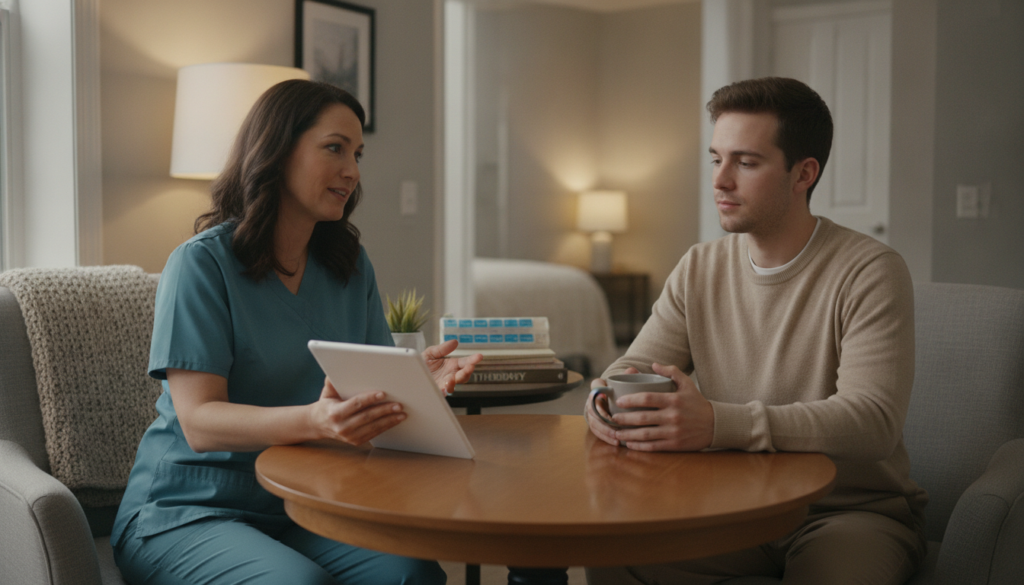
In a monitored or supervised sober living home, expect more structure. A manager or staff member enforces rules, may schedule drug testing, and helps connect you to outpatient treatment, work, or community resources. You’ll have curfews and more formal intake procedures. It is still primarily housing, though, not clinical treatment.
In a clinically integrated sober living home, you’re getting licensed counseling, medication management, and individualized treatment planning layered directly onto the housing. This level is meant for people who need both a place to live and active clinical care at the same time.
Benefits of Sober Living Backed by Research
Does any of this actually work? The strongest evidence comes from Oxford House studies, and it’s worth taking seriously.
A randomized study followed 150 people leaving substance use treatment in Illinois. After two years, those assigned to Oxford House had lower substance use, higher monthly income at $989.40 versus $440.00 for usual aftercare, and lower incarceration at 3% versus 9%. That’s not a small difference. It touches three separate parts of a person’s life at once.
A broader 2025 systematic review looked at five rigorous studies and found recovery housing generally beat continuing care as usual across abstinence, income, employment, and criminal charges, while also appearing more cost effective. The review called the overall evidence moderate rather than definitive, mostly because so few high quality studies exist and most focus on the Oxford House model specifically. That caveat matters. It doesn’t mean sober living doesn’t work broadly. It means we should be careful assuming every home produces Oxford House level results just because both prohibit substances.
Here’s a quick comparison of outcomes from that Illinois study:
| Outcome After Two Years | Oxford House Group | Usual Aftercare |
|—|—:|—:|
| Substance use | 31.3% | 64.8% |
| Monthly income | $989.40 | $440.00 |
| Incarceration | 3% | 9% |
The mechanism behind these numbers appears to be something researchers call recovery capital, meaning the practical resources like stable housing, peer relationships, employment, and daily routine that help someone actually sustain recovery once formal treatment ends.
Sober Living vs Halfway House: What’s the Real Difference
People use these terms interchangeably, and that’s a mistake. A sober living home is primarily voluntary, recovery focused housing. A halfway house is more often tied to a correctional system, a court, or a formal treatment program, with mandatory rules and a fixed length of stay set by an outside authority.
The distinction isn’t just semantic. It changes who controls your daily life, whether you can leave, and what happens if you break a rule. A Dearborn, Michigan treatment court model shows how halfway house style housing gets built into a justice system alongside court reviews and testing, which is a completely different experience from a peer governed Oxford House where residents vote on decisions and pay rent like any other tenant.
Some structured sober living homes, especially at Level III or IV, start to resemble halfway houses with mandatory programming and formal phases. That resemblance isn’t automatically bad. It just means you should ask direct questions rather than trust a label: Is this voluntary? Is there a fixed stay length? Who has authority to discharge me? Those answers tell you more than any sign on the door.
Who Sober Living Homes Actually Help
A sober living home tends to work best for people who are medically stable, not in acute withdrawal, and ready to take on some level of personal responsibility. Someone who just left detox with unmanaged withdrawal symptoms, active psychosis, or an inability to safely manage medications generally needs clinical care first, not a peer run house.
For people who are stable, sober living can support:
- Recent graduates of residential or outpatient treatment who need a substance free bridge back to independent living
- People with stable co occurring mental health conditions who have reliable outside treatment and medication support
- Individuals rebuilding employment, family relationships, or daily structure after incarceration
- Anyone seeking longer term peer community rather than a short, tightly controlled placement
- People who need routine and accountability but not 24 hour clinical supervision
Medication policy is one of the clearest signals of whether a home is actually recovery oriented. People taking prescribed medication for opioid use disorder may have protections under disability law, and a home that flatly bans all such medication without individual assessment is a red flag worth taking seriously, since federal guidance recognizes that people in treatment or recovery using legally prescribed medication should not face blanket exclusion.
Choosing the Right Level for Your Situation
The most useful placement principle is straightforward, even if applying it takes judgment: choose the least restrictive setting that can still keep you safe and support your recovery.
If you’re not sure where you fit, ask yourself a few honest questions. Are you medically and psychiatrically stable right now? Can you manage your own medications, or do you need help with that? Do you have some work, school, or daily structure already, or are you starting from nothing? Have lower structure settings failed for you before?
If the answer points toward needing more support, a Level III or IV sober living home with staff and clinical coordination probably fits better than jumping straight into a peer run house. If you’re stable and mainly need community and modest accountability, a Level I or II home may serve you well without unnecessary restriction. This isn’t a permanent decision either. People regularly step down from more structured settings to peer run homes as their recovery capital grows, and that movement should be seen as progress, not failure.
Getting the Support You Need
Recovery rarely happens in a straight line, and figuring out whether sober living fits your situation right now is a real decision worth getting right. If you’re weighing your options or need help figuring out what level of care actually matches where you are, the team at Summit Wellness Group’s evidence-based treatment programs can help you sort through it and find a path that fits.