Can you take Xanax while pregnant without harming your baby? The honest answer is that stopping suddenly is usually more dangerous than continuing under medical care, since regular alprazolam use can cause physical dependence and sudden withdrawal can trigger seizures, severe anxiety, or confusion. This guide walks through what the research shows for each trimester, for breastfeeding, and for finding a safer path forward.
Can You Take Xanax While Pregnant?
Pregnancy alone is not a reason to stop Xanax on your own. Alprazolam is a short acting benzodiazepine, and daily use can lead to physical dependence even when you take it exactly as prescribed. A 2025 joint clinical guideline built with input from nine medical groups, including ACOG and the American Psychiatric Association, tells doctors to weigh the risks and benefits for mother and baby together instead of defaulting to an immediate stop.
That same guideline is clear that pregnancy by itself does not require you to quit. The real question your doctor should ask is whether continuing, tapering slowly, or moving to a different treatment gives the lowest overall risk to you and your baby. That answer depends on your dose, how long you have used it, and what condition it is treating in the first place.
Xanax While Pregnant: First Trimester Risks
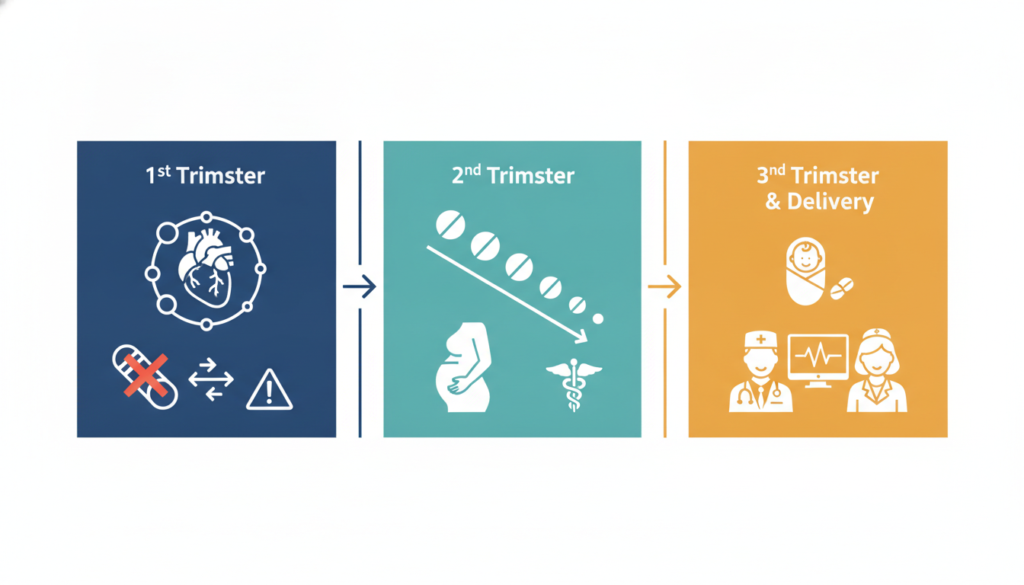
During the first trimester, your baby’s organs are forming, so this is the stretch doctors watch most closely. A large Korean cohort study that followed more than 3 million pregnancies found that babies exposed to benzodiazepines in early pregnancy had a slightly higher rate of birth defects, about 65 per 1,000 pregnancies compared with 51 per 1,000 in unexposed pregnancies. After adjusting for other factors, that works out to roughly a 9 percent higher relative risk overall, and a 15 percent higher relative risk for heart defects specifically.
The same research found the risk climbed with higher doses, which suggests that if a benzodiazepine is needed, the lowest effective amount matters most. A smaller Korean pregnancy study that compared 96 alprazolam exposed pregnancies with unexposed ones found higher odds of miscarriage and low birth weight, though it did not find a significant rise in birth defects. Larger recent research reviews have since echoed the miscarriage concern, though researchers still cannot fully separate the drug’s effect from the anxiety or panic disorder it was treating in the first place.
So can you take a Xanax while pregnant in the first trimester? If you already have, try not to panic. Most exposed pregnancies do not end in miscarriage or birth defects. The safer next step is a quick conversation with your prescriber about dose, duration, and whether therapy or a longer term medication could lower your need for it, not an emergency stop on your own.
Second and Third Trimester Changes
By the second trimester, many people feel their usual dose works differently. Pregnancy changes how your body processes medication, so alprazolam may seem less effective, but that is not automatically a sign you need more. It could just as easily be pregnancy related anxiety, poor sleep, or the drug simply wearing off between doses. Bring any of these changes to your doctor before adjusting your own dose, since raising it can deepen dependence without solving the real problem.
This is also often the most realistic window for gradual dose reduction, if reduction makes sense for you. Reassessment every few months, alongside therapy for the underlying anxiety, tends to work better than aiming for a fixed target by delivery day.
By the third trimester, the main worry shifts toward the baby’s transition after birth. Regular use close to delivery has been linked to newborn sedation, floppy muscle tone, feeding trouble, and withdrawal symptoms after birth. A pocket guideline summary developed with the American Society of Addiction Medicine notes added concern for preterm birth, low birth weight, and the need for breathing support in some newborns. Even so, tapering fast right before delivery carries its own danger, since it may trigger maternal withdrawal during labor at the worst possible time.
The goal late in pregnancy is usually the lowest stable dose you can manage without falling apart, paired with a clear plan shared with your delivery team and your baby’s pediatric team before labor begins.
Can You Take Xanax While Breastfeeding?
Once your baby arrives, the question shifts to breastfeeding. Alprazolam does pass into breast milk. The LactMed database reports that in the main study on this, eight nursing mothers each took a single 0.5 mg dose, and milk levels peaked around one hour later at a fairly low concentration, giving an estimated infant dose of about 3 percent of the mother’s own weight adjusted amount. That sits well under the 10 percent mark researchers often use as a rough safety checkpoint.
So can you take a Xanax while breastfeeding? A single occasional dose, taken after a feeding, usually does not require you to stop nursing or pump and dump your milk, since pumping does not remove the drug from your body any faster. Daily or repeated use is a different story. Alprazolam lingers in milk for a while, with a half life of about 14.5 hours, so doses taken more than once a day can build up across feedings instead of clearing between them.
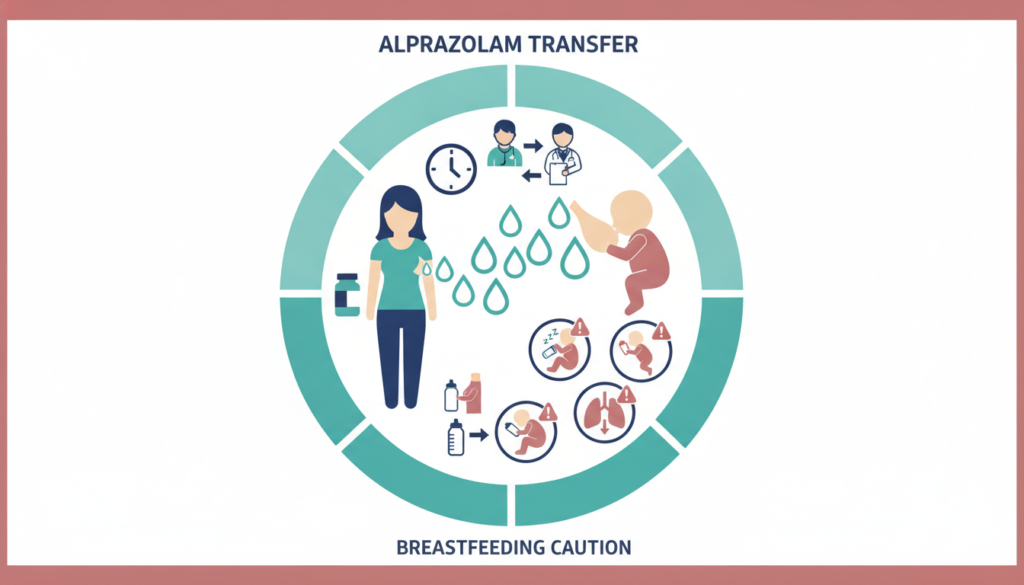
There is no single official number that tells you exactly how much Xanax you can take while breastfeeding safely, because the real risk depends on your baby’s age, whether they were born early, and whether you are also using other sedating medications. Taking half a tablet is still a repeated dose if you do it daily, and it still builds up in milk over time much the same way a full tablet would. What matters more than the size of the dose is how often you take it and how closely your baby is watched afterward.
Watch for these signs in your baby if you are breastfeeding while taking alprazolam regularly, and call your pediatrician the same day if you notice any of them:
- Unusual sleepiness or trouble waking for feeds
- Weak sucking or a much shorter feeding time than normal
- Fewer wet diapers along with poor feeding
- Limpness or reduced muscle tone
- Slow or irregular breathing, or a bluish color, which needs emergency care right away
If you need a benzodiazepine regularly while nursing, lorazepam and oxazepam are generally considered better choices than alprazolam, because they clear the body faster and are less likely to build up in a nursing infant over repeated doses. That does not mean a stable patient has to switch off alprazolam automatically. It means the option is worth raising with your prescriber if you are using it daily rather than once in a while.
Tapering Safely Instead of Stopping Suddenly
Whether you are pregnant or nursing, the safest way off daily Xanax is a slow, supervised taper rather than an abrupt stop. A 2023 mental health guideline from ACOG recommends using benzodiazepines sparingly during pregnancy and postpartum, paired with therapy or a longer term medication such as an SSRI to treat the anxiety underneath. A taper that moves too fast can bring back panic, insomnia, tremors, or in serious cases seizures, so your prescriber should set the pace based on how you respond rather than a fixed calendar.
It also helps to know that needing alprazolam to avoid withdrawal is not the same as having an addiction. Physical dependence can happen to anyone who takes a benzodiazepine daily, even exactly as prescribed. That distinction should shape how your care team talks with you about tapering, not whether they take your concerns seriously.
Switching from alprazolam to a different benzodiazezone is sometimes suggested purely because pregnancy or nursing is involved, but that is not automatic either. A stable patient who is doing fine on a low, steady dose may face more risk from an unnecessary switch than from staying the course under supervision. The decision should rest on your history, your response to prior changes, and how well you are functioning right now, not a blanket rule.
Why This Matters for You and Your Baby
Getting this right matters because both extremes carry real danger. Quitting Xanax overnight while pregnant can cause seizures and a psychiatric crisis, which is its own threat to a healthy pregnancy. Continuing an unexamined daily habit without any plan carries its own smaller but real risks to fetal development and to how your newborn adjusts after birth. The middle path, built together with your obstetric team and a mental health or addiction specialist, tends to protect both of you best.
If daily Xanax use has taken hold of your life beyond pregnancy or breastfeeding questions, you do not have to sort it out alone. Reach out to learn more about evidence based treatment built around safe tapering, mental health care, and long term recovery for you and your family.