Wondering if drinking every night, even just one or two drinks, means you have a problem? Having one or two standard drinks nightly usually isn’t dangerous by itself, but it can score positive on a validated screening tool called AUDIT-C, which flags patterns worth a closer look. This article walks through what nightly drinking does to your body and how to tell when it has crossed into something that needs attention.
What Counts as Drinking Every Night
When people say they drink every night, they usually mean one drink, one glass, or one pour. But a standard drink in the United States is a specific amount of alcohol, about 14 grams, not a glass size. NIAAA describes one standard drink as roughly 12 ounces of regular beer, 5 ounces of table wine, or 1.5 ounces of spirits.
A restaurant pour or a heavy hand at home is often bigger than that. A 10 ounce glass of 14 percent wine works out closer to two standard drinks, not one. That distinction matters because it changes how a drink every night pattern actually gets counted, both by you and by any screening tool a doctor might use.
Cocktails complicate things further. A drink with two pours of liquor plus a liqueur can easily total two or three standard drinks in a single glass. So before you can honestly answer whether your habit is a problem, it helps to know what you’re actually counting.
Is Drinking Every Night Bad for Your Health
So is drinking every night bad? The honest answer is that it depends on the amount, your sex, your health, and what else is going on in your life. There isn’t one universal daily number anymore. Federal dietary guidelines recently dropped the old sex specific daily limits in favor of a broader message to drink less overall, but that shift doesn’t erase the risk math underneath.
NIAAA still defines heavy drinking thresholds as 15 or more drinks a week or 5 in a single day for men, and 8 or more a week or 4 in a day for women. Nightly totals add up faster than most people expect:
| Nightly amount | Weekly total | Meets the heavy drinking line |
| 1 standard drink | 7 drinks | Below both thresholds, but close for women |
| 2 standard drinks | 14 drinks | Meets it for women, just under it for men |
| 3 standard drinks | 21 drinks | Meets it for both men and women |
A two drink every night habit lands at 14 drinks a week. That’s under the male weekly line but over the female one, which is exactly why sex still matters even though the guidelines no longer spell out separate daily numbers.
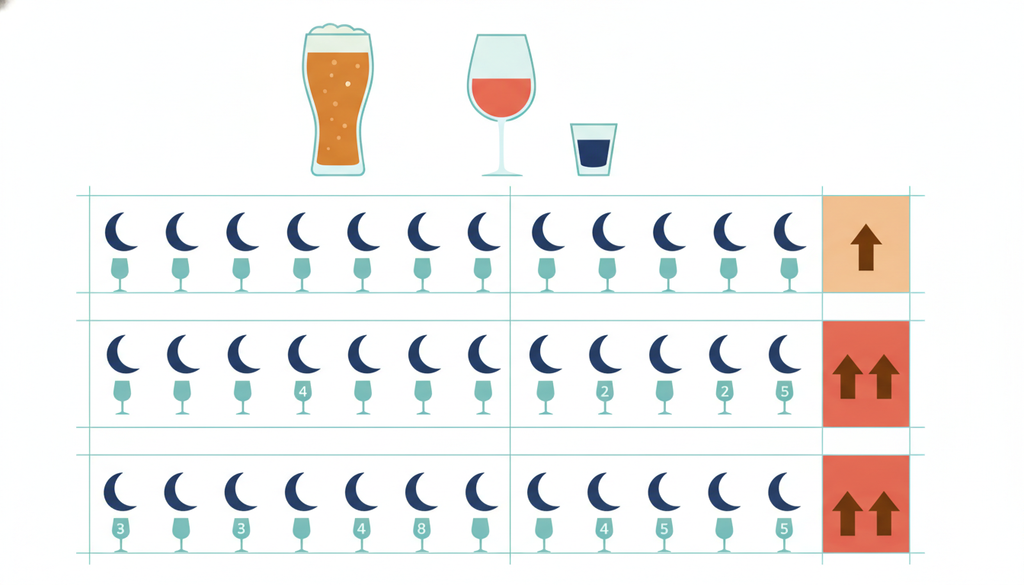
There’s a second way to check yourself that doesn’t depend on hitting a weekly total. The AUDIT-C screening tool asks how often you drink, how much on a typical day, and how often you have six or more drinks in one sitting. Drinking four or more times a week earns 4 points on its own, even if you only have one or two drinks each time. That means a simple nightly one or two drink habit often lands at a total score of 4, which counts as a positive screen for both men and women under common cutoffs used in the United States. A positive screen isn’t a diagnosis. It’s a nudge to look closer, not a verdict.
When Nightly Drinking Signals a Problem
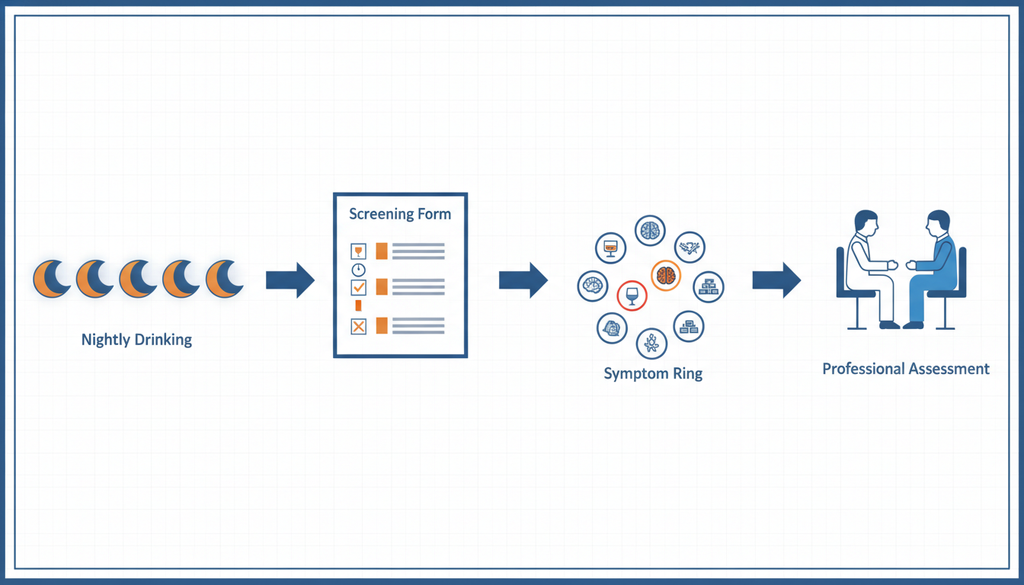
A positive screen or a weekly total near a heavy drinking line doesn’t mean you have alcohol use disorder. Under the DSM-5-TR criteria used by clinicians, a diagnosis needs at least two of eleven symptoms showing up within a year. Those symptoms include craving, drinking more or longer than planned, giving up activities because of alcohol, needing more to get the same effect, and continuing to drink despite a health problem it’s making worse.
A single glass of wine every night, on its own, without any of those signs, isn’t automatically a disorder. Plenty of people drink nightly and stop easily when they choose to, feel no craving, and have no consequences to show for it.
What changes the picture is a pattern layered on top of the habit. If you find yourself needing a drink to unwind rather than choosing one, feeling irritable or shaky before your first drink, noticing you need more to feel the same relief you used to get from less, or repeatedly promising yourself to cut back and not following through, that combination is worth naming out loud, even if each piece seems small on its own. The volume alone rarely tells the whole story. It’s the pattern around the volume that does.
Drinking Wine Every Night vs Other Drinks
Drinking wine every night runs on the same math as any other drink, but wine pours are notorious for creeping upward without anyone noticing. A 12 ounce glass of 14 percent wine is closer to three standard drinks than one. If a bottle that used to last four nights now empties in two, the ounces have added up even though the glass itself never changed size.
Beer and spirits have their own versions of this creep. A 16 ounce pint of 8 percent craft beer holds roughly two standard drinks, not the one a regular 12 ounce can would give you. A heavier handed cocktail pour does the same thing in reverse, hiding extra ounces of liquor behind a single glass.
None of this means wine, beer, or spirits are more or less risky by nature. It means the container and the pour matter as much as the choice of drink, and it’s worth measuring your actual glass once just to know what you’re really working with.
Who Should Be More Careful
Some people should treat any nightly drinking as higher stakes, regardless of the total. NIAAA notes that older adults reach higher blood alcohol levels than younger adults from the exact same amount, largely because of age related changes in how the body processes alcohol. Many older adults also take medications that interact with alcohol, which raises the stakes further.
Mixing alcohol with sedatives, sleep aids, opioids, or certain blood pressure and diabetes medications can cause real harm at doses that would otherwise seem modest. NIAAA’s review of medication interactions lists these combinations among the most dangerous, and the risk doesn’t require heavy drinking to show up. It can appear in one drink.
Pregnancy is its own category entirely. There’s no known safe amount at any point during pregnancy, so the usual weekly math and screening cutoffs don’t apply the same way. If you’re pregnant or planning to be, the safest move is to avoid alcohol completely and talk with your doctor about anything you’ve already been drinking.
How to Cut Back on Drinking Every Night
If you want to change a nightly habit, start with an honest count rather than a guess. Measure a real pour at home once, using an actual measuring cup, so you know what your usual glass really holds. Most people are surprised.
From there, try building in two or three alcohol free nights a week and pay attention to how you feel, both good and bad. Trouble sleeping the first night or two is common and usually settles down. If it doesn’t settle, or if you feel shaky, sweaty, or anxious until you drink, that’s useful information, not a failure.
It also helps to write down why you reach for a drink each evening. Stress, boredom, loneliness, and trouble sleeping are common answers, and each one points toward a different fix that has nothing to do with alcohol itself. Solving the actual reason often does more than willpower ever could.
When to Get Help
If you’ve been drinking every night for years, don’t quit cold on your own, especially if you ever wake up shaky, sweaty, or anxious until you’ve had a drink. That pattern can point to physical dependence, and the withdrawal management guideline from the American Society of Addiction Medicine notes that stopping abruptly after sustained heavy use can trigger seizures or worse. A doctor or addiction specialist can help you taper safely and figure out whether ongoing support makes sense for you.
Getting an honest read on a nightly habit matters because it changes what you do next. A truly modest, symptom free pattern might just need a little more attention. A pattern tangled up with craving, morning drinking, or failed attempts to cut back deserves real support, not just good intentions.
If nightly drinking feels bigger than a glass of wine with dinner, you don’t have to sort it out alone.By reaching out to a professional at The Summit Wellness Group you can ask about evidence-based treatment options that fit your life.