Waking up anxious, shaky, or replaying everything you said the night before has a name: hangxiety. It usually peaks the next morning as blood alcohol falls toward zero, and it fades within about a day with rest, fluids, and time. This guide covers why alcohol triggers anxiety, how to spot the few warning signs that need medical care, and how to get rid of hangxiety fast.
What Is Hangxiety and Why It Happens
Hangxiety isn’t an official diagnosis. It’s shorthand for the nervous, on edge feeling that follows a night of drinking, an informal label for one symptom of a hangover rather than a stand alone condition.
Alcohol calms the brain in the short term by boosting a calming chemical called GABA while quieting an excitatory chemical called glutamate. Once that calming effect fades, the nervous system can swing the other way in a kind of rebound, which helps explain why anxiety often shows up right as the alcohol clears your system.
This rebound can happen after a single night out, even without any history of heavy or regular drinking, so one anxious morning does not automatically mean you have a drinking problem.
Hangovers themselves are rarely just a headache. They often include thirst, fatigue, nausea, sensitivity to light and sound, sweating, and anxiety, and these symptoms tend to peak right as your blood alcohol level drops toward zero. That timing matters, because you can feel worst at the exact moment you are technically sober, which can be confusing if you assume anxiety should fade once the alcohol is gone.
Hangxiety vs. a Regular Hangover
Think of a hangover as the umbrella and hangxiety as one piece sitting underneath it. Some people get mostly physical symptoms, like nausea and headache, with barely any anxiety. Others feel physically fine but spend the whole day gripped by worry, dread, or a racing mind.
Why Do I Get Anxiety After Drinking
Part of the answer is physical and part is psychological. Poor sleep, physical discomfort, embarrassment about the night before, and general worry about sensations in your body all feed next day anxiety, and that combination can amplify distress even when nothing serious is going on.
There is also a learned pattern worth knowing about if anxiety after drinking keeps showing up. Alcohol can briefly ease tension by acting on calming brain chemicals, and that relief is exactly what keeps some people reaching for another drink when anxiety hits. Over time this relief can backfire. Each time a drink takes the edge off, the brain learns to reach for alcohol the next time anxiety shows up, and the anxiety between drinks tends to grow rather than shrink.
That cycle matters most for people managing an anxiety disorder that existed before the drinking started. Leaning on alcohol to quiet anxious thoughts can quietly reinforce both problems at once, since relief from one drink makes drinking feel like the fix even as heavy, regular use adds new anxiety on top of the old. Someone with social anxiety might notice that a drink before a party makes conversation easier, which can make sober socializing feel harder and harder to imagine over time.
None of this means alcohol causes anxiety in everyone who drinks. Plenty of people have an occasional hangover without any lasting anxiety problem. The pattern becomes more relevant when drinking and anxious feelings start to feed each other on a regular basis rather than showing up once in a while after a big night.
Why Drinking to Calm Anxiety Backfires
The link between alcohol and anxiety goes beyond one rough morning. Long running research has tracked what happens when people drink specifically to manage anxiety, and the pattern is worth taking seriously. One large national survey found that adults who said they drank to self medicate anxiety symptoms had 5.71 times the odds of having alcohol dependence when researchers checked back about three years later. Among those who already had alcohol dependence, the odds that it persisted were 6.25 times higher.
That does not mean one anxious hangover leads to dependence. It means that using alcohol as a regular anxiety strategy, rather than having an occasional drink, is the pattern most strongly tied to lasting alcohol problems down the road. The risk comes from repetition and reliance, not from a single rough evening.
Repeated heavy drinking also changes how the brain handles stress. Over time, the brain adapts to alcohol by turning up its own stress systems, so alcohol brings less relief while the low that follows each drinking episode gets deeper. This is part of why people who drink heavily for months or years often describe hangxiety getting worse over time rather than better.
Understanding this mechanism can actually be reassuring. It explains why hangxiety is a real, physical process rather than a character flaw or a sign you cannot handle your liquor, while also explaining why leaning on alcohol to manage anxiety tends to backfire the longer it continues.
Is It Hangxiety or Alcohol Withdrawal?
Hangxiety should ease steadily as the day goes on. Alcohol withdrawal is a different and more serious syndrome that can follow a sharp drop in drinking after a period of heavy, sustained alcohol use, and it can include visible hand tremor, heavy sweating, a racing pulse, and anxiety that gets worse instead of better.
If you have been drinking heavily every day, stopping suddenly can cause seizures and can be life-threatening, so talk to a doctor before you quit or cut back sharply.
The two can look similar on paper, which is why timing by the clock is not a reliable way to tell them apart. Early withdrawal tremor can begin within five to ten hours of the last drink, right in the window most people associate with an ordinary hangover. A 2021 review of outpatient withdrawal management in American Family Physician points instead to the full drinking history, any past withdrawal episodes, and whether symptoms are easing or getting worse. Someone who drinks occasionally and feels anxious at noon is in a very different situation than someone who drinks heavily every day and feels anxious and shaky every morning before their first drink.
One pattern deserves extra attention: anxiety that keeps returning and is repeatedly relieved by another drink. That cycle can point toward developing dependence rather than a simple hangover, and it is not something to test by drinking more. The American Society of Addiction Medicine’s withdrawal management guideline specifically advises against using alcohol to treat or prevent withdrawal symptoms. Drinking to feel better can mask a worsening problem rather than solve it.
Get emergency care right away for a seizure, new confusion, hallucinations, severe agitation, or collapse after cutting back on heavy drinking. These serious warning signs go beyond ordinary hangxiety and need medical attention rather than home remedies. If you are unsure which category you fall into, especially if your drinking has been heavy and regular, treat uncertainty as a reason to check in with a doctor rather than guessing.
How to Get Rid of Hangxiety Fast
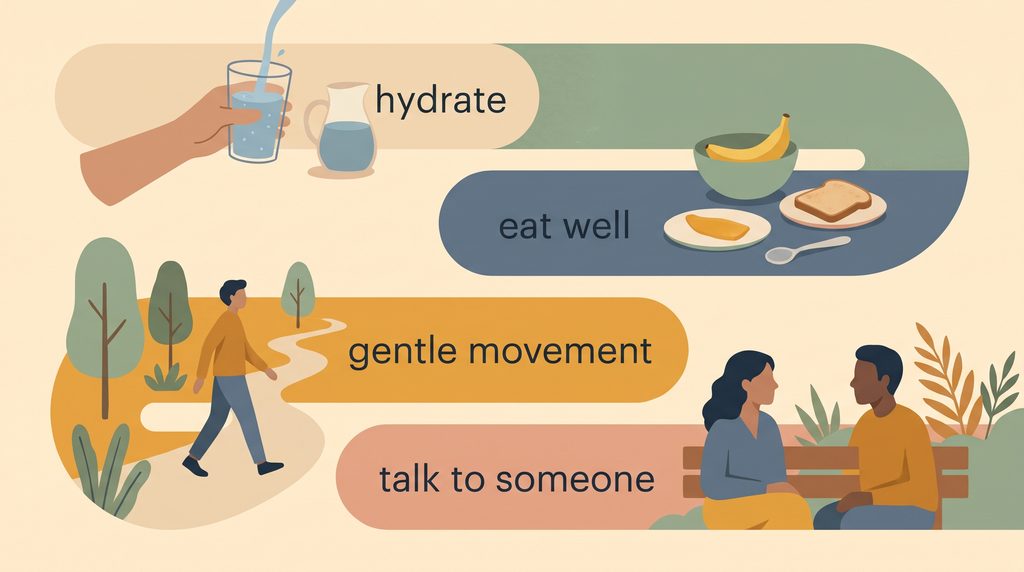
- Drink water steadily and add electrolytes if you can.
- Eat something with protein and carbohydrates.
- Get outside for a short walk or light movement.
- Try slow breathing, in for four counts and out for six.
- Skip the urge to have another drink for relief.
- Talk to someone you trust about how you are feeling instead of sitting with it alone.
Sleep matters more than people expect here. Alcohol disrupts normal sleep cycles, and a poor night of sleep on top of a hangover can make anxious thoughts feel much bigger than they actually are.
This combination will not erase anxiety that is tied to withdrawal or a deeper drinking pattern. If you have tried these steps and still feel anxious the next day, or the anxiety keeps returning after future nights of drinking, that is useful information rather than something to ignore.
Preventing Hangover Anxiety Before It Starts
Space out drinks, eat before and during a night out, and alternate alcohol with water. Setting a limit before you start drinking, rather than deciding in the moment, also helps you avoid the kind of heavy session that tends to produce the worst hangxiety.
Paying attention to what you are drinking for can matter just as much as how much you drink. If you notice you are drinking specifically to calm anxiety rather than to socialize or unwind, that is worth paying attention to on its own.
It also helps to notice your personal pattern over several occasions rather than judging one night in isolation. Spotting your own triggers makes prevention far more specific than generic advice ever can.
When to Get Help Beyond a Bad Morning
A different picture emerges when anxiety keeps showing up morning after morning, comes with shaking hands, a pounding heart, or heavy sweating, or only goes away once you have another drink. That pattern is worth raising with a doctor or counselor rather than managing alone, especially if your drinking has been heavy and steady for a while.
Withdrawal is also only one piece of the picture. Clinicians diagnose alcohol use disorder when someone meets at least two of eleven criteria within a year, so a person can have a real drinking problem without ever shaking or sweating when they stop.
The same is true if you already live with an anxiety disorder and have noticed that alcohol has become part of how you cope with it. A person can improve their anxiety with therapy or medication and still struggle with drinking, just as someone can cut back on alcohol and still carry unresolved anxiety that never gets named. That is why treating both together matters. In a 2021 randomized trial of people with social anxiety and alcohol problems, treatment that targeted both conditions together improved social anxiety and quality of life more than treatment focused on alcohol alone.

If any of this sounds familiar, it is not a sign of weakness. It is a sign that the anxiety and the drinking have started working together.
If hangxiety has turned into a pattern you cannot shake on your own, you do not have to sort it out by yourself. Reaching out for dual diagnosis treatment at The Summit Wellness Group can help you address the anxiety and the drinking together, with a plan built around what you actually need.